

Chair: “It’s difficult to get students to stand for election”
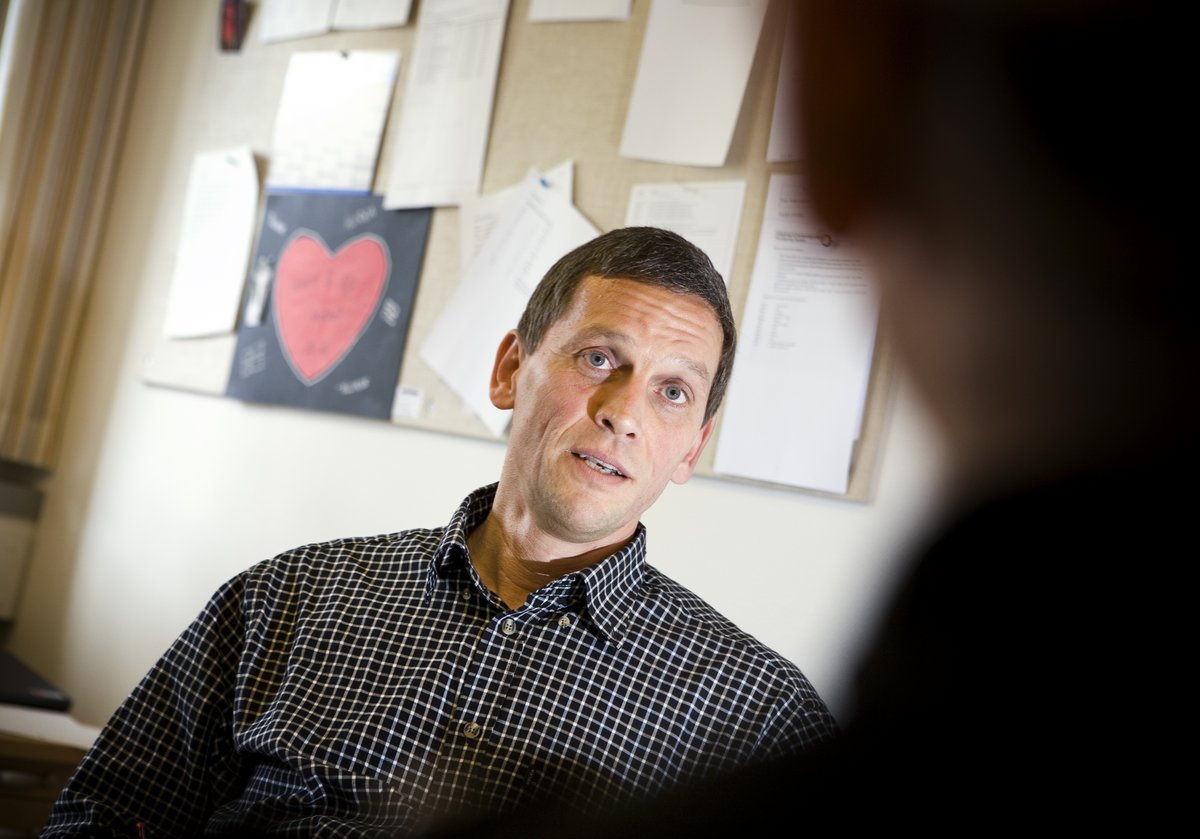
Only two students sit on the two boards of studies at the Faculty of Technical Sciences. One on each board. Six seats, three on each board, that student representatives could have filled, have remained vacant for a long time, says the chair of one of the boards, Associate Professor Keld Lars Bak.

“For a long time, we have had difficulty getting students to stand for election in the university elections.”
The observation comes from Associate Professor and Deputy Head of Department at the Department of Biological and Chemical Engineering, Keld Lars Bak. He is chair of the Board of Studies for Engineering Sciences (BSE), which is one of two boards of studies at the Faculty of Technical Sciences.
Boards of Studies at Tech
The structure of the Board of Studies ensures the co-determination and involvement of students and staff in programmes and teaching, and it caters for interdisciplinary and strategic work on education at Aarhus University.
The Faculty of Technical Sciences has two boards of studies:
Board of Studies for Engineering Sciences (BSE):
The board of studies currently consists of five members: Four academic staff members and one student, as well as three observers who do not have voting rights.
Board of Studies of Agriculture, Food and Veterinary Sciences (BSA):
The board of studies consists of five members: Four academic staff members and one student, as well as four observers who do not have voting rights.
Source: Board of Studies for Engineering Sciences (BSE) & Board of Studies of Agriculture, Food and Veterinary Sciences
At the university elections, students can choose who will represent them on the committees and boards responsible for making decisions on curricula, exemptions, student wellbeing initiatives, and many other matters relating to their degree programmes and departments. If there are candidates to vote for, that is.
“Over the years, we have tried all sorts of things to get students more involved. For example, we have tried recruiting students through the education committees on individual degree programmes, where the students involved have already shown an interest, but it is still difficult. It’s always at the nomination stage that things fall through. It’s difficult to get students to stand for election," says Keld Lars Bak.
Henrik Callesen is chair of the faculty's second board of studies, the Board of Studies of Agriculture, Food and Veterinary Sciences (BSA).
He is a professor at the Department of Animal and Veterinary Sciences, and BSA faces the same challenges as its colleagues in BSE when it comes to getting students to stand for election. The situation in Viborg is somewhat different, however, as the first students were only admitted to the degree programmes in Veterinary Medicine, Animal Science and Plant and Food Science in 2024.
“We are new, so in the past few years everything has been new, and so have the students. The third class is starting now, so I think, and hope, that the worst is behind us. I hope students will start to get a better sense of what the board of studies does and become more interested in taking part,” says Henrik Callesen.
During his student speech at the university's annual celebration on 11 September, physics student Simon Mosgaard Jørgensen highlighted the fact that far too few students engage with their own education through councils and committees. He believes that Aarhus University becomes a poorer place to study when students are not involved in decision-making.
“For me it's quite simple: Students’ perspectives, knowledge and experiences are essential to making the university better. Without student involvement, Aarhus University would be a worse place to study. And that is a problem,” said Simon Mosgaard Jørgensen in the opening remarks of his speech.
More recently, the new Chair of the Student Council, Julie Olesen, has highlighted the need for more students to stand in the university elections.
Student Council gets new chair ahead of schedule
The same goes for Kasper Atzen Gade, who represents his fellow students while studying for a Master’s degree in Scandinavian Languages and Literature.
Stand for election – and make your voice heard by those who can make a difference
The Faculty of Technical Sciences is one of the faculties where the fewest degree programmes have student representation on their boards of studies. That is according to a tally compiled by Omnibus.
Across all 22 of AU’s boards of studies, students are entitled to a total of 107 seats. However, only 81 students were elected in the 2025 university elections, leaving 26 seats that could have been filled by student representatives vacant.
Students on AU's boards of studies
Overview of the number of seats on AU’s boards of studies to which students are entitled, and how many of those seats remained vacant after the 2025 university elections:
Arts:
4 boards of studies, 25 seats, 2 empty.
Nat:
1 board of studies, 6 seats, 0 empty.
Tech:
2 boards of studies, 8 seats, 6 empty.
Health:
6 boards of studies, 29 seats, 6 empty.
Aarhus BSS:
9 boards of studies, 39 seats, 12 empty.
The Faculty of Technical Sciences has just under 4,500 students, who vote for a total of eight seats in the university elections, with four seats allocated to each of the faculty’s two boards of studies.
In BSA, which covers Veterinary Science, Animal Science, Plant and Food Science, and MEF and Agrobiology, primarily based at AU Viborg in Foulum, only one student, from Agrobiology, has been elected to the board of studies. No candidates stood for election from the other three degree programmes.
“We can't do much other than encourage students to stand for election. The current students in the education committees and the one on the board of studies are our best ambassadors," says Henrik Callesen, Chair of the BSA board of studies.
His impression is that students already have plenty on their plates, and Henrik Callesen notes that far more students choose to get involved in the more degree programme-focused education committees.
“It is also my impression that we generally have a good dialogue with our students,” says Henrik Callesen. Still, he doesn’t hide the fact that he would very much like to see more students on the board of studies.
Degree programmes at Tech represented in the boards of studies
Omnibus has examined which degree programmes at the Faculty of Technical Sciences were not represented on a board of studies between 2022 and 2025:
No representation for three years (4 degree programmes): Master’s degree: Chemistry and Biotechnology, Chemical Engineering, Biotechnology & Diploma: Chemical Engineering, Chemistry (Chemical Engineering), Biotechnology, Chemistry and Food Technology, Food Technology.
No representation for two years (11 degree programmes): Veterinary Medicine; Viborg, Master's Degree: Architectural Engineering, Architectural Engineering, Diploma: Construction, Building Design, Master’s degree: Computer Engineering, Electrical Engineering, Biomedical Technology/Engineering, Computer Engineering, Electrical Engineering, Diploma: Electronics (Aarhus/Herning), Diploma: Software Technology, Diploma: Electrical Power Engineering (Aarhus/Herning) & Diploma: Healthcare Technology Engineering.
No representation for one year (2 degree programmes): Animal Science; Viborg & Plant and Food Science; Viborg.
In the BSE board of studies, which represents the faculty’s other degree programmes, only one student has been elected to represent Mechanical Engineering, Mechanical Engineering and Technology, and the Diploma Engineering programmes in Mechanical Engineering in Aarhus and Herning. None of the other degree programmes are represented on the board of studies.
Chair Keld Lars Bak would very much like to see students make use of their seats and fill all four student positions on the BSE board of studies, but he has become used to that not being the case.
“There are students on the education committees, where there is very direct contact between the department, teaching staff, and students. But I have found it difficult to get students to stand for election. Especially for the board of studies, and that's how it is. I also see it as a sign that our students are very busy. In a society where everyone is competing for our attention, there are many things to keep track of,” says Keld Lars Bak, before adding:
“I also see it as a sign that things are working well and that students feel their interests are being looked after.”
The deadline for standing in the 2026 university elections is Friday 9 October.
This text is machine translated and post-edited by Mie Skov Jeppesen.