

In case of fire, students in the Nobel Park are now in safe hands
Anders, Jørn and the other fire guards are now in place in the stairwells, ensuring that students can return to classrooms and study rooms, but both fire guards and students must go home at 4 p.m.

Here’s the plan
All rooms on floors 3, 4, 5 and 6 in buildings 1461, 1463, 1465 and 1467 are reopened for students and teaching on weekdays from 8 a.m. to 4 p.m.
Students are still not permitted to be in the mentioned locations outside of these times, including at weekends.
There are physical fire guards on all the floors mentioned in the buildings mentioned. The fire guards' task is to raise the alarm in case of fire.
The scheme will operate with dispensation from Aarhus Municipality until 21 May.
After this, there will again be a restriction of 25 people on each of the floors mentioned.
This means that students aren’t allowed to stay on the mentioned floors after 21 May.
Exams and preparation after 21 May will take place in other rooms, which will be announced to the students concerned at a later date.
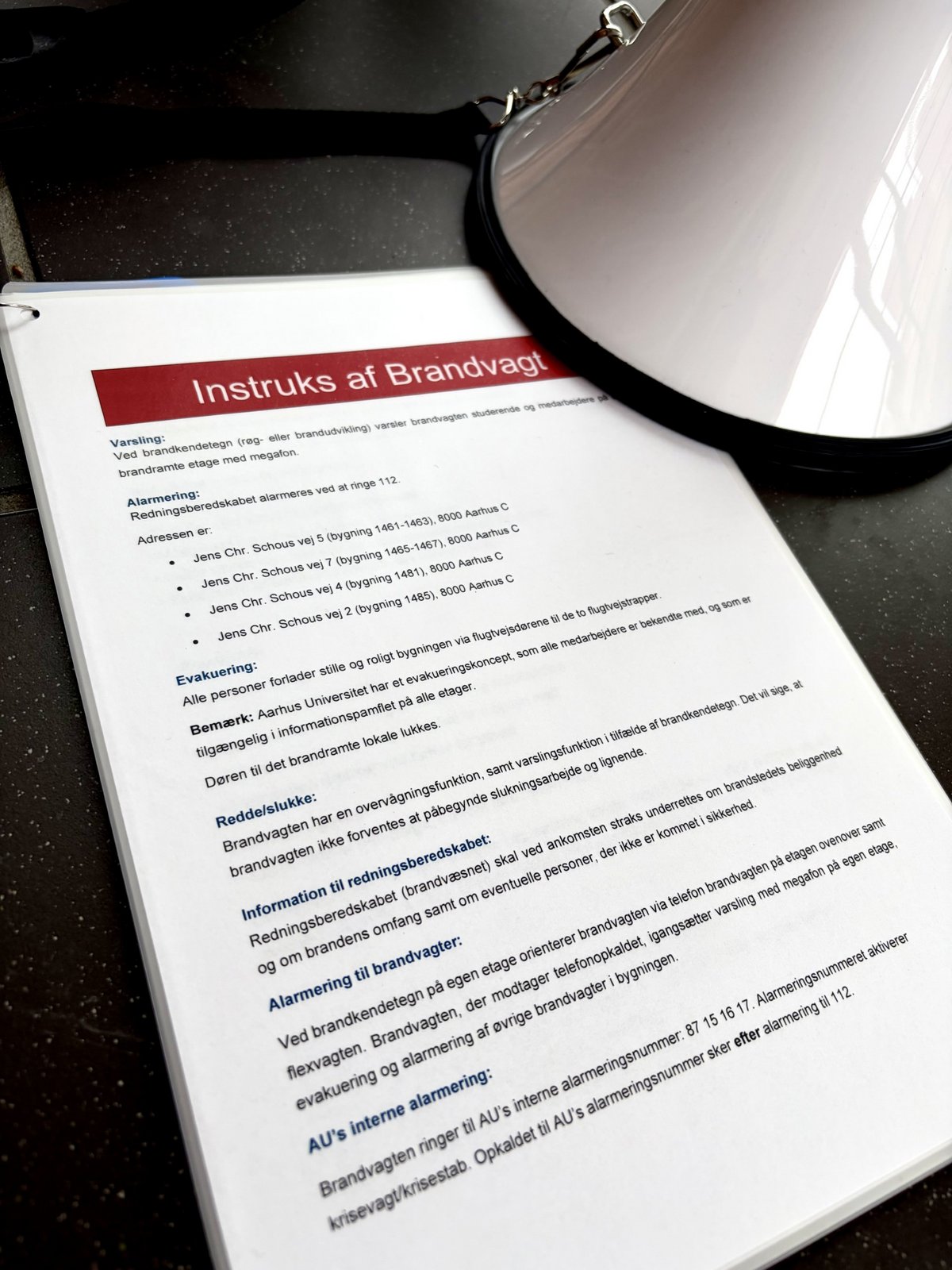
In the middle of the staircase on the third floor of the tall, red building 1461 in the Nobel Park sits a gentleman on a chair. He is equipped with the book Erindringsglimt by Henry Nielsen, which helps him pass the time. Next to him lies a day-old copy of Politiken, instructions on what to do in case of fire, and a megaphone.
"It's a little chilly," Anders Lund notes, which is the man's name.
"But otherwise, it's fine."
Anders Lund is a fire guard. This service is now available from 8 a.m. to 4 p.m. on a total of 24 floors spread across buildings 1461, 1463, 1465 and 1467 in the Nobel Park.
"We walk around a few times per hour and make sure that everything is as it should be. If there are signs of fire, we use this to warn people," says Anders Lund, patting the megaphone at his feet.
It’s far from common to have guards walking around the hallways keeping watch. However, this is necessary because fire safety on floors 3, 4, 5 and 6 is not up to standard in the four buildings.
As Omnibus has previously reported, the lack of fire safety is far from a new problem, but according to Niels Lehmann, Vice-Dean for Education at Arts, it was only discovered a few weeks ago when the possibility of increasing the capacity of a classroom from 25 students to 30 was being assessed.
Inadequate fire protection in four buildings in the Nobel Park sends students home
"We became aware that from the third floor upwards, there must be no more than 25 people on each floor. It has always been this way, but I don't know when it was overlooked. The moment we became aware of this, we had a duty to act, and so we did," Niels Lehmann explains.
From one day to the next, students were sent home to study behind their computers.
"It was a total and complete physical flashback to the time during Corona," says Mathilde Mosdal, who studies Scandinavian Languages and Literature.

Together with her fellow students in the Media Culture course, she re-experienced online teaching and all the struggles that come with it. Another subject was cancelled altogether.
"It's all been a bit LOL. It has been confusing, and even the teachers haven’t been entirely sure what was going to happen," says Laura Bøtker, who’s in the same programme as Mathilde Mosdal.
As students of Scandinavian Languages and Literature, who are primarily located in a completely different building, they have got off lightly compared to students of, for example, Philosophy and History of Ideas, who are located in buildings 1463 and 1465, where fire safety is also inadequate.
Jeppe Langhede Olsen, Linea Høgfeldt Pedersen and Mathias Christiansen, who all study History of Ideas, and Molly Boysen Visby, who studies Philosophy, haven’t only lost their classrooms, but also their combined study and Friday bar room is locked after 4 p.m.
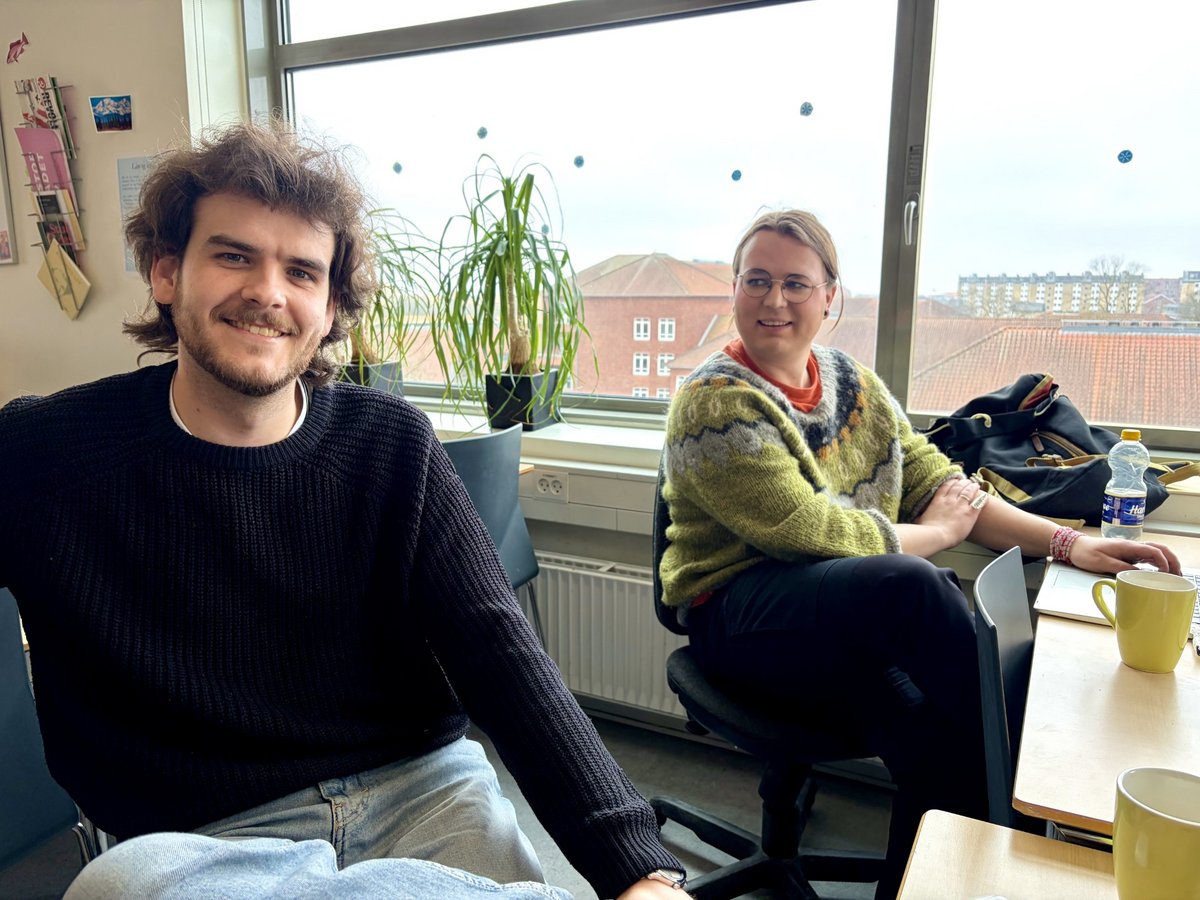
"First and foremost, it makes everyday life extremely difficult. And then we find that the university either cannot or will not inform us about what is going to happen," Mathias Christiansen says.
Every day, I wonder what tomorrow will bring. This room is incredibly important to me because my studies are linked to my ability to use it. This determines where I will go in the morning, who I will spend the day with, and what I can expect to gain from the day," Molly Boysen Visby continues.
Similarly, Linea Høgfeldt Pedersen depends on access to room 515, which is a shared study room for students.
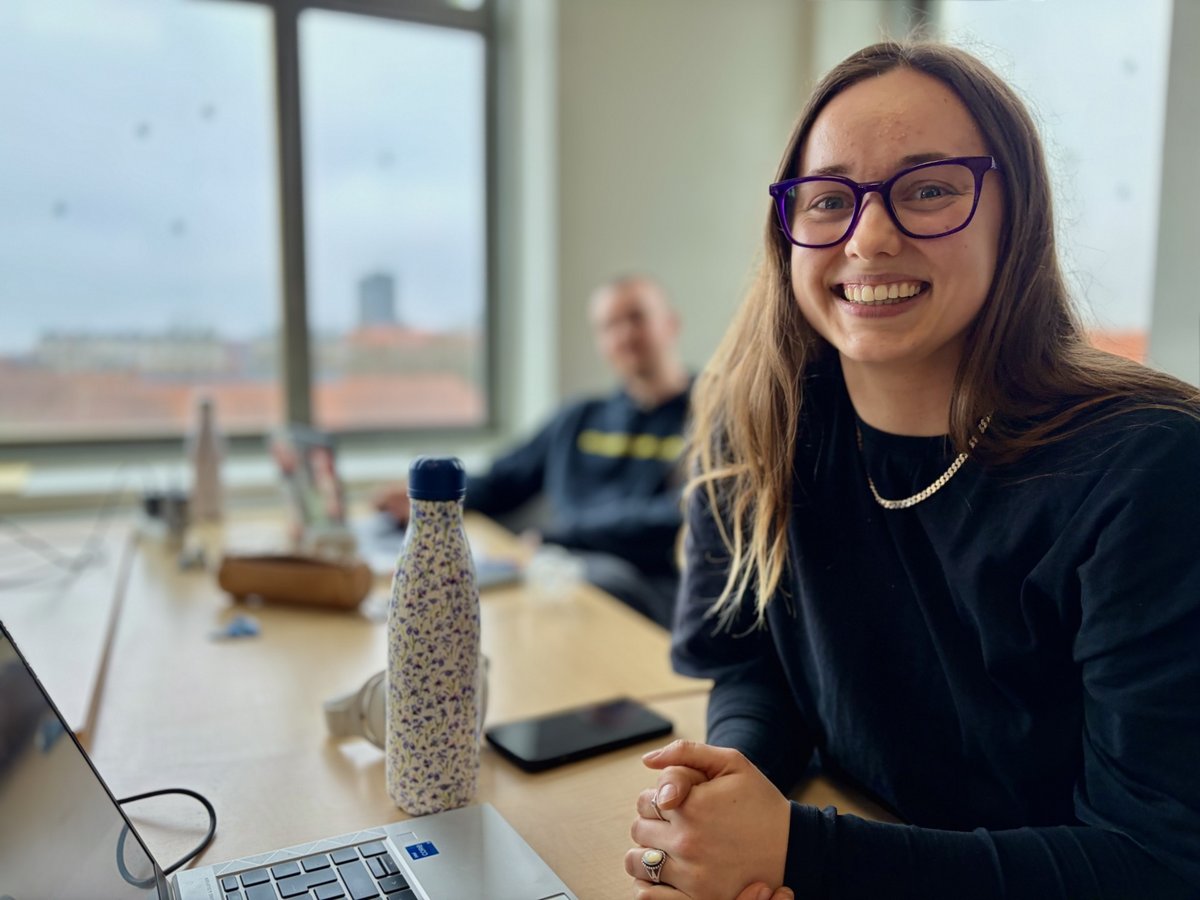
"I’m writing my thesis and need access to the room. I live in a very small flat, and I can’t work from there. After 4 p.m., there aren't really any other places to go," Linea Høgfeldt Pedersen says.
One thing is access to a study room and thereby a social environment for students. They’ve now got it back because the fire guards are keeping watch in the corridors. However, after 4 p.m., students are no longer allowed to remain on floors 3, 4, 5 and 6. This also applies on Fridays, when room 515 on the fifth floor usually transforms into the Friday bar Panta Rei.
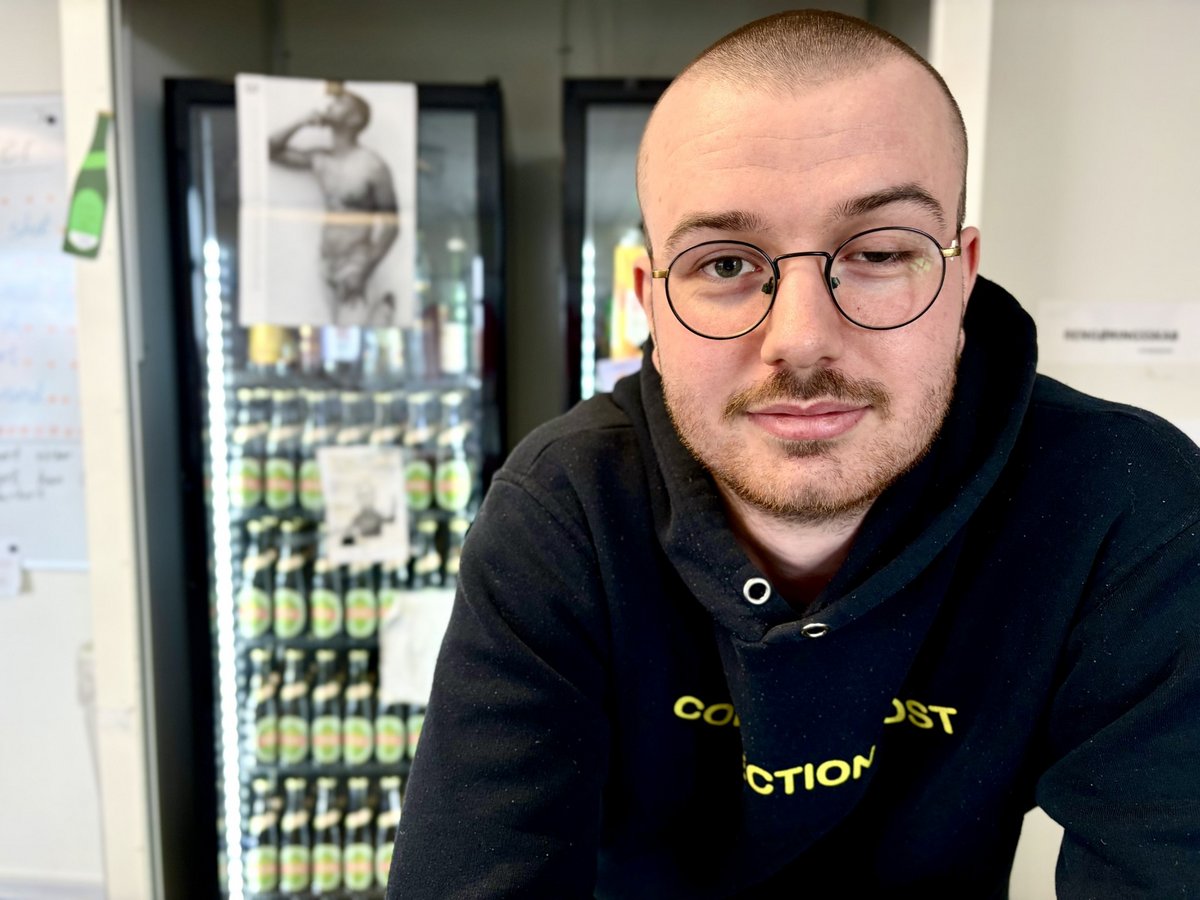
Jeppe Langhede Olsen is vice-chair of the bar committee. He is, of course, annoyed about the situation.
It's really disappointing not to be able to have a Friday bar. It's not just that we can't drink beer. It's also about us getting the income that the bar has generated. This means that we have far less money to distribute to the associations we support," Jeppe Langhede Olsen says.
Now the students are back in the buildings. However, it appears that Panta Rei will be hosting its Friday bar together with Global Studies at their Friday bat Globarl. At least until August.
"It's not ideal at all," Jeppe Langhede Olsen says.
While confusion still reigns among students in the affected buildings, most things are now under control, according to Niels Lehmann, Vice-Dean for Education at Arts.
He has been busy finding solutions since he was forced to send the students home.
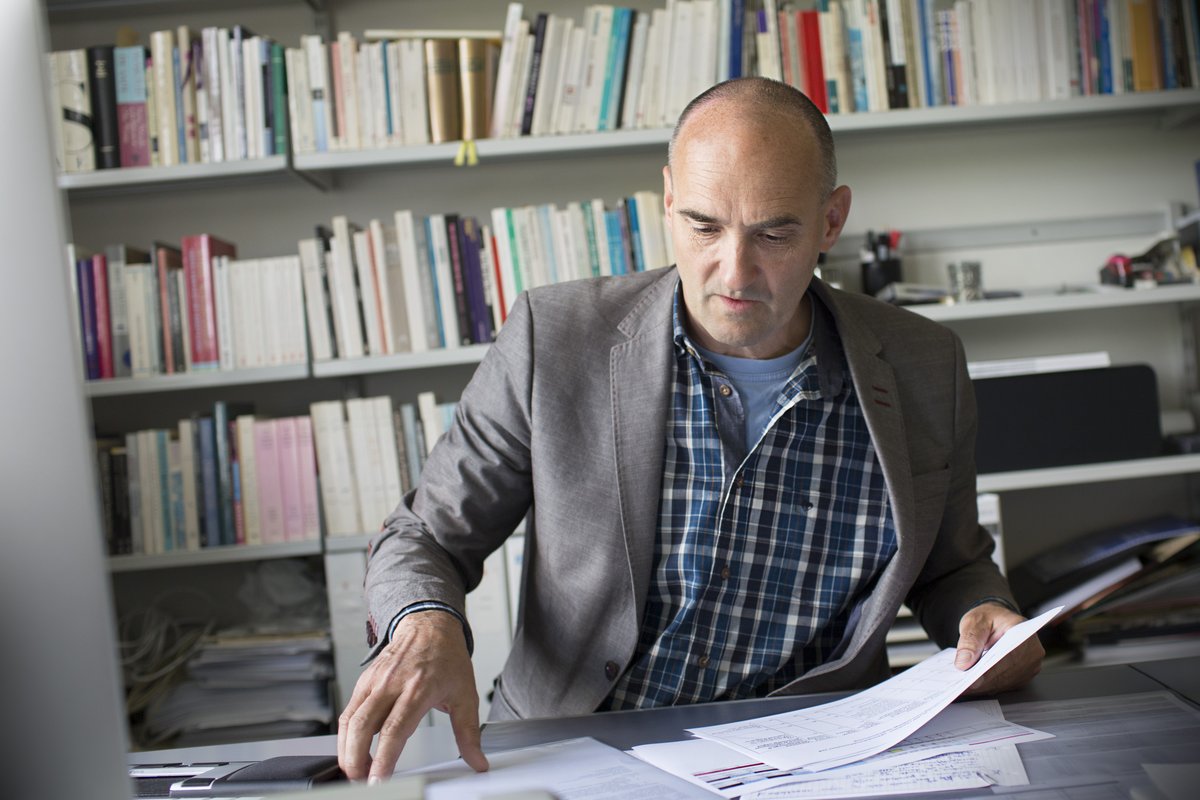
"We expect to have a complete solution in place by August, before the autumn semester begins," Niels Lehmann says.
Until then, there will be physical fire guards on duty from 8 a.m. to 4 p.m. After this, floors 3 and above will be closed, as is currently the case. The scheme will run until 21 May, according to Niels Lehmann.
"When the exemption period expires, we will once again be limited to 25 people on each floor, which poses a challenge in terms of conducting exams scheduled after 21 May," he explains.
The guards can only resolve the situation until 21 May because they are the result of a municipal exemption which, according to Niels Lehmann, allows for exemptions from fire safety requirements for 50 days if a permanent solution has been applied for.
We’ve agreed with FEAS, which owns the buildings, that they will install zone-divided warning systems on all floors. That is the warning system that should’ve been in place all along. They’ve started planning the task, and it will be completed by the end of August," Niels Lehmann says.
Only when the application for a permanent solution had been submitted to the local authority and the exemption had been granted, the work of finding physical fire guards could begin.
Jørn Højgaard Jespersen never imagined in his wildest dreams that one day he would be equipped with a megaphone and act as a fire guard when, as a retired civil servant in the postal service, he signed up as an exam supervisor.
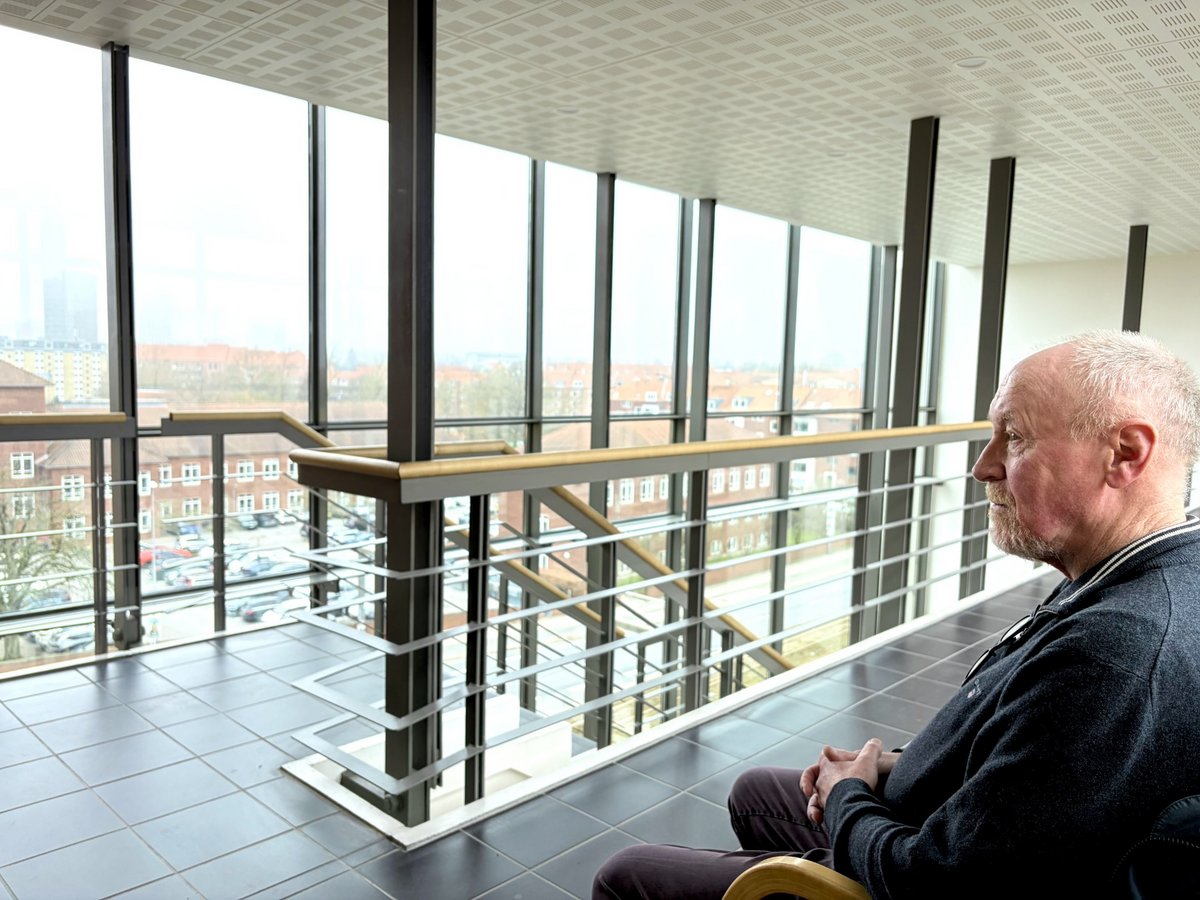
"But suddenly we were asked to solve this problem. It was short notice, but it suits me fine, and it's a good job. And then the view is really good," Jørn Højgaard Jespersen says.
His shift today is on the sixth floor, and during his inspections, he spends a few extra seconds in the room that offers a view over half of Aarhus from the corner of the building facing the intersection at Ringgaden and with windows on two sides.
The exemption applies only on weekdays. And only between 8 a.m. and 4 p.m. And only until 21 May.
After 21 May, teaching will be over, but unfortunately, the lack of fire warning in the classrooms will not.
Therefore, the affected rooms cannot be used for examinations or preparation.
"We're on the case, and we'll find some premises. Both for exams and exam preparation. We’ll communicate this directly to the concerned students and teachers a little later. We’ll also resolve the challenges faced by the associations that are unable to use their premises for the rest of the semester," Niels Lehmann promises.
On Tuesday morning, the students were invited to a meeting about the situation. Niels Lehmann hopes that he has succeeded in clearing up any confusion among the students, and he promises to continue communicating with them to limit any confusion.
The university has used the mailing list of exam supervisors to recruit the fire guards. The guards have had the opportunity to sign up for morning shifts from 8 a.m. to 12 p.m. and afternoon shifts, respectively.
Anders Lund, who’s on duty three floors below his colleague Jørn Højgaard Jespersen, says that he’d actually prefer to work the entire day. But this isn’t enough.
“We can only take one shift per day. They probably want to make sure we're on the ball," Anders Lund says.
He puts on his jacket to warm himself up a little in the cold stairwell. This morning's fire watch is coming to an end, but Anders Lund is already looking forward to his next shift tomorrow.
"It's three floors higher up, where the view is really good," says Anders Lund, returning to his book.
This text is machine translated and post-edited by Lisa Enevoldsen.