

Attended his first Student Council meeting in November 2024 – now he is chair
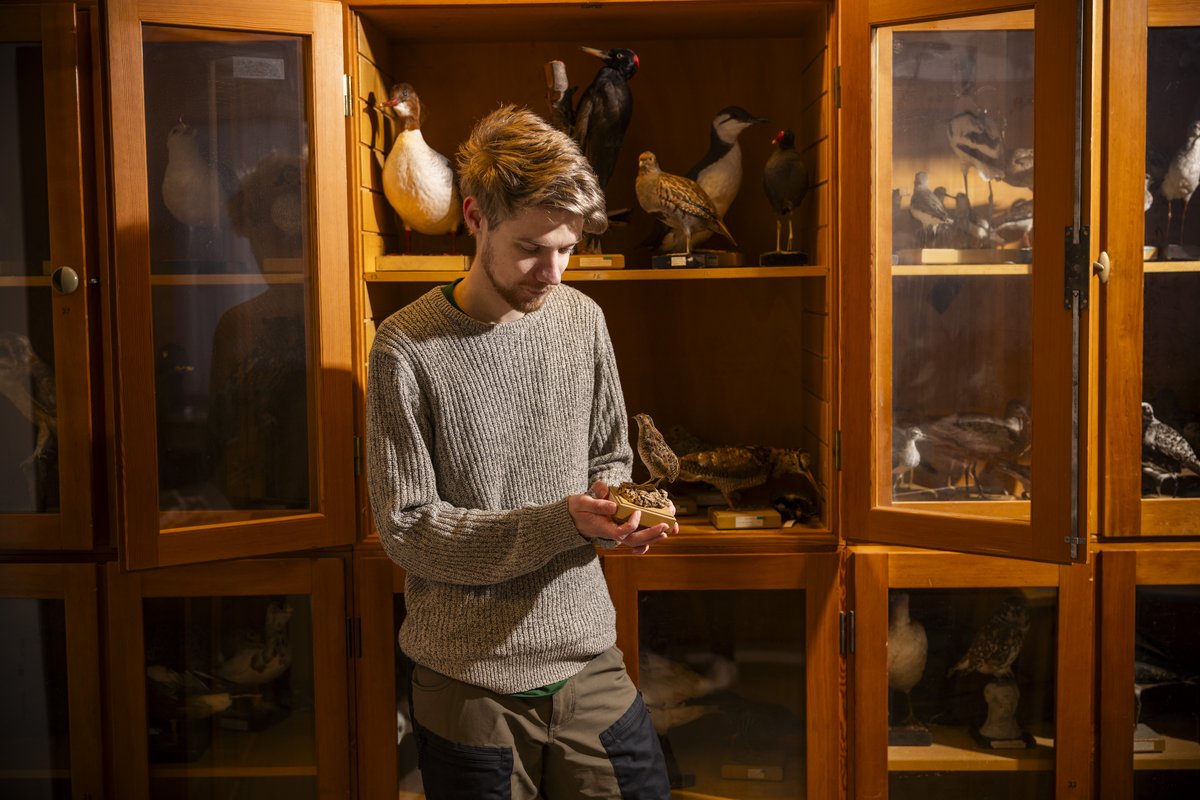
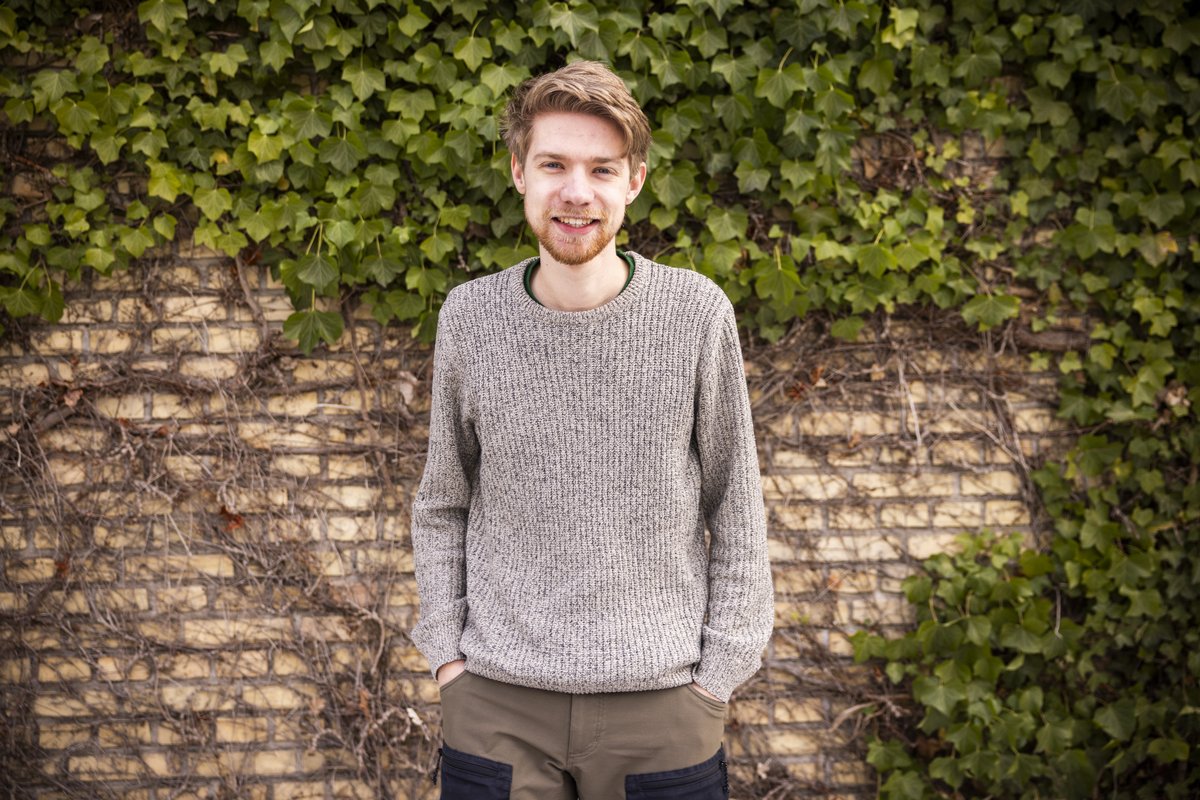
Christian Hansen thought his student political activities should unfold locally in his biology studies. Now, around a year since his first meeting, he has been appointed as the new chair of the Student Council and is embarking on a busy spring with degree programme reforms, a new grading scale and a general election.

FIVE QUIRKY QUESTIONS FOR CHRISTIAN HANSEN
The last time I was seeing red was because of: "... the world around us and the uncertainty that comes from outside. I think I can safely say that I have been angry about that. I think a lot about climate change and the political leadership in relation to it. The climate is important to me, and that is probably why I am studying biology. There must be a world for the generations after us, and we are not solving that right now."
Very few people know that I: "... can solve a Rubik's Cube in 30 seconds."
My favourite app is: "... Microsoft To Do. It's a to-do list that syncs with your calendar. That one, or E-reolen, where you can borrow audiobooks from libraries."
I feel my best when I: "... am in the Student Council hallway, surrounded by people. There has to be life, people and friends.”
My favourite place at AU is: “... around the lakes in Uniparken. There is always a good atmosphere and space for a nice walk.”
Christian Hansen's path to the position of chair of the Student Council has been straightforward and short. In November 2024, he attended his first official meeting with the Student Council in connection with the university elections, where he ran for the academic council at Natural Sciences, where he is studying biology in his fourth semester. And he actually thought that this was where he would unfold his student-political involvement.
But after a meeting in a forum across the five academic councils at AU, Christian Hansen became fascinated by student political cooperation across faculties and subsequently went all in on the Student Council.
The Student Council is unique because it brings together many students from different fields of study. It’s the hub that attracted me. We all have in common that we are students," he says.
"We have some of the same problems that need to be solved locally, and it's easier to solve something locally when you know how your neighbour has solved it," Christian Hansen says.
Christian Hansen tried hard to get a contested election for the chair position by trying to persuade others to run.
"I am pleased with the democratic process. It’s good for the community that there’s a choice. Not because you’re rejecting something, but because you’re choosing something, and that is difficult in a uncontested election," Christian Hansen says.
"Leading an organisation is a big task and a big responsibility," he says, adding that the timing was right:
Many people think that their studies are important. I agree, but I may be in a situation where I have more room for it in my schedule," he says.
CALENDAR FILLED WITH STUDENT POLITICS
The student political calendar offers a little bit of everything in the coming year for the new chair. The candidate reform must be implemented, negotiations on the new grading scale are taking place, and the Danish general election is (perhaps) just around the corner.
"We are living in changing times, and now is the time for the Student Council to stand strong and take specific action. We are the ones who will issue the first warning if something isn’t working," Christian Hansen says.
The new grading scale is not expected to be implemented until 2031 in higher education degree programmes, but negotiations on the design of the new scale will continue in the spring. The new chair is looking forward to a new grading scale:
"It's positive that there isn't such a big gap between the grades," Christian Hansen says.
The Master’s reform has also been a focus for Christian Hansen's predecessors, and he will also need to discuss the implementation of the reform at AU.
"I think ongoing feedback is important," he says, continuing:
"We are in contact with the people affected by the reform. If something isn't working, we're the ones who can quickly identify what needs to be fixed. Just because you are the first to take a particular programme, it doesn’t necessarily mean that you’ll get a poorer education," Christian Hansen says.
ELECTION PROMISES FOR STUDENTS
As mentioned, a Danish general election is also just around the corner, and the chair cautiously lifts the veil on a parliamentary debate similar to the one held by the Student Council in Stakladen in connection with the municipal elections in November.
During the municipal election debate, the chair at the time, Daniel Hjort, was quick to set the stage for what the candidates were to discuss. Christian Hansen would also like to see the general election focus on issues that concern students.
"Housing prices and food prices are clearly some of the biggest issues for students. The Danish Parliament has also signalled this by providing food vouchers. That debate is not over yet. Some major, systematic changes need to be made before it becomes better to be a student in Denmark," Christian Hansen says.
SAVED UP TO BE ABLE TO AFFORD UNIVERSITY
"There are also many who start university later than young people have done before. I think it reflects the fact that being a student can be stressful – both mentally and financially.”
This is a problem the chair is familiar with from personal experience:
"I couldn't afford to go to university and move to Aarhus when I graduated from upper secondary school. I had to work and save up," Christian Hansen says.
SUMMER, SUN AND STUDENT POLITICS
With a packed spring schedule, it’s reasonable to ask whether there will be more breathing room in the calendar when we reach the summer holidays. Admittedly, there aren't many private summer holiday plans to be found in Christian Hansen's calendar. However, as the autumn semester is usually a busy time for the Student Council, Christian Hansen will take a course at summer school to free up some time in his schedule for the coming semester.
Fortunately, he’s looking forward to Denmark's Political Festival with the Student Council in mid-June, he says. But as most university students know, there’s no summer holiday without exams, which means a trip to the exam centre in Lisbjerg.
"It's been a tough start with the exam centre," Christian Hansen admits.
“The conditions in the exam hall are what they are. This doesn’t mean that the circumstances surrounding them cannot be changed. We can get better exam dates for winter, and the exams can be scheduled further apart and more conveniently in relation to the summer holidays," he says.
"Part of our role is to help sharpen the university – and the exam hall is one of the places where the whetstone may be most useful," he says.
This text is machine translated and post-edited by Lisa Enevoldsen.