

AU research criticised in political conflict
The association behind Tuesday's tractor demonstration in the University Park criticises AU researchers for being in politicians’ pockets. "Completely absurd," replies the vice-dean.

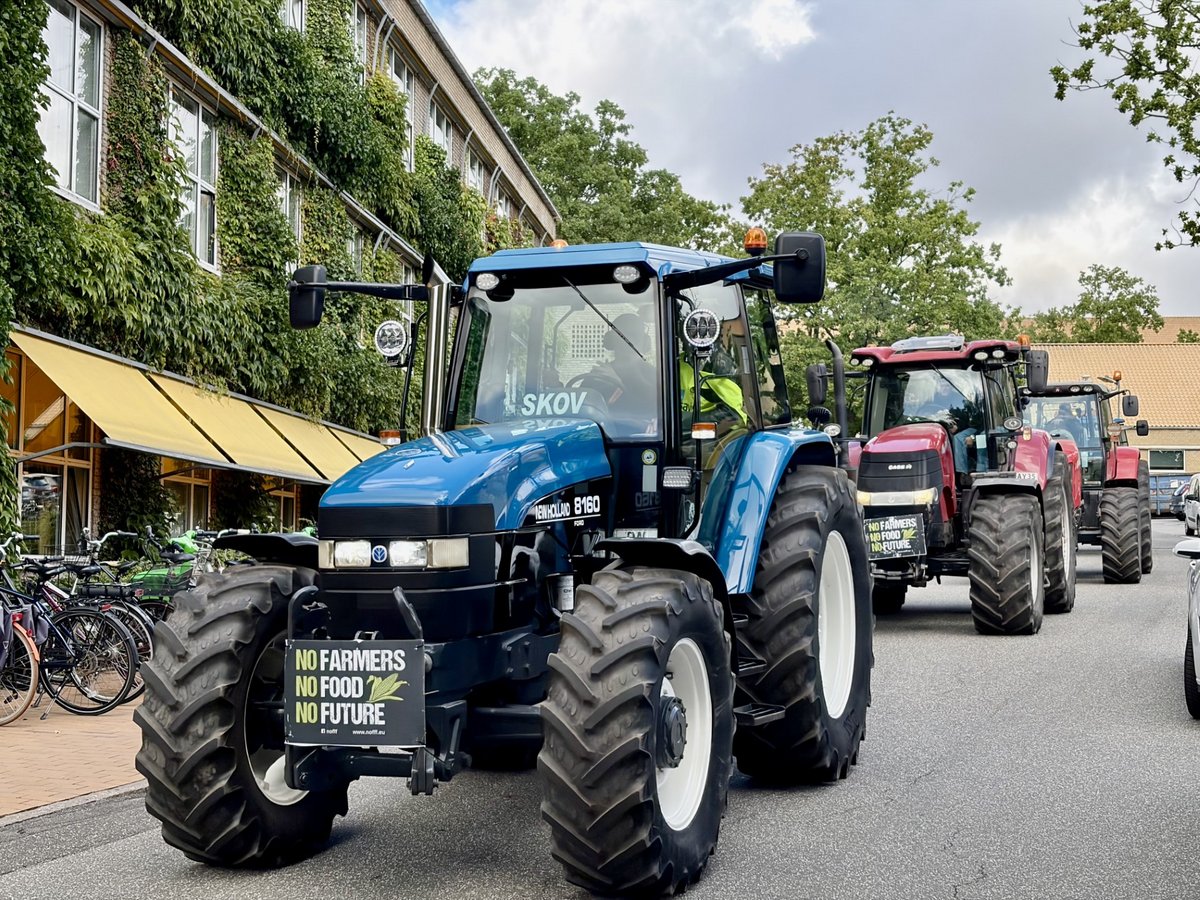
It is not every day that a fleet of tractors rolls into the University Park, filling the winding roads between the oak trees and the yellow-brick buildings of Aarhus University's campus.
But Tuesday was one such day. Behind the wheel of the 40 to 50 tractors that drove through the park were disgruntled farmers.
“I hope our demonstration can help draw attention to the serious problems with the legislation currently being introduced by politicians,” says Bent Hovalt Bertelsen.
He is a farmer, climate debater and spokesman for the farmers involved in Tuesday's demonstration on campus.
The dispute over new nitrogen regulations
From 1 January, agriculture will be regulated according to a new model. Under the new system, each farm will be assigned an emissions quota that sets a cap on the amount of nitrogen it may discharge into the surrounding marine environment. The law is part of the Green Tripartite Agreement.
Critics within the agricultural sector argue that the scientific basis for the calculations is too uncertain, that not all relevant factors have been taken into account, and that the regulations could have a severe impact on individual farms. Farmers also argue that the full consequences remain unknown, while the authorities point out that the provisional nitrogen discharge limits could change considerably from one area to another once the final calculations are available.
In addition, there is a dispute about compensation and legal rights.
The government and the broad political majority behind the Green Tripartite Agreement maintain that nitrogen emissions from agriculture must be reduced in order to improve the aquatic environment and for Denmark to be able to live up to the EU's Water Framework Directive.
Following the second reading of the Fertiliser Act today, the bill will proceed to a third reading and a final vote on Thursday.
During September, farmers should receive the final emission limits and their final quotas.
Sources: The Agency for Green Transition and Aquatic Environment and the Danish Parliament
Farmers are dissatisfied with the new Fertiliser Act, which is intended to reduce nitrogen emissions from agriculture into the marine environment. They believe that the consequences of the legislation will force many Danish farms out of business. They also believe that the economic impact on society could amount to as much as DKK 100 billion per year. They also argue that part of the responsibility for what the protesting farmers describe as a “catastrophe” lies with the policy support provided by researchers at Aarhus University to politicians and government agencies and institutions.
Criticism of AU researchers
While the organisation Sustainable Agriculture (Bæredygtigt Landbrug, ed.) travelled to Christiansborg to pressure politicians into pausing the new Fertiliser Act ahead of its second reading in Parliament today, NOFFF, No Farmers, No Food, No Future, headed to Aarhus University to confront the university’s management.
Bent Hovalt Bertelsen stresses that, in his view, many researchers are highly competent and do their jobs well.
However, he also believes that some researchers, as well as Aarhus University's leadership, are subject to political pressure when producing calculations related to the harmful effects of nitrogen emissions on the marine environment.
“Politicians want it to be agricultural nitrogen emissions that are causing the poor state of the marine environment. Therefore, they demand that researchers demonstrate that this is in fact the case. If the researchers fail to do so, they will not receive any more funding for their research. Then they will be free from research. That is why researchers do as they are told. That is the opposite of free and independent research. It's crazy, and it has to stop," says Bent Hovalt Bertelsen.
"A completely absurd thought"
Vice-dean at Technical Sciences Ole Hertel denies that the university's researchers are under political pressure when they deliver research results to politicians.
"No, it's a completely absurd thought. Researchers at Aarhus University provide independent, research-based science advice to the authorities. In this way, we contribute knowledge to society’s development. We provide research-based science advice to stakeholders with full independence and in accordance with the procedures set out in our ISO9001-certified quality management system,” says Ole Hertel.
Aarhus University, its researchers, and the policy advice they provide now find themselves at the centre of a heated political conflict because the university has helped produce the calculations that will determine how much fertiliser farmers will be allowed to apply to their fields in the future.
The new regulations, which are expected to take effect at the turn of the year, mean that future fertiliser use will increasingly be regulated according to the amount of nitrogen calculated to be released from individual fields.
Inadequate according to farmers
Here, the word calculated is crucial. Politicians have asked researchers to develop the NUAR calculator. NUAR stands for New Emissions-Based Land Regulation. The model uses a wide range of parameters to calculate how much nitrogen is released from each individual field. This work has been carried out by the DCA – the Danish Centre for Food and Agriculture at Aarhus University, which provides research-based science advice to government agencies and institutions, and politicians.
Jørgen Eriksen, professor and head of section at the Department of Agroecology at Aarhus University and project manager for NUAR, has previously outlined the work behind the initiative and explained how the model functions in a university news article (In Danish, ed.).
“Based on the current body of knowledge, NUAR provides reliable estimates of nitrogen leaching. But the calculator must of course be further developed when new knowledge becomes available. Trials involving vegetables and potatoes are also under way and may be incorporated into future updates of the model. When new measures are to be included in the calculations, it is also crucial that their effect is documented," Jørgen Eriksen says in the news article.
The researchers’ arguments do not satisfy the farmers, however. They argue that the model is flawed precisely because it relies on calculations rather than precise figures based on actual, measured emissions from individual fields.
“When we do not measure what is actually being released into the marine environment, and when we fail to take account of all the sources of emissions that do not originate from agriculture, we will continue doing something that does not work. We have reduced nitrogen emissions in agriculture for 30 years, and the aquatic environment is getting worse and worse. It doesn't work, and it won't this time either. On the other hand, it will have major consequences in agriculture, where many farms may be forced to close, and the cost to society as a whole will be enormous,” says Bent Hovalt Bertelsen.
What is NUAR?
NUAR stands for New Emissions-Based Land Regulation and is a calculation tool that will be used in the new nitrogen regulation in 2027. NUAR does not determine the farmer's quota, but provides part of the basis for calculation. Environmental goals, reduction requirements and specific regulations are set by policymakers.
The model calculates – it does not measure – how much nitrogen is released from individual fields, and draws on information about soil type, climate, runoff, crops, fertiliser application and other factors.
NUAR has been developed by the Department of Agroecology at Aarhus University in collaboration with, among others, the University of Copenhagen. The project was commissioned and funded by what was then the Danish Agricultural Agency.
Source: DCA – Danish Centre for Food and Agriculture (In Danish, ed.)
They had therefore come to the University Park to raise awareness of their cause and to start a conversation with the university.
"We would have liked to have held a meeting on the lawn in the park, but we were turned down when we approached the management," says Bent Hovalt Bertelsen.
According to Vice-dean Ole Hertel, however, the association was not completely rejected.
"Last Thursday, we had the pleasure of welcoming Bent Hovalt Bertelsen and a colleague for a cup of coffee here at the Faculty of Technical Sciences. One of our staff members had a good chat with them, and we were able to express that we understand that the nitrogen regulations will affect their industry and livelihoods.”
“A request was made for AU to take an active part in the tractor demonstration. “However, we have concluded that this is primarily a matter for the political system, as it concerns the consideration of a specific bill. We encouraged them to notify the police of the demonstration and to show particular consideration for Aarhus University’s students and staff on the day,” says Ole Hertel.
At the same time, he stresses that Aarhus University focuses exclusively on the research itself and on providing research-based advice to national authorities, government agencies and the public administration.
"Politics and the specific legislative work belong in the political system," says Ole Hertel.
Demonstration on campus raises eyebrows
When a tractor rolls through the University Park, most people turn their heads. But when 40 to 50 tractors rumble around campus, most stop in their tracks to watch the procession pass by.
Including the chair of the Student Council, Christian Hansen. He studies biology and, of course, supports academic freedom, which is what the demonstrators are calling for. But he struggles to understand why they are demonstrating at the university.
“Demonstrating at a university because you do not like certain research findings is a bit like peeing your pants and then putting on a blindfold. You’ve still peed your pants. This is ultimately a question of values, and I do not believe good decisions are made with a blindfold on,” he says, arguing that the demonstrators are directing their protest at the wrong target.
"The university tries to contribute new knowledge to the decisions politicians make. It is not the researchers who make the decisions, so it does not make sense to protest here," says Christian Hansen.
Focus on the challenges
Politically, the NUAR calculator is also the subject of debate. Precisely because it relies on calculations rather than direct measurements of nitrogen runoff from individual fields. There has been considerable debate, particularly in recent days, about the consequences of the forthcoming requirements to reduce nitrogen pollution from Danish fields.
The final requirements governing the specific regulations have yet to be determined, and the Minister of Nature and Animal Welfare, Christian Rabjerg Madsen (S), has established an expert group to stress-test the calculation basis.”
“We simply must not end up in a situation where, because some people are calling for more information and more data, we fail to make the decision needed to protect our fjords,” the minister said in a response to members of the Danish Liberal Party, Marie Bjerre and Stephanie Lose, on 20 August.
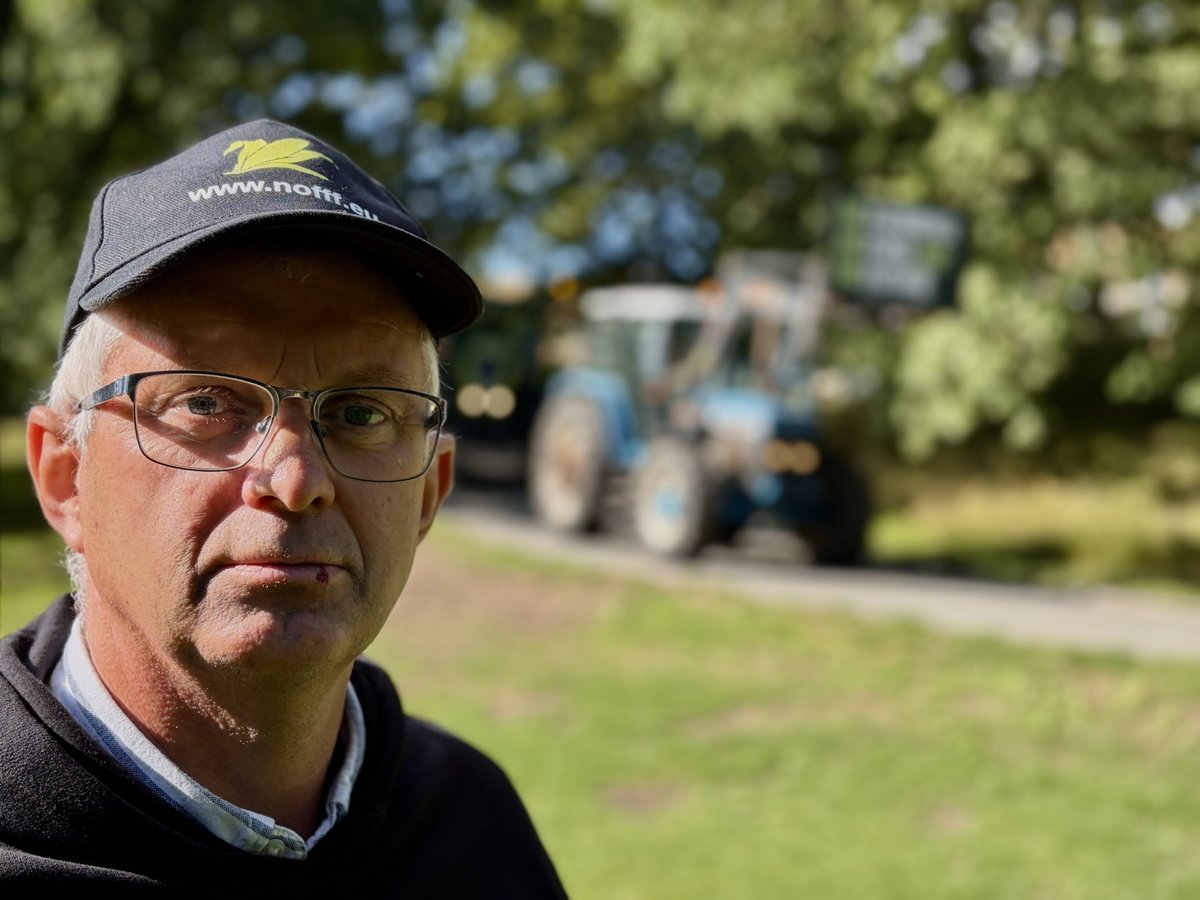
After today's demonstrations in the University Park and in front of Christiansborg, Bent Hovalt Bertelsen hopes that the politicians will pull the brakes and put the new bill on hold.
"Now we've done what we could," he says.
The bill, known as L5, is due to receive its second reading in the Danish Parliament today and is expected to be passed following its third reading on Thursday, before entering into force on 1 January 2027.
This text is machine translated and post-edited by Mie Skov Jeppesen.