

AU students with diagnoses meet in drop-in groups and exchange experiences: "I felt like I was the only one struggling"
Students from the Cognitive Science and Linguistics programmes have started a drop-in group for students with mental or physical disabilities. They meet twice a semester and share experiences of being a student with a diagnosis. Both initiator Sabrina Zaki Hansen and department head Joshua Skewes encourage other education programmes to embrace the idea.

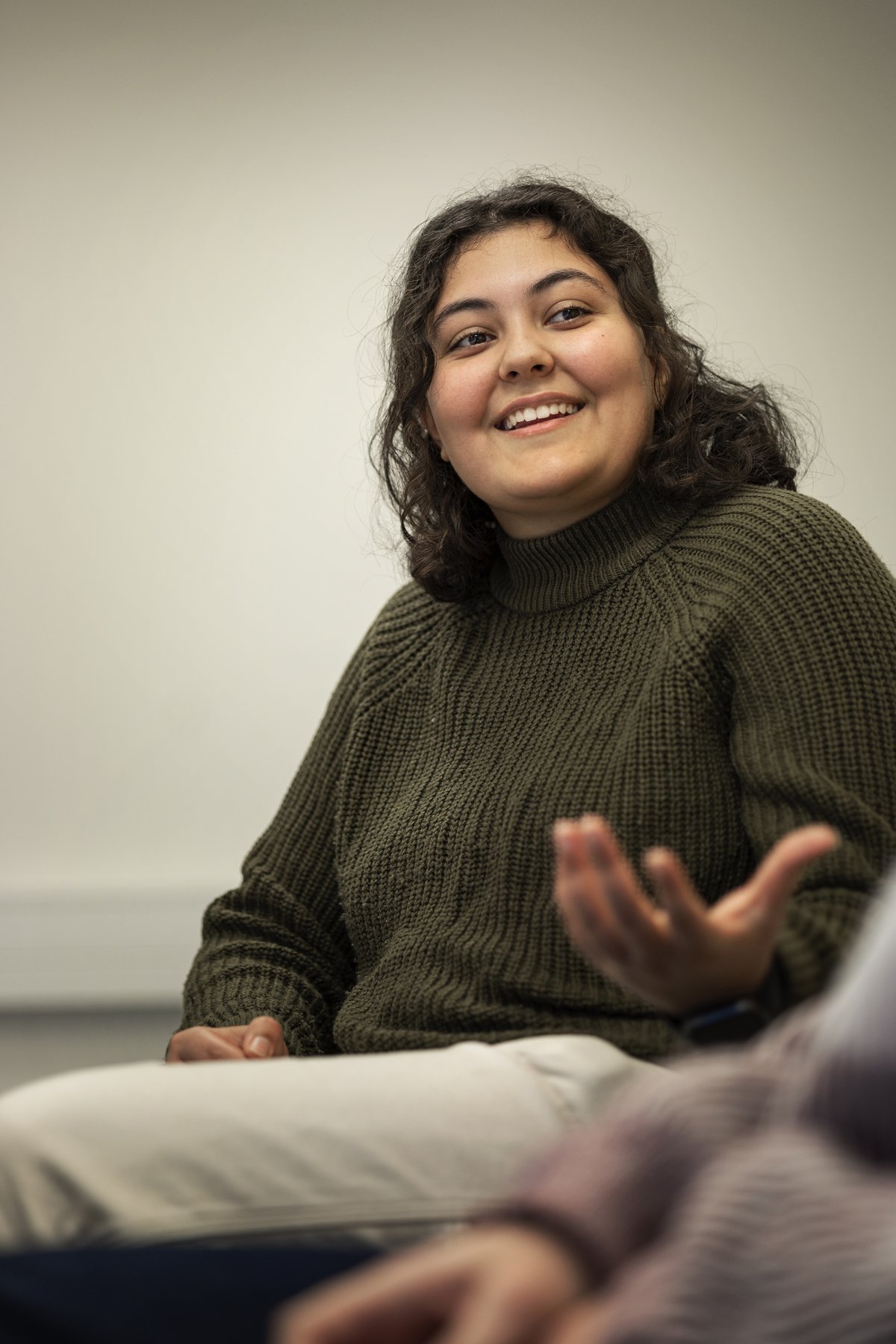
“Normally there’s coffee and cake on the tables,” says Sabrina Zaki Hansen when Omnibus meets her in the room where the drop-in group for students with diagnoses in Cognitive Science and Linguistics usually meets. She is the initiator of the group and currently studies Cognitive Science in her 9th semester.
“I used to feel a little alone with my diagnosis, and that I'm the only one struggling,” says Sabrina Zaki Hansen, explaining that the need to look to other students with a diagnosis was the starting point for establishing the group. Personally, she herself suffers from chronic pain.
At the end of 2024, she therefore reached out to Joshua Skewes, head of department of Linguistics, Cognitive Science, and Semiotics, who quickly responded and was very positive about the initiative.
“When Sabrina presented her idea to us, we wanted to do everything we could to help,” Joshua Skewes tells Omnibus in a written response.
The department supports the initiative in practical terms by covering the cost of coffee, tea and cake for the meetings, and a departmental consultant assists the students with booking rooms.
You aren’t alone
When the drop-in group met for the first time back in February, a counsellor from The Counselling and Support Centre at AU participated to help facilitate the conversation. However, the three subsequent times have been without an adviser from AU.
“We agreed that we liked the format better, where those in the room are part of the target group - and that the conversation shouldn’t be facilitated from the outside,” says Sabrina Zaki Hansen. The group meets twice per semester, and there are typically 5-10 people attending the meetings.
“When we are few, it gives room for vulnerability, but when we are more, it gives a feeling that you really aren’t alone and that there are more people you can relate to,” Sabrina Zaki Hansen points out regarding the attendance, which varies from time to time. The drop-in format means that it isn’t necessarily the same students who come each time.
“The most important thing is that students know that the offer exists,” adds Smilla Hachmann, who is studying linguistics in her third semester and has attended three out of the four meetings. Like several of the other members, she heard about the group through other students.
NOT GROUP THERAPY
There's no specific agenda at the meetings, but they often begin with Sabrina Zaki Hansen taking the floor to outline the framework for the space and make sure that it's a confidential and safe space.
“I make sure that we share our names, pronouns, and, if you want, your diagnosis,” says Sabrina Zaki Hansen, pointing out that she also makes sure that everyone has the opportunity to provide input. She also clarifies if there are any triggers that the students do not want to talk about along the way. The meetings are scheduled to last 1 hour and 45 minutes, but often run into two hours when there’s a lot to discuss.
Here, they talk about what is on each person’s mind, which can vary greatly from meeting to meeting, but there are also some common themes.
“How do you structure your life with both study and self-care, which is especially important when you have a diagnosis,” says Sabrina Zaki Hansen and continues: “It has also been about what help and resources are available. Who should you contact if you want help with disability allowance for SU, exam aids or get a mentor," reports Sabrina Zaki Hansen.

At first, Smilla Hachmann had expected it to be almost group therapy, but the meetings are also largely about the practical aspects of being a student with a diagnosis.
“It's very nice that it's not group therapy,” says Smilla Hachmann
“It's very nice that it's not group therapy, but rather that you relate to each other and share practical experiences and tips,” Smilla Hachmann explains, who has both physical and mental challenges that affect her energy level and stress.
Another recurring theme at the meetings is the students' expectations of themselves.
“How to set realistic expectations without pushing yourself too hard. This applies both to studies in general, but also in relation to exams," Sabrina Zaki Hansen emphasises.
OKAY WITH USING AIDS
Both Sabrina Zaki Hansen and Smilla Hachmann benefit greatly from sharing their challenges and experiences with the others in the group.
“I feel like this is a space where I am sure there is someone who will understand what I share,” Sabrina Zaki Hansen says. She may generally have difficulty talking to friends who don't have a diagnosis about the same things she shares in the group. Smilla Hachmann agrees.
“It's really cool that you can share something without having to explain much before the other students understand what I mean or can relate to it,” she says.
It’s also their experience that it’s a very vulnerable space, where students quickly feel safe sharing what can be difficult.
For Sabrina Zaki Hansen, the meetings in the drop-in group have meant that several of the challenges she otherwise faced alone have become more normalised.
"It has helped me to be more okay with using aids," Sabrina Zaki Hansen says
“It has helped me to be more okay with using aids and generally asking for help because we in the group talk about it positively. It's not something that makes you inferior or means you're cheating. Instead, it will be something uplifting,” Sabrina Zaki Hansen emphasises. Almost nine per cent of AU's students receive special support due to physical or mental challenges.
“Just do it!”
After a year, the call is clear from both the students and the head of department: Other education programmes can benefit from copy-pasting the initiative.
“It’s been great to see the group do so much good, and to see others recognise this. If students from other departments wanted to develop this sort of group, I’d certainly recommend their heads of department help them out where they can,” says Joshua Skewes in a written response to Omnibus.
Sabrina Zaki Hansen also hopes that the heads of department at AU will support similar initiatives, now that they can see that it works in Cognitive Science and Linguistics.
“It doesn't have to be huge with 50 people and an employed coordinator from SPS (Special Educational Support, ed.). "It could also just be some students who have a room with some coffee and cake," Smilla Hachmann points out.
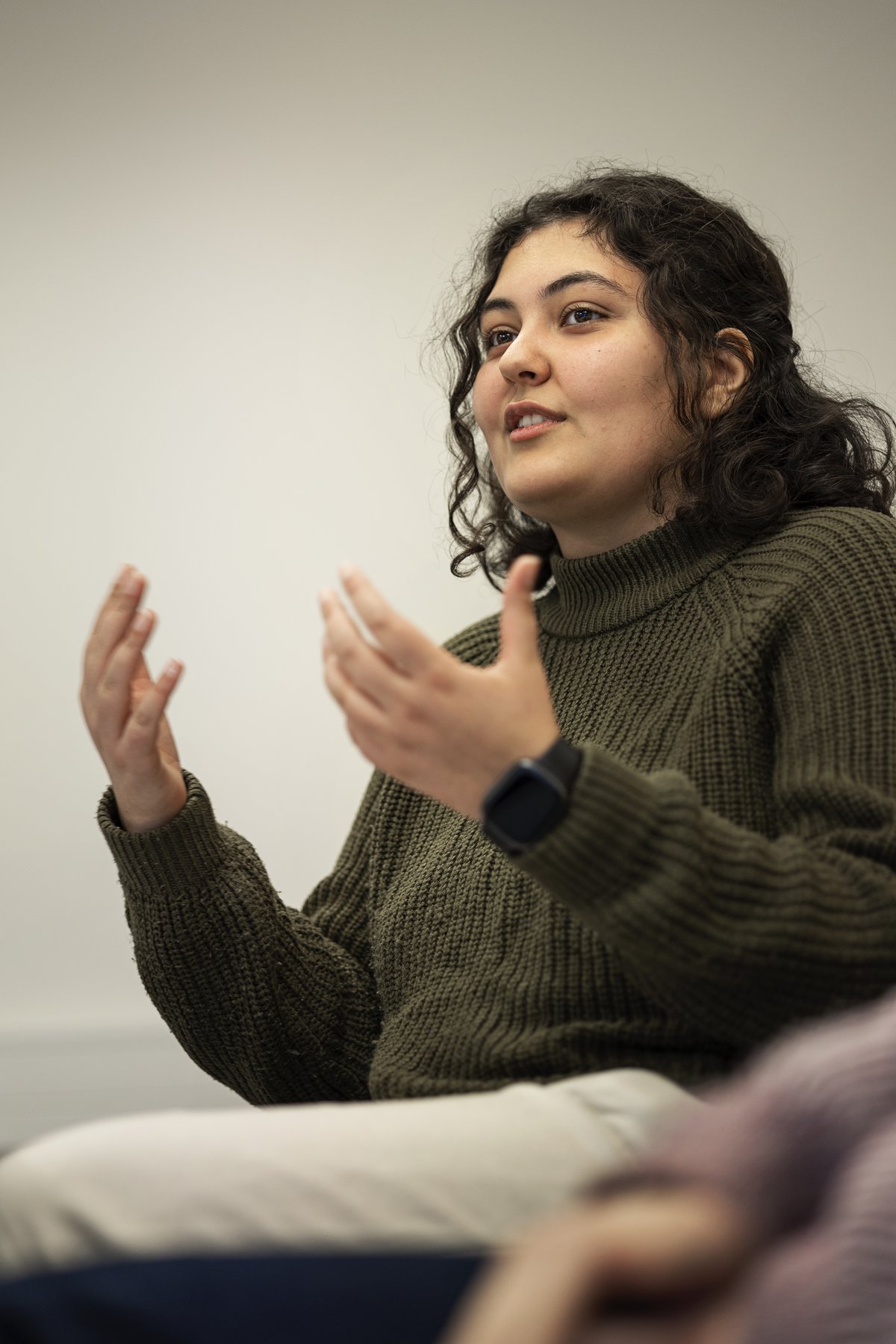
“Just do it! You really get a lot out of it," Sabrina Zaki Hansen concludes.
This text is machine translated and post-edited by Lisa Enevoldsen.