

Closure of canteen puts a strain on student volunteers
The renovation of the BSS canteen has disrupted the usual routines of the student associations. According to two associations, the consequences could be significant.

Right now, the BSS canteen is closed. It is being renovated so that, early next year, it can reopen as a modern and functional combination of canteen and library, situated between the yellow-brick buildings of the University Park and the newer red-brick buildings of the University City.
"The canteen really needs an update. We want to create a modern and more open building that can serve as a vibrant hub and gathering place, bringing together a canteen, study spaces and a library under one roof,” says Morten Rask, vice-dean for education at Aarhus BSS.
Although none of the associations interviewed by Omnibus have heard calls for the canteen to be renovated, they acknowledge that the renovation may be necessary.
Student associations short of space
However, the timing of the project and the way it has been managed have placed unnecessary pressure on the student volunteers who run the student associations, says Simon Krogsgaard Jensen, a member of the Coordination Committee of Politologisk Forening (The Politological Society, ed.).
He spends around 15 hours a week volunteering to help create the best possible environment for students of Political Science.
“The closure means we are short of spaces large enough to host the academic and social events we organise, some of which attract up to 300 people. I’ve spent a significant amount of time solving problems that could have been avoided if we had been involved earlier in the process," says Simon Krogsgaard Jensen.
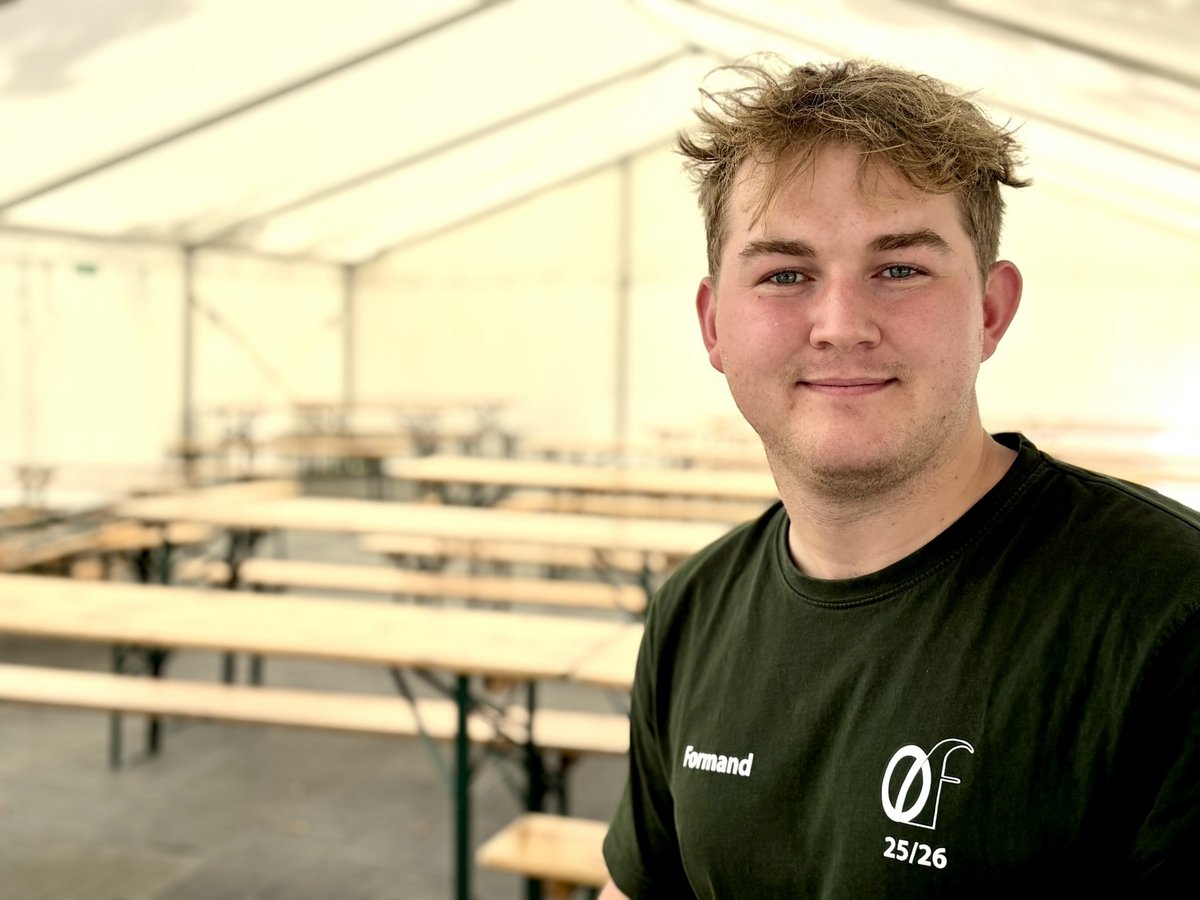
Frederik Chalmer Rasmussen, chair of Økonomisk Forening (The Economic Association, ed.), shares that view. This association is also heavily reliant on having access to large spaces for its events.
“We learned about the canteen renovation through our department. Initially, we were told that the work would be carried out during the summer holidays, but in April we found out that the canteen would remain closed for the entire semester. This can have some very significant consequences," says Frederik Chalmer Rasmussen.
In the worst-case scenario, the result could be a significant decline in the student environment. Frederik Chalmer Rasmussen fears that, in the coming months, it may become much more difficult to recruit new volunteers willing to take on roles within the student association.
“If we cannot organise the events we want, and therefore cannot show what a fantastic student environment we have and how rewarding it is to volunteer with the association, I am concerned that no one will stand for election at our general meeting in November. That is, if we can find somewhere to hold it at all,” says Frederik Chalmer Rasmussen, referring to the fact that, from the autumn break, when the temporary tent is removed, until early next year, there will be no rooms large enough to accommodate, for example, a general meeting.
Temporary tent for parties
As early as last semester, many of the students responsible for planning the orientation week for new AU students were already aware of the challenges the upcoming canteen closure would create.
Esther Enig and Mads Holst are both students and have worked as freshers’ week secretaries at the Department of Political Science since March. They are responsible for coordinating the orientation week for the new Political Science and Social Science students. According to them, the fact that the BSS canteen will be closed throughout the autumn semester has been a defining factor in planning this year’s orientation week programme. Traditionally, the canteen has served as a key gathering place for new students.
"It’s especially been a challenge to find rooms that are large enough since we cannot use the canteen. For example, we had to find a room with space for 270-300 students for a social dining event and for the freshers’ party," they say.
They have been in contact with the department, the faculty, and freshers’ week secretaries from other degree programmes to determine which rooms they could use and when.
The faculty has decided to place a tent in the north-eastern corner of the park, which its students will be able to use for Friday bars until the autumn break.
“However, there has been some uncertainty about when the tent would be available and how many people it would be able to accommodate,” they explain.
Challenges the study environment
For Simon Krogsgaard Jensen from Politologisk Forening and Frederik Chalmer Rasmussen from Økonomisk Forening, the new students’ experience of life on campus is an important part of sustaining the student environment within their degree programmes.
They therefore find it surprising that the management at Aarhus BSS did not involve the student associations much earlier in the planning process.
“On the one hand, Aarhus BSS prides itself on having an excellent student environment, yet on the other, students are not brought into the conversation early enough when plans are made for something like a canteen closure, which has such a significant impact on the student associations," says Simon Krogsgaard Jensen.
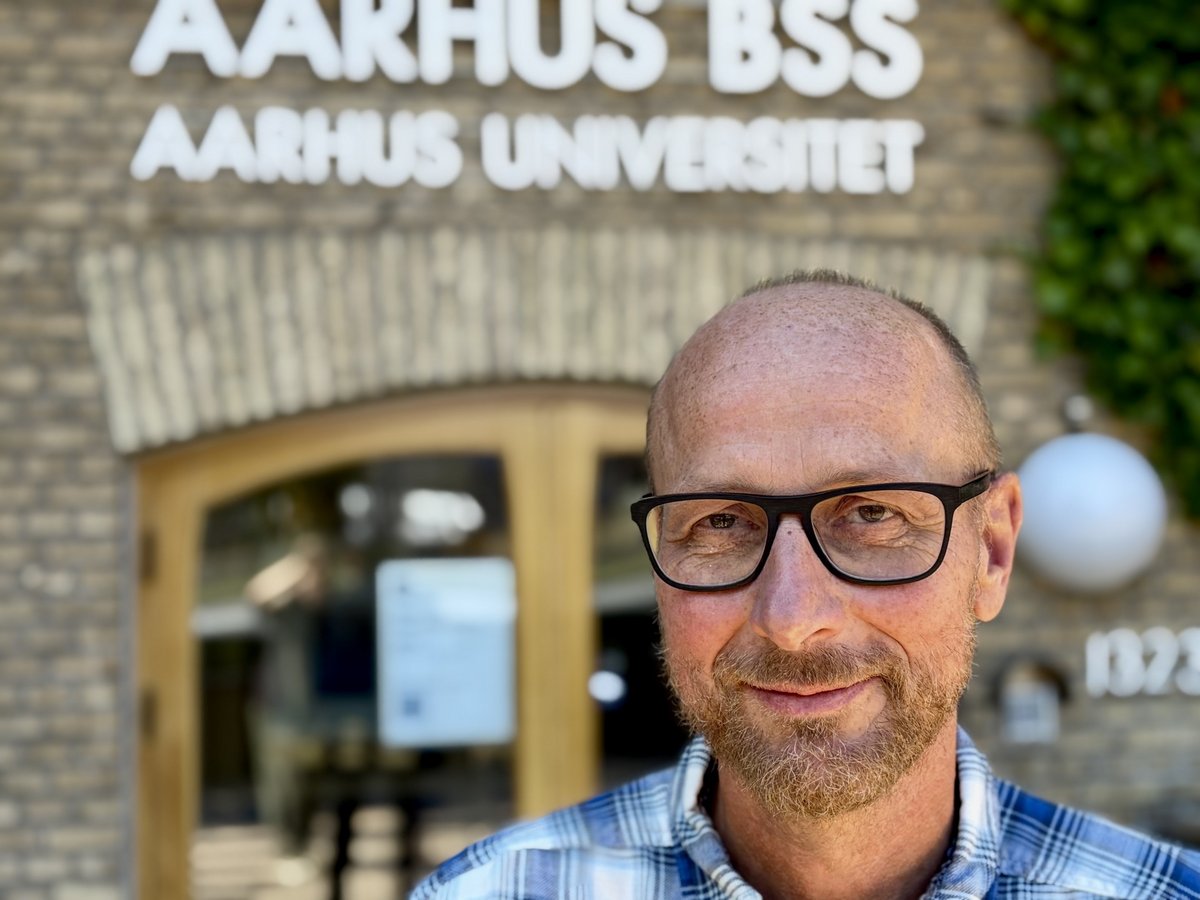
Vice-Dean for Education at Aarhus BSS, Morten Rask, acknowledges that the conditions for the student associations' activities are not optimal in the current semester.
“That is always going to be the case when changes are made, but I believe we have done everything we could to engage with the student associations about what is going to happen,” says Morten Rask.
He says the plans for the canteen renovation were first presented to the student associations at a meeting in October 2024, but acknowledges that it was only at the semester meeting in April that it became clear the renovation would continue throughout the entire semester.
“We shared that information with the students as soon as we received it," says Morten Rask.
Dialogue between the Dean, the Vice-Dean and the student associations has been formalised to ensure regular meetings between the parties. However, the meetings are informal and no minutes are taken. As a result, it can be challenging for the student associations, which experience a high turnover of members, to keep track of what and when information has been communicated. All student associations at Aarhus BSS are invited to the semester meetings.
The students do not entirely agree that the faculty has done what it could to inform them. They argue that students of the faculty were not kept sufficiently informed about the what, the how, the when, and the ‘so what now?’.
“We have raised the issue at our meetings and shared information about the arrangements surrounding the canteen closure, including in a news article published on 17 June,” says Morten Rask.
Calls for better communication
However, the two student association representatives point out that few students are likely to read a news article published in mid-June, as many have already left for the summer holidays.
“I had to post about it myself in our Facebook group in May, as more than a month after the meeting in April, no official communication had been sent out. It surprises me that there is not a bigger focus on getting the information out," says Simon Krogsgaard Jensen.
Many of the problems facing the student associations could have been avoided had there been a clearer plan from the outset, Frederik Chalmer Rasmussen argues:
"Once we were told that we could not use the canteen for an entire semester, many events were already planned. Many of us who volunteer in the student associations have had to put a great deal of extra effort into finding solutions. I do not feel there has been much support from the faculty, nor much understanding of the challenges we have faced,” says the chair of Økonomisk Forening.
As a member of Politologisk Forening’s Coordination Committee, Simon Krogsgaard has a clear message for the faculty leadership team.
“I would encourage earlier and more effective communication between the faculty and students. I believe that better communication and greater receptiveness to our input would make a big difference. Of course, it is not for us to decide what the faculty should do, but we are the ones who spend our free time supporting the student environment,” he says.
Vice-Dean Morten Rask would like to thank the student associations for supporting the faculty’s efforts to invest in and develop an attractive student environment. He emphasises that the faculty leadership is always open to improving communication.
“However, we do not quite share the view that there has been a lack of communication on this matter. Information has been shared at regular intervals since 2024, and as soon as the specific construction schedules were confirmed. We fully understand that a semester is a long time in the context of a degree programme. However, we are confident that students will be very pleased with the new facilities for the study environment and activities of the student associations, which is ultimately what this project has been about: creating a better environment for both,” says Morten Rask.
With the temporary closure of the BSS canteen, a lot of study spaces also disappear. In the canteen alone, there are 250 spaces, and upstairs there are an additional 80 that will not be available in the upcoming semester. As a result, this year’s campus tour for new students will also include a stop at the University City, where a number of new study spaces have been created, including at the City Auditorium.
This text is machine translated and post-edited by Mie Skov Jeppesen.