

“Right at that moment, I’m the real pig”
On the one hand and on the other hand. There is no single correct stance, but animal experimentation re-mains the best compromise in an ethical dilemma that cannot be resolved, according to zoophysiologist To-bias Wang and laboratory animal veterinarian Aage Kristian Olsen Alstrup. Together, they teach a course on animal experimentation, drawing on a 75-year-old quote by Karen Blixen.

In the basement beneath the yellow brick building of Zoophysiology, snakes lie side by side in boxes. The room smells slightly of animal feed, and both the temperature and humidity send the senses wandering.
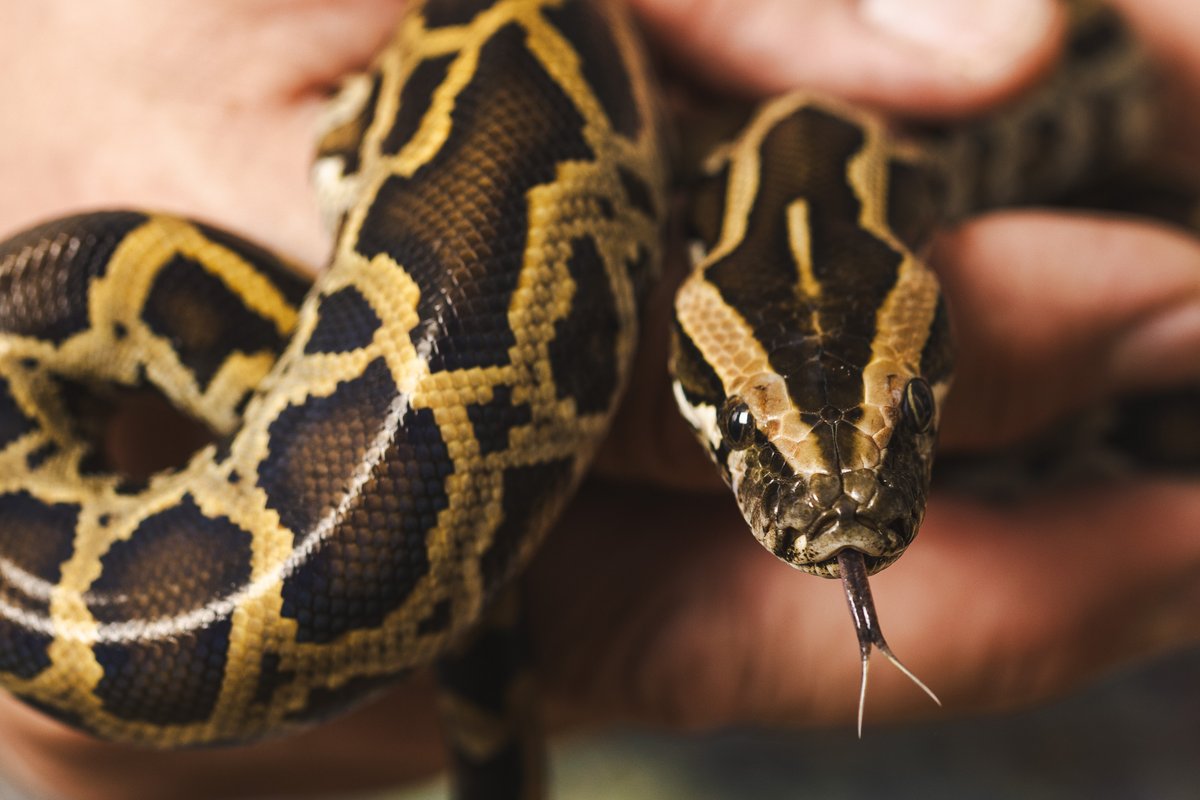
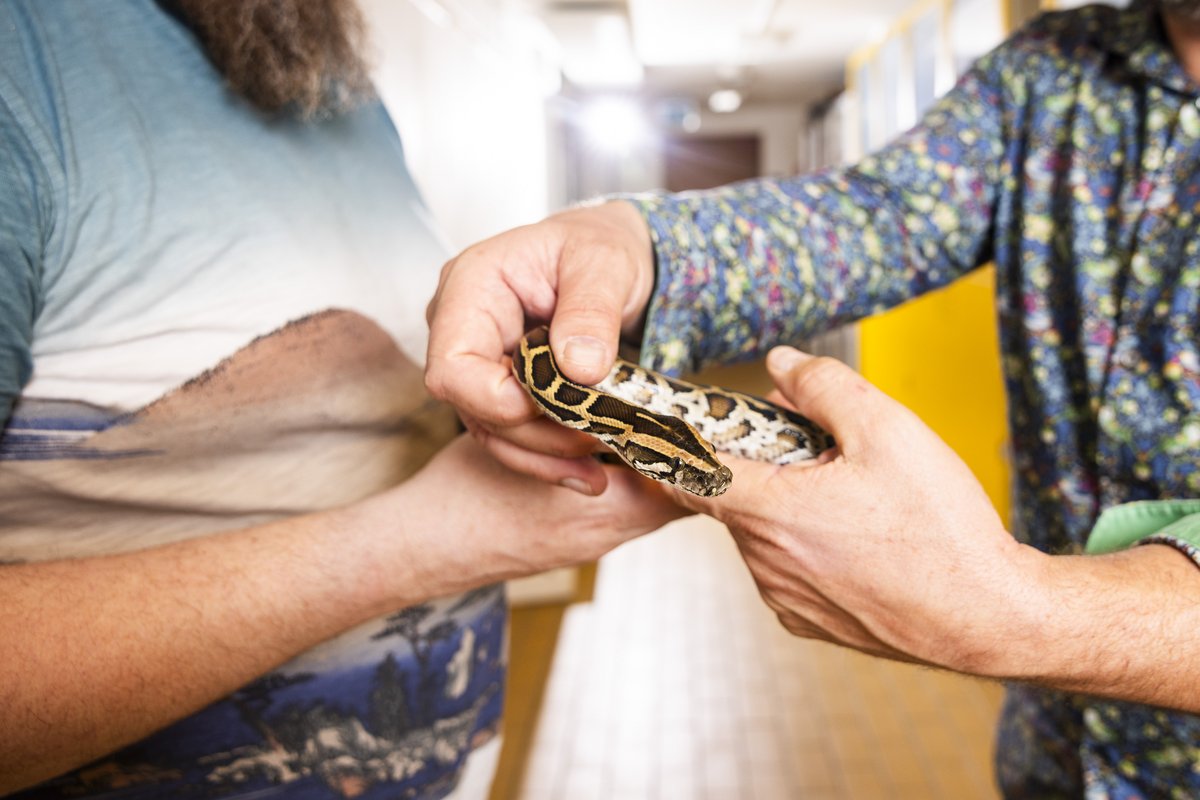
“A tiger python eats a quarter of its own body weight in one go, and then it grows incredibly quickly and can become really huge. That’s one of the reasons why you’re not allowed to keep them as pets, but it makes them ideal for studying how muscles grow and develop,” Aage Kristian Olsen Alstrup explains.
The young tiger python doesn’t realise that it’s a laboratory animal at a university, and that the purpose of its life is to provide humans with new insights. But Aage Kristian Olsen Alstrup knows. He’s a laboratory animal veterinarian and has dedicated his working life to acting as an advocate for laboratory animals in Denmark.
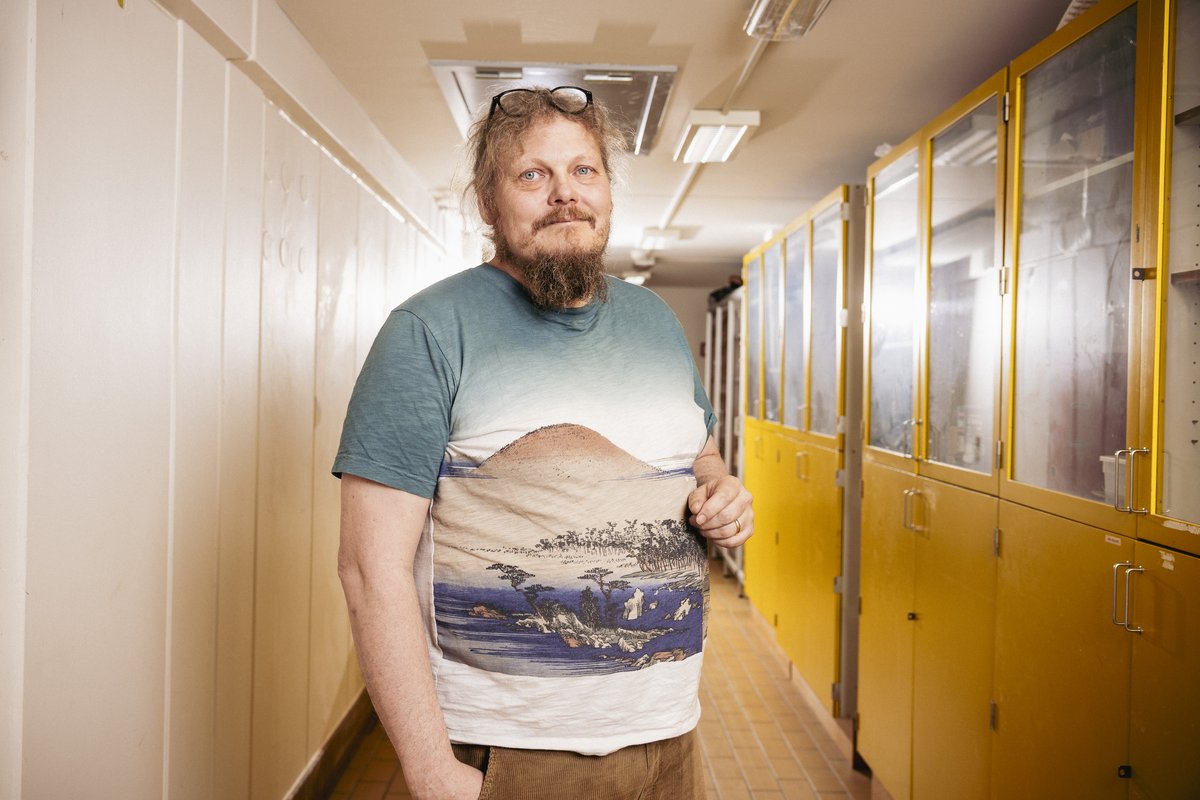
His colleague Tobias Wang has also dedicated his working life to animals. He is a professor of Zoophysiology, where his responsibilities include overseeing the experiments carried out on animals in the basement of Aarhus University.
“Animal experimentation essentially involves deliberately and intentionally subjecting an animal to something potentially unpleasant that the animal hasn’t asked for and that isn’t in its best interests,” Tobias Wang states.
It’s for the sake of our dignity
The two serve together on the council that assesses and approves all animal experiments in Denmark, and they also teach twice a year on a mandatory course for anyone wishing to work with laboratory animals in Denmark.
During the course, students are always presented with a quote from Karen Blixen taken from a speech she was due to give at a debate at Aarhus University in April 1951, where she had been invited to speak on the subject of laboratory animals.
Karen Blixen fell ill and had to send her colleague Bjørnvig to deliver her speech, but although the baroness was unable to attend herself, her surprising views on animal experimentation have gone down in history:
“We are moved more when we read about children’s suffering than when we read about the same suffering in adults. Animals are even more defenceless in our hands than children. It is for the sake of our dignity, for the sake of our good name in the universe, for the sake of our honour, if you will, that we must not leave them without legal rights. For it is indeed a matter of great importance to preserve human life. “But it is even more important to make human life worth preserving,” reads Karen Blixen’s quote from her lecture at Aarhus University on 23 April 1951.
“It’s so beautiful that she looks beyond the animals’ potential suffering and also emphasises that this is about our own dignity as human beings. If you want to carry out animal experiments, you end up doing something inhuman to yourself. You cross a line in terms of how one ought to behave because, no matter how well you conduct the experiment, you are, to some extent, causing the animal to suffer,” Tobias Wang says.

In the early days of animal experimentation, most scientists believed that animals were incapable of feeling anything. And the very idea that the laboratories might be inspected by outsiders was seen as an insult and an infringement on freedom of research.
The right to conduct animal experiments
The debate raged when Karen Blixen was invited to Aarhus 75 years ago. Her presentation helped to move the debate forward and contributed to a change in the law shortly afterwards.
Today, all animals are covered by the Animal Welfare Act. You must not deliberately harm animals. Not your own animals either.
However, there are three main areas where exceptions to the Animal Welfare Act apply, Aage Kristian Olsen Alstrup explains:
“One of these is animal experimentation. The second is the Veterinary Act, which states that a vet may sometimes cause harm to an animal if this is done with a view to improving the animal’s welfare in the long term. The third exception is agricultural legislation, which is subject to a whole host of rules and exceptions.”
This means that, legally speaking, a licence to carry out animal experiments is a licence to breach the Animal Welfare Act.
“I think that’s important to understand,” Tobias Wang says.
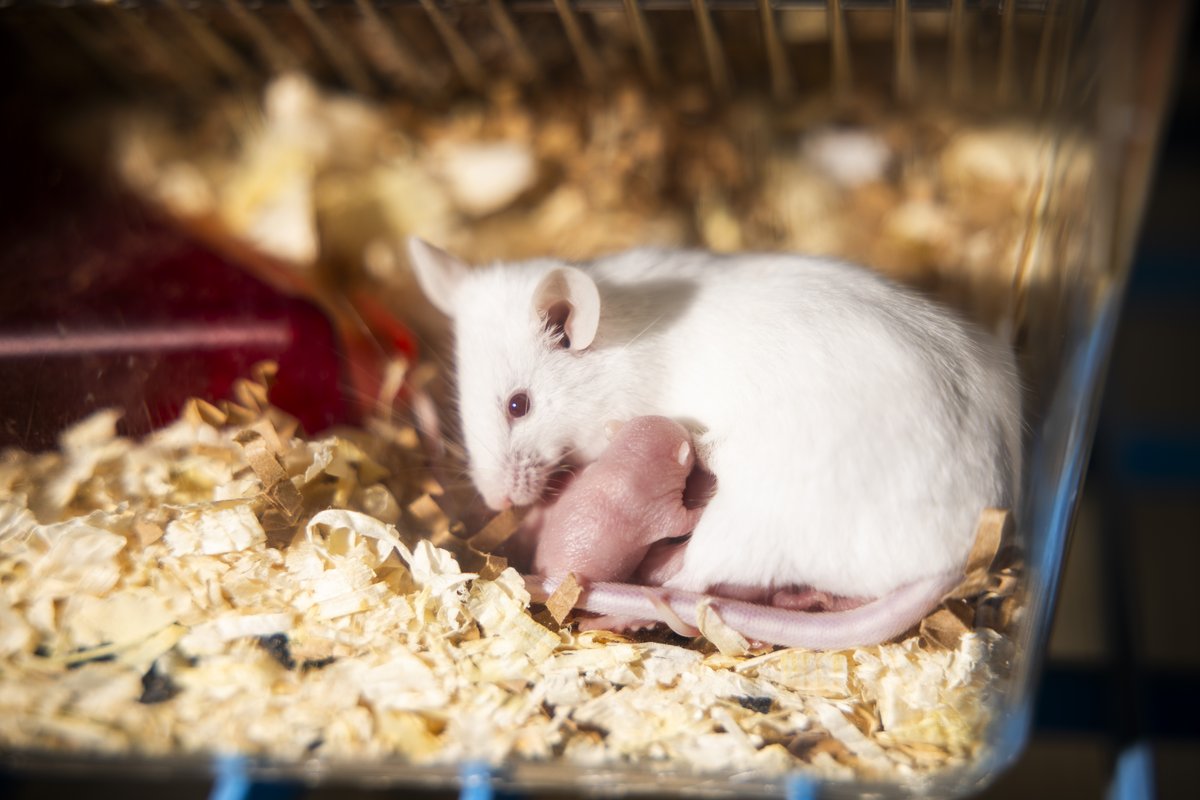
“You must not mistreat animals. So, when you are authorised to carry out certain procedures at a university or another research institution, you are permitted to deviate from the Animal Welfare Act, within the procedures you have described and subsequently had approved," he explains.
The “sensible” solution
And this is where a key dilemma arises regarding people’s differing views on animal experimentation. How can one justify deliberately and with full intent inflicting suffering on an animal without it being in the animal’s best interests?
“Some people believe that animal experimentation should be stopped altogether. And several organisations are actively campaigning to end animal experimentation, because we as human beings cannot under any circumstances take an animal’s life,” Tobias Wang says.
However, he believes that most Danes are utilitarians and accept animal experimentation if the purpose is important enough and the laboratory animals are treated properly.
“I’ve heard that argument so often: that if it’s for cosmetic purposes, it’s not acceptable, whereas if it’s to treat cancer, it is,” Aage Kristian Olsen Alstrup notes.
When it comes to purpose, animal experiments must meet the benefit criterion. This is the ‘sensible’ solution to the ethical dilemma. The Council for Animal Experimentation under the Danish Animal Experimentation Inspectorate – the government body responsible for granting authorisation for all animal experiments in Denmark – has a mandate to assess all applications for animal experiments to determine whether they meet the benefit criterion.
An impossible comparison between apples and pears
There are eleven members. Tobias Wang and Aage Kristian Olsen Alstrup are both members of the council, but it should be emphasised that they are speaking here solely on their own behalf and don’t represent the council.
The benefit criterion
The criterion of benefit is set out in section 1(5) of the Animal Experimentation Act: The Danish Animal Experiments Inspectorate may refuse to grant permission for animal experiments if the project isn’t deemed to be of significant benefit, including cases where the distress of the animal is not proportionate to the usefulness of the experiment or the product.
“The council doesn’t have a single stance. We each have our own views, and we try, on a case-by-case basis, to work towards a compromise on whether an animal experiment meets the criterion of benefit,” Aage Kristian Olsen Alstrup explains.
“It’s a completely impossible comparison between apples and oranges, but we’re doing our best, and I actually believe we’re striking a sensible balance, even though it can be extremely difficult in individual cases,” Tobias Wang says.
How much suffering is an insight worth?
While the benefit criterion may be relatively straightforward to identify if the purpose of an animal experiment is to treat a life-threatening disease, it’s very difficult when it comes to basic research, which is largely the type of research carried out at universities.
“What is the value of basic research? What is the value of an insight? Knowledge has value in itself, but I don’t know how to quantify it, and I don’t think anyone else knows either. And particularly in these matters, where it’s at the expense of suffering. In principle, it’s an impossible task. But that’s the task the minister has asked us to solve," says Tobias Wang, noting that not all animal experiments lead to new insights.
“Naturally, you don’t know that in advance. That’s just how it is with basic research. It could be anything from nothing at all to a completely groundbreaking new treatment that nobody had even thought of,” Aage Kristian Olsen Alstrup notes.
The needle criterion
In Denmark, the threshold for what constitutes an animal experiment is set so low that if, even just once in an animal’s lifetime, a needle is inserted under its skin for research or educational purposes, it’s considered an animal experiment.
“The distress can be minimal, but animals may also be afflicted with conditions such as pneumonia or undergo major surgery. So the field of animal experimentation covers a wide range," Aage Kristian Olsen Alstrup notes.
However, the mere fact that animals are considered for use in experiments means that they are subject to very specific rules and requirements.

The needle criterion
The needle criterion is set out in section 1(3) of the Animal Experiments Act: ‘Experiment’ means any use of animals for scientific or educational purposes which is likely to cause pain, suffering, distress or lasting harm to the animal equivalent to, or greater than, that caused by the insertion of a needle in accordance with good veterinary practice.
“As soon as an animal is included in a research protocol or simply enters a university or a pharmaceutical company, it’s protected by the regulations governing animal experimentation. There are therefore higher requirements for more space and more environmental enrichment, for example in the form of more bedding material, than there are for animals kept for production,” explains Aage Kristian Olsen Alstrup, who also points out that effective anaesthetic methods and pain-relieving medication are available today, making it possible to alleviate the animals’ suffering to a large extent.
“You could say that we buy indulgences to justify what we do, if you look at the requirements for animal experimentation from our side. And I’d rather be a lab pig than a factory-farmed pig if I’ve got six months left to live, no matter what experiment I’m involved in,” Tobias Wang says.
Blixen’s quote lives on
According to Tobias Wang and Aage Kristian Olsen Alstrup, most researchers today are in favour of legislation and of having a council evaluate the trials.
“There are also some who believe that we are too detail-oriented, too difficult to work with, that it’s too expensive, that we put unnecessary obstacles in the way, and that we are too slow; but we are talking about details within a consensus that there must be rules governing animal experimentation,” Tobias Wang says.
But if, as Tobias Wang believes, laboratory animals are better off than farm animals, and if he himself would rather be a laboratory animal than a farm animal, what exactly is the problem?
“Karen Blixen’s quote made sense 75 years ago. Since then, the rules have been tightened and the standards raised, but the issue remains the same as it always has been, and it will never change as long as people deliberately subject animals to procedures. That’s why the quote makes just as much sense today,” Tobias Wang says.
Must be human afterwards
Aage Kristian Olsen Alstrup wonders why it makes any sense at all to teach animal ethics in the courses designed to authorise people to work with laboratory animals.
“At first glance, it makes sense, but what’s the point of it? Is the idea that you’re supposed to become a better person just because you’re taught ethics?” he asks, though he himself points out that people who teach ethics aren’t necessarily better than the rest of us just because they work with ethics, are they?
“So that’s probably not it, is it? And in my most cynical moments, I’ve said that it’s to be able to argue that less fortunate protocols are somehow acceptable. With this quote, it all makes sense. It’s for the sake of humanity. It’s not just because they must carry out experiments that are more ethically sound. It’s also because they still must be human beings afterwards,” Aage Kristian Olsen Alstrup says.
Why do the pigs have to die?
In the debate on animal experimentation, the premise is that no single argument carries more weight than any other. There is no conclusive argument in favour of deliberately inflicting pain on animals, nor is there a conclusive argument against it. It’s on one hand and on the other.
Ultimately, it comes down to each individual deciding where to draw the line. What is an individual willing to accept? Rules and requirements set the framework, but it’s the individual who must carry out the procedure on the laboratory animal, regardless of how major or minor the procedure is.

“When we teach the animal experimentation course – a mandatory course for anyone who is to carry out animal experiments – we certainly have some participants who are there more out of a sense of duty than out of any real desire,” Tobias Wang says.
“But apart from all the practicalities, the trainees must also recognise the importance of being able to look themselves in the eyes after they’ve killed their pig. And they need to be able to sit next to their aunt at a family gathering and explain why they killed eight pigs, and why they think it was worth it,” he continues.
Face to face with an animal
While the discussion about animal experiments, ethical boundaries, the value of knowledge, and humanity’s right to decide when it is justified to harm an animal deliberately quickly becomes very theoretical, it’s much more real when you’re face to face with an animal in real life.
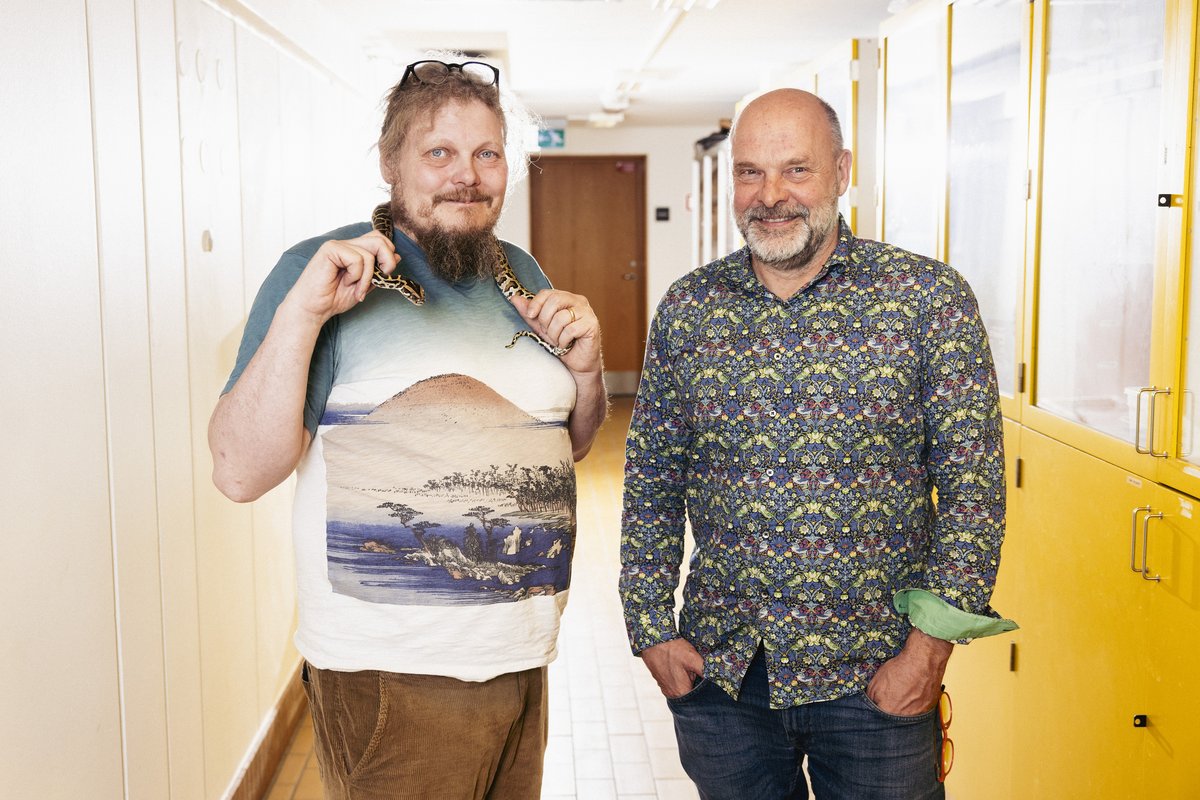
“When I’ve worked with pigs, treated them and spent a year and a half with them, and we’ve done well, and the pigs have become completely trusting, then comes the day when I give them a lethal injection of pentobarbital while they look joyfully for the apple I’ve brought. Right at that moment, I’m the real pig,” Aage Kristian Olsen Alstrup says.
“It should affect you personally when you perform a procedure on an animal. Otherwise, you should probably stop.”
This text is machine translated and post-edited by Lisa Enevoldsen.