

Should we take out the rook? Animal experts and students disagree
A drama is currently unfolding across species near the amphitheatre in the University Park, as the rook colony has returned, cawing loudly early in the morning. It must be eradicated, say several residents of Parkkollegierne. Leave nature alone, say nature expert Sebastian Klein and anthropologist Inger Anneberg. But can one learn to love – or at least coexist with – rooks?

The article was updated on 10 June at 11.00 am with a comment from the rook colony
Summer, sunshine, exams… and the cawing of rooks from the early hours of the morning until sunset. This is currently the reality for residents of Parkkollegierne (the student halls of residence in the University Park, ed.), as a rook colony has chosen the oak trees by the amphitheatre as its ideal home once again this year. Last year, Omnibus reported on rook control measures in those very same oak trees by the amphitheatre.
While the rook is a protected species, the Danish Nature Agency may grant permission to regulate young rooks. It may sound cruel to shoot the chicks, but if you ask the residents of Parkkollegierne, the rook is a nightmare neighbour.
“Great, great, great,” says Andreas Dalsgaard, a resident at Parkkollegierne, when Omnibus tells him that the rook chicks in the University Park are being regulated again this year.
“What? No way, really? I had no idea they were shooting the chicks. I think that’s a bit too much,” says another resident, Sarah Bahat, as she overhears the conversation.
“They must be eradicated”
Following a survey of several halls of residence in the University Park, Sarah Bahat’s reaction appears to be the only empathetic response from residents at Parkkollegierne. To put it mildly, there isn’t much sympathy left for the rook.
Resident Mads Pagh is woken up every day at five o’clock in the morning by the cawing of the rook colony.
“It’s bad for your health, really. I don’t exactly think it’s a pest, but it is rather noisy. So yes, I’m in favour of regulating them,” he says.
“They must be eradicated,” says another resident, Søren, his gaze fixed on the treetops outside the kitchen balcony.
“I can’t sit on my balcony because it’s so noisy. Who was here first? It is, after all, a landscaped park – I mean, someone did plant the trees. It's not wild nature," says Søren, pointing out towards the park.
Parkkollegium 3 has been given a crow-scare device by the caretakers so that they can make a noise to scare away the rooks. One of the residents says there has even been a rook-theme during the hall’s ‘tour de chambre’ event.
There is no doubt that the rook has earned a reputation as the greatest enemy of a good night’s sleep.
Nature is ugly and noisy
Environmental educator and TV host Sebastian Klein is not in favour of regulating rooks. "We tend to want to control nature," he says to Omnibus. Perhaps the childhood hero can teach the residents of Parkkollegierne to accept the rook as an equal neighbour.
“Rooks, oh, they make noise in our ears,” he says, and continues: “Nature is best left in peace, but we find that difficult.”
“When we regulate, we’re essentially treating the symptoms, and we’re treating them in the only way we can. We shoot,” he says.
There is a waiting list of around 12 months for a room at Parkkollegierne, and this may be due to the scenic surroundings. But sometimes nature just isn’t what we want it to be, according to Sebastian Klein.
“We’d like to live near tall trees, but we don’t like the birds that live in them,” he says.
“Nature isn’t all butterflies and birdsong. Nature stinks, it’s noisy, and it’s a nuisance," says Sebastian Klein.
“And then it (the rook, ed.) isn’t exactly pretty, is it? So we shoot it. If only it looked pretty or sounded nice …" he says.
He admits, however, that he is not exactly Gandhi:
“If a mosquito bites me, well, I’ll swat it. But otherwise, I leave nature alone," he says.
From enemies to friends
Inger Anneberg, an anthropologist and senior advisor emerita at the Department of Animal and Veterinary Sciences, contacted Omnibus last year after reading the article on rook regulation.
She was critical of how the rook’s caw was described as harmful to health. That is why this year, Omnibus has invited Inger Anneberg for a stroll beneath the trees by the amphitheatre – right in the eye of the storm.
Inger Anneberg has conducted research into the interaction between farmers, the authorities, and animal welfare. She is also interested in which animals we like and which ones we don’t like. Her fellow citizens’ reactions to the rook-noise sparked an interest in the much-maligned bird. Personally, she is a big fan of the rook.
“It’s fascinating how corvids form lifelong pairs, and I think the way they establish themselves socially is amazing. They’re clever and look out for one another by sticking together the way that they do,” says Inger Anneberg as she looks up into the treetops.
“It has made an impression on me. They are already facing an uphill struggle. There might only be three or four eggs that hatch into chicks, and then we come along and shoot the chicks. I wish we’d give that more thought instead of just worrying about the noise,” she says.
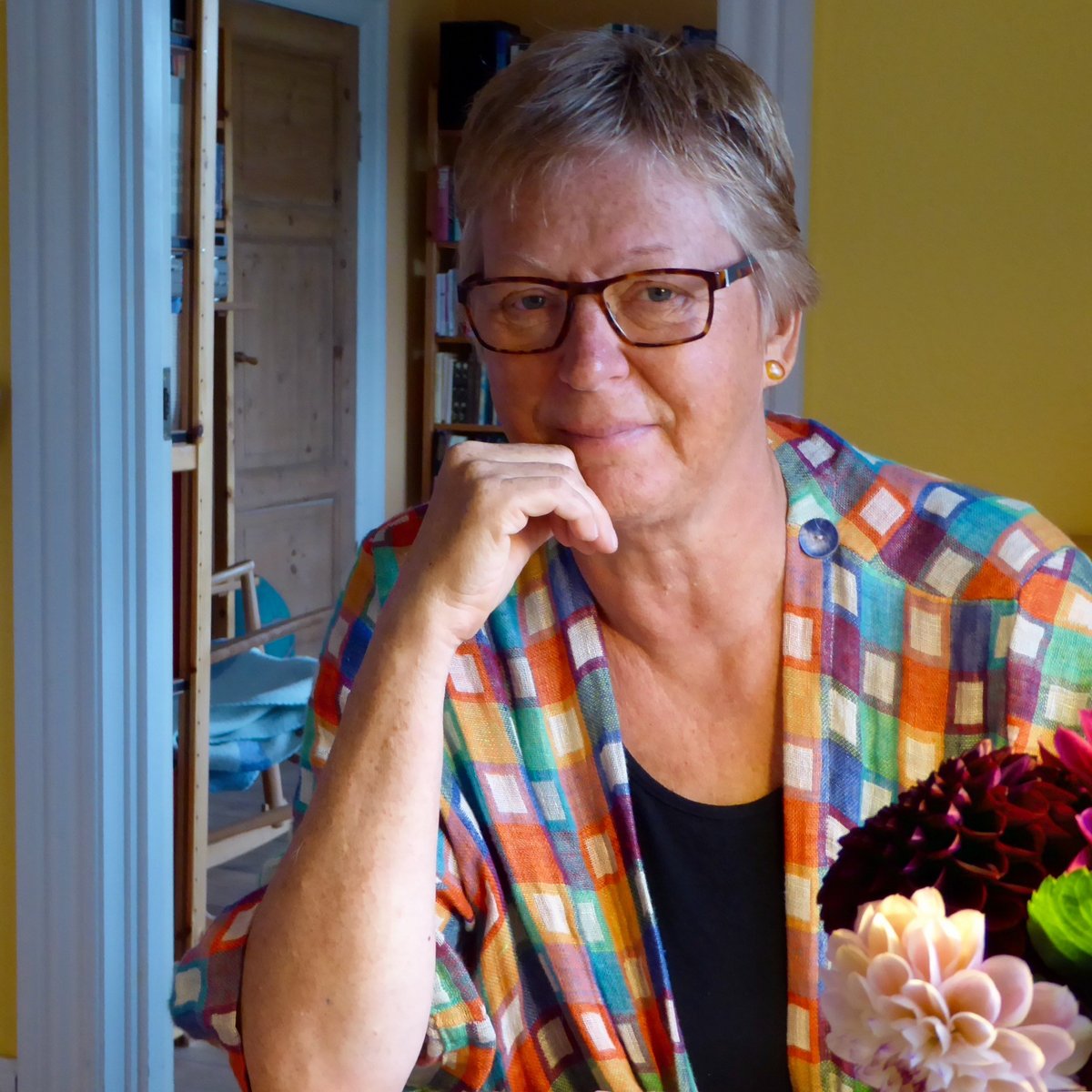
If we try to understand the rook, the noise will die down, she suggests.
“They’re talking to each other. It’s not just one sound; they have 20 different calls. You could sit down and listen to them. Maybe start a group called 'Friends of the Rooks'. Sit down and try to listen to what they’re saying. You could try to understand what sort of birds they are and think of them as creatures just like yourselves,” urges Inger Anneberg to the residents of Parkkollegierne.
Here we are, standing outside an educational institution, and inside lies the promising young talent, fast asleep. At five o’clock in the morning, students naturally want to sleep so that they can get up and contribute to society by pursuing an education. Isn't it a problem that their sleep is being disrupted?
“Actually, I see it the other way round. I can’t understand why those bright young people, with all their brains and all that wisdom and knowledge, can’t overcome their aversion. You could take some precautions, such as wearing earplugs,” says Inger Anneberg.
“If you manage to get this colony to fly off somewhere else, they might end up at a care home, and then suddenly it would be a different group that’s in the firing line. They might not have brains like yours, but they want to sleep too," she says.
Our aversion to the rook isn't just about the noise, which makes it a neighbour from hell, says Inger Anneberg. It goes deeper than that.
“The way we rank animals is culturally determined. Different societies have different views on which animals are considered useful, pests, food animals, and pets. It would be good for students to reflect on that hierarchy and not just accept that 'that’s just the way it’s always been', but instead try to see themselves as one species among many others with whom they can actually share a sense of community," she says.
Experts are romanticising the rook-noise
We pass on both Inger Anneberg’s and Sebastian Klein’s advice to the halls of residence, though it doesn’t make much of an impression on the sleep-deprived residents of Parkkollegierne.
“It’s easy to think that we should just put up with the noise for the sake of nature. It’s easy to say that when they don’t live right outside your balcony. But that’s not going to solve the problem,” says resident Søren.
“It’s a romantic way of looking at nature. After all, it’s not really nature in the park when we humans have created it and are there to look after and tend to it,” he says.
Not in my back garden!
Resident Mads Pagh is also critical of the experts’ statements.
“If we’re going to think that way about rooks, then we’ll have to take a similar view on how ethical it is to slaughter cattle and pigs, for example,” he says.
“It’s just like offshore wind turbines and solar farms. “We city dwellers think it’s a brilliant idea, but the people who have to put up with them in their back gardens think they’re a problem,” says Mads Pagh.
Resident Andreas Dalsgaard, who initially thought it was “Great, great, great” that the rooks were being shot, is not quite as critical of Inger Anneberg and Sebastian Klein as his fellow residents.
“Of course, I’d prefer it if the rooks weren’t there, but if they wake you up, you just have to get up and close the window,” he says.
Omnibus has, of course, given the rooks the opportunity to respond to the criticism. They have returned with the following statements.
This text is machine translated and post-edited by Mie Skov Jeppesen.