

Election debate in the City Auditorium: Too much Kattegat Bridge and too little AI
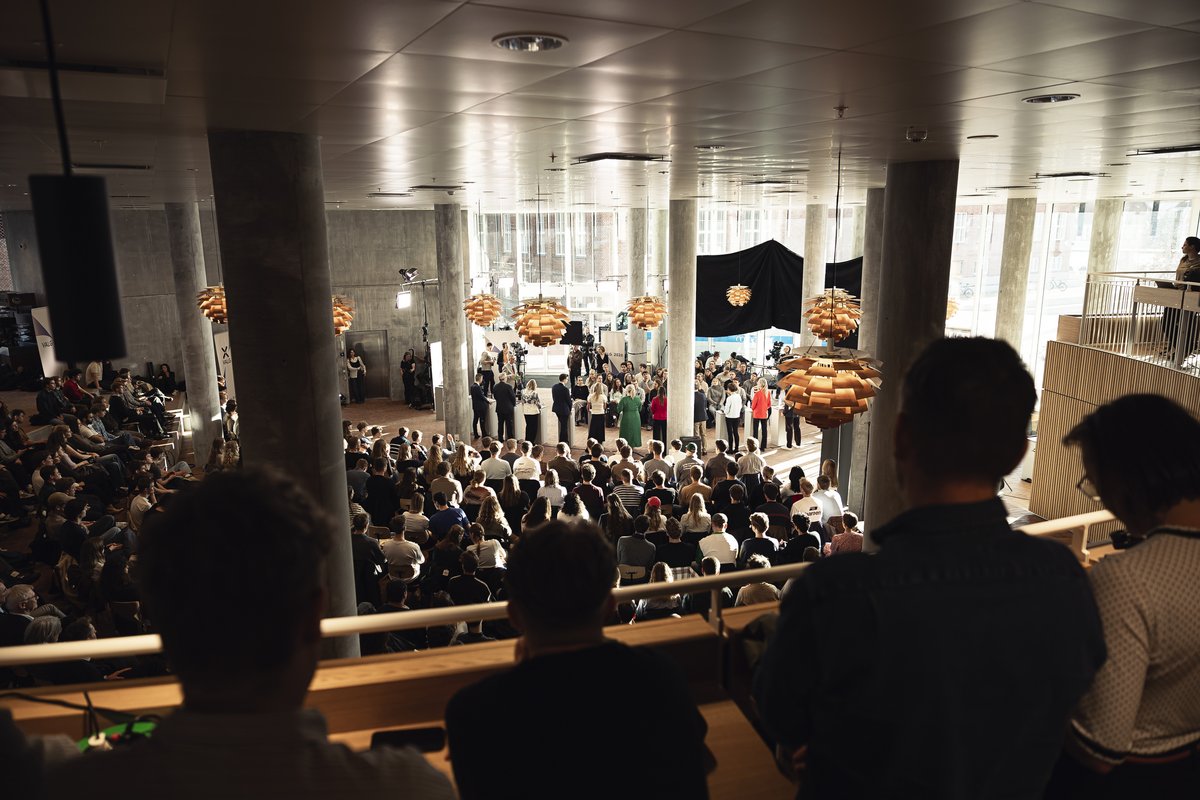
300 AU students filled the City Auditorium for a somewhat lopsided election debate, where the political parties' lead candidates discussed immigration policy, primary schools and the Kattegat connection. Only at the end were study-relevant topics such as the Master's reform and artificial intelligence addressed.

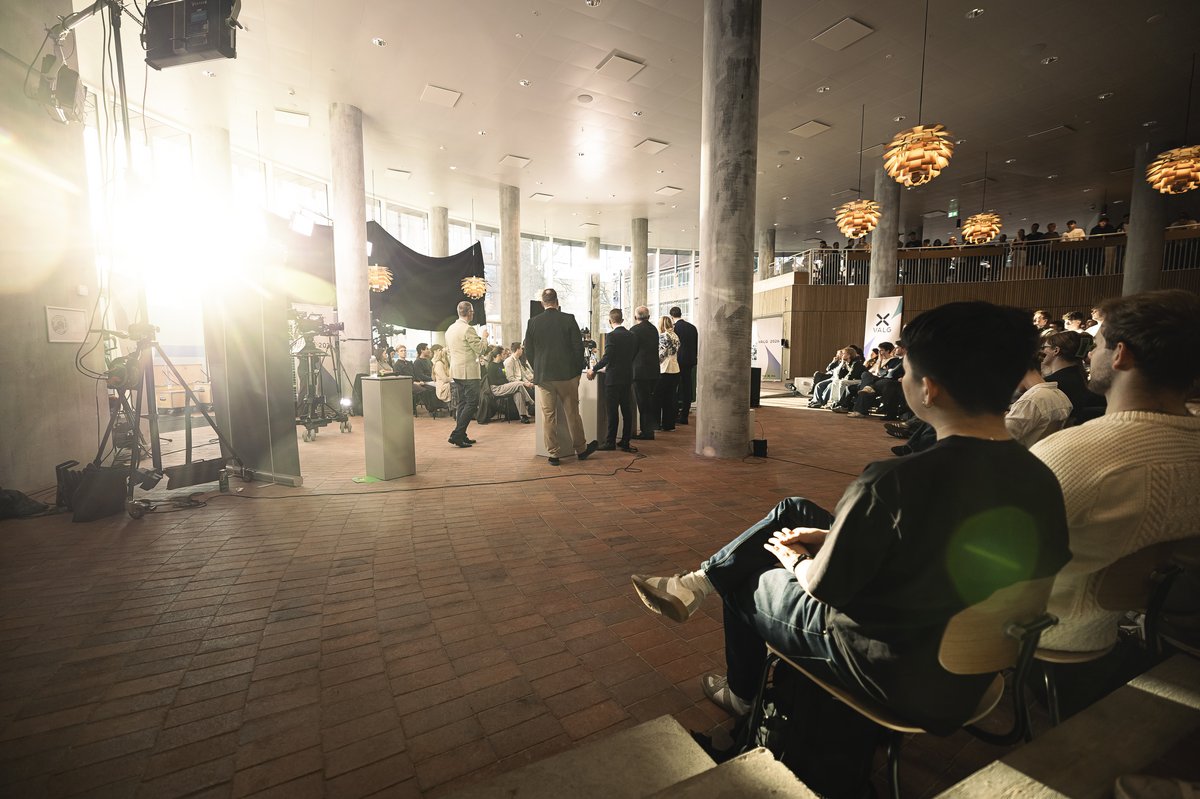
The election was only a few hours old when the invitation to participate in TV2 East Jutland's election debate in the City Auditorium in the University City went out to AU's students. Shortly after, the 300 places were torn away. The invitation said that it was a debate between the lead candidates, but this only applied to three of the panellists: Mona Juul (Conservative People’s Party), Alex Vanopslagh (Liberal Alliance) and Lars Boje Mathiesen (Citizens’ Party). The panel also included two ministers: Minister of Finance Nicolai Wammen (Social Democrats) and Minister of Higher Education and Science Christina Egelund (Moderates). In addition, the East Jutland lead candidates Torsten Gejl (Next Denmark), Trine Pertou Mach (Red-Green Alliance), Kirsten Normann Andersen (Socialist People’s Party), Katrine Robsøe (Danish Social Liberal Party), Mathilde Hjort Bressum (Danish Liberal Party), Hans Kristian Skibby (Denmark Democrats) and Nick Zimmermann (Danish People’s Party) participated.
The wings were drawn up from the start with a discussion about freedom of speech, a showdown with international conventions and the repatriation of criminal immigrants based on the weekend's episode in Copenhagen, where a memorial service paid tribute to the now deceased Iranian ayatollah Ali Khamenei. After that, we came back down to earth with a debate about class sizes in primary school, before moderator Søren Ø. Jensen from TV2 Østjylland led the debate to the Kattegat connection. Much to the surprise of many of the students in the audience:
"I had completely forgotten that it was a thing," said one of the students Omnibus spoke to after the debate.
"The Danish Parliament has been snoring on the AI agenda"
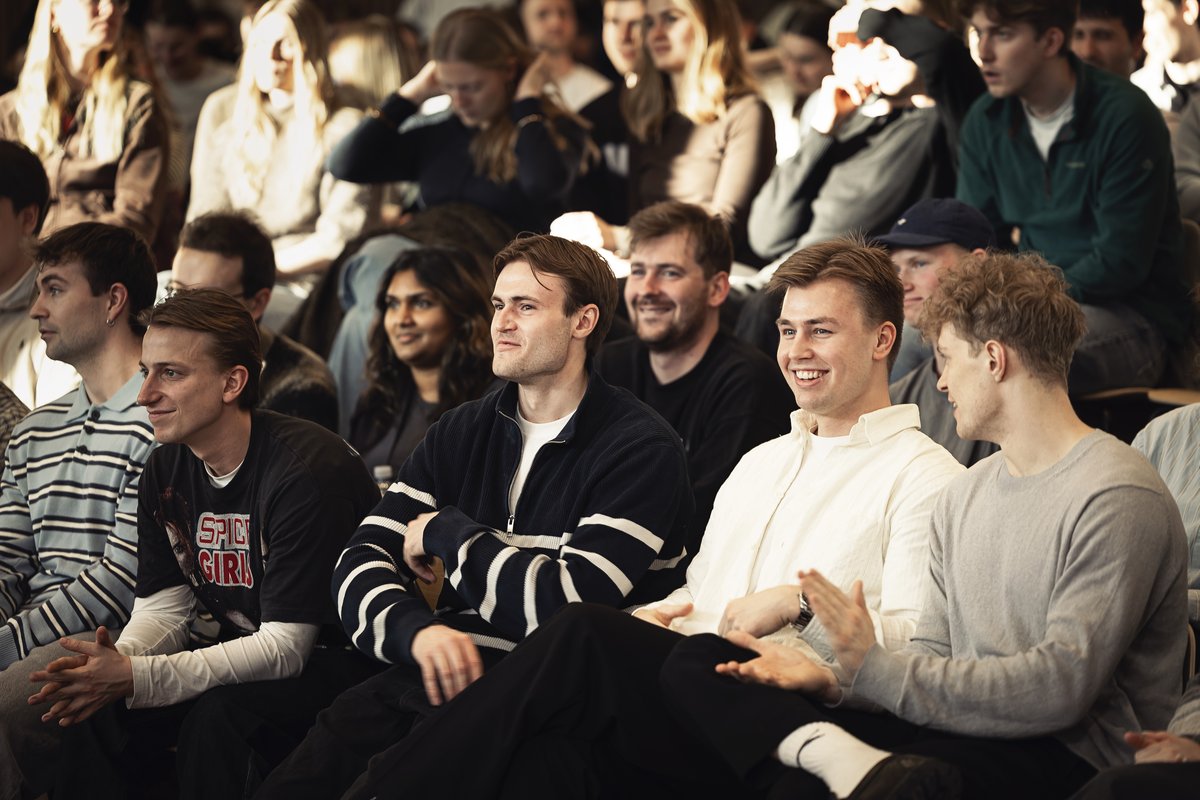
Only when questions from the audience in the hall, and behind the TV screens via TikTok, were opened up, did the topics move closer to the university and to the students.
“How do we best prepare for a job market with AI?” was one of the questions.
Minister for Higher Education and Science Christina Egelund (Moderates) expects artificial intelligence to change the labour market significantly and called the technology the greatest force for change since the industrial revolution. When asked how you should behave as a young person, she answered:
"I don't have a manual, but follow along, orient yourself, master the technology, don't be afraid."
Lars Bøje Mathiesen (Citizens’ Party) encouraged young people to educate themselves in something that deals with people.
"In 5 to 10 years, AI will have revolutionised the labour market, AI will take everything, but the last jobs that will be taken over are those that have to do with humans," he said, criticising the Danish Parliament for having "snored" on that agenda.
Torsten Gejl (Next Denmark) agreed with this.
"Where does the information go when we ask AI? We have no idea how that information is used," he said.
Mona Juul (Conservative People’s Party), on the other hand, insisted that there is plenty of enthusiasm to be found in the field of AI and encouraged people to speak more positively about artificial intelligence.
"It's really exciting for your generation in terms of knowledge and learning."
Vanopslagh: "Not a human right to go to university"
Another question asked through TikTok, presumably from one of the attendees in the auditorium, was: What do you think about the Master's Degree Reform?
Here, Christina Egelund (Moderates) started out as the minister who was responsible for securing a political agreement on the reform.
"The reform addresses the need for education to be something that follows you throughout your life. That's basically what it's about."
Alex Vanopslagh (Liberal Alliance) also represents one of the parties behind the reform and made it clear that it contains more good than bad elements.
"It makes sense to link the master's degree programmes more closely to the labour market, and the reform also makes it possible to combine your studies with a job in a workplace."
At the same time, he pointed out that fewer people need to go to university in order to raise the quality of the education.
"It’s not a human right to go to university."
The last answer of the evening came from Katrine Robsøe (Danish Socialist Liberal Party):
"A lot of things are bad. The reform closes thousands of student places and shortens Master's degree programmes. We must not send you into the labour market worse off than previous generations," said Robsøe, who, as her very last remark, called for the reintroduction of the 6th year of the Danish students' Grants and Loans Scheme (SU). Here, the moderator rounded off the debate, and therefore it wasn’t entirely clear whether the subsequent big applause went to Robsøe's comment – or to the panel.
More debate on reform, SU and AI
Karsten Evers Bidstrup, who's studying geophysics, was among the students who attended the afternoon's debate. He subsequently wondered about the themes that he didn’t find equally well chosen, now that the debate was taking place at a university:
"The Kattegat connection is not that relevant to discuss in a university environment, but I missed the debate on the disability area and on housing policy."
The fact that the Kattegat Bridge took up so much space also surprised the four engineering students, Jens Damgaard Trinderup, Johannes Barckmann, Kasper Dahl and Magnus Bjørn Nielsen.
"It seems unimportant and out of date, we’d rather that the debate on the Master's degree reform had taken up more space. The same applies to the question of artificial intelligence and how students should relate to this development. This is something we ourselves are in doubt about, but unfortunately, the politicians were a little vague in their answers," said the four, who also wanted to hear about the debate on SU and the food check.
That said, the afternoon's debate was a good experience, they think.
"I’ve received input for my further position, but I don’t feel more clear about where I want to place my vote. It’s a process, and the debate gave me something to think about," Magnus Bjørn Nielsen said.
Jason Mai, Niels Haldkjer and Bjørn Pedersen, who are studying for their Master’s degree in engineering, had the same experience.
"It was a fun and exciting debate to watch, and a good way to start the election campaign, even though we didn’t end up more clarified."
This text is machine translated and post-edited by Lisa Enevoldsen.