

Disappointment in West Jutland over Aarhus University’s wealthy research foundation
A former city councillor in Lemvig argues that Aarhus University's Research Foundation exploited the local community, channelled billions of kroner to Aarhus over six decades, and left behind the chemical company Cheminova along with three of Denmark’s worst pollution sites, only to refuse responsibility in the aftermath. The foundation denies any responsibility.

The news that FMC Rønland, the notorious and much-discussed chemical plant, is set to close at the turn of the year is gradually sinking in across Harboøre and the surrounding area. An era is coming to an end. Cheminova, as the plant was originally known, is closing its doors, leaving around 400 employees in search of new work.
It is impossible to deny, and difficult to overestimate, Cheminova’s importance in the northwest area of Jutland. Since the mid-1950s, Cheminova has helped hundreds of families put food on the table and played a key role in the development of the area where the Limfjord flows into the North Sea.
But Cheminova is also responsible for some of the worst environmental contamination in Danish history, and as the final chapter in the company’s history is about to be written, Aarhus University is once again being brought into the spotlight.
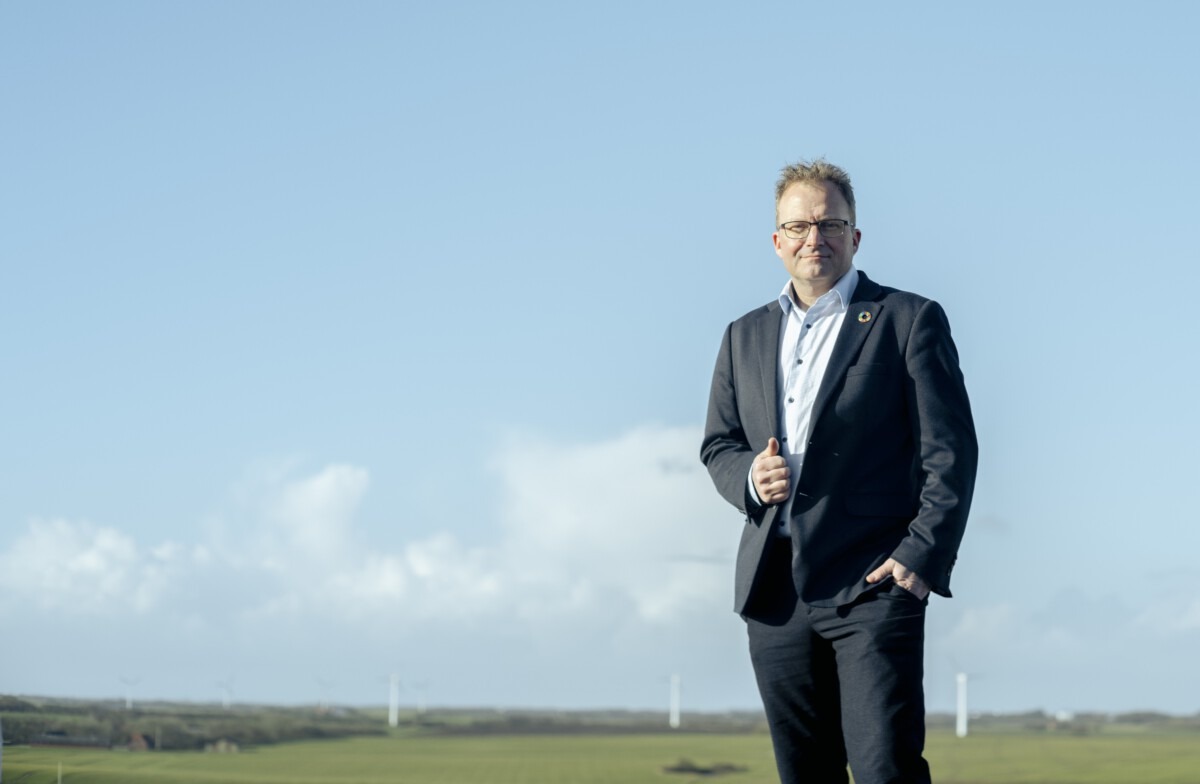
"I believe I’m putting into words what many people around here are thinking and feeling. How can a university exploit a local community, drain value from the area for six decades, and leave behind such extensive pollution without ever being truly held to account, or willing to take responsibility for it afterwards?” says Steffen Damsgaard.
He is a former member of Lemvig City Council, where he served for twenty years and followed the case of Aarhus University’s Research Foundation and its prized asset, Cheminova, at close quarters. Today, he is chair of the National Council for Rural Affairs.
Billions in AUFF's coffers
The finger points from West Jutland to Aarhus because, since 1945, Aarhus University has benefited enormously from the wealth generated by Cheminova. At the time, Cheminova’s founder, engineer Gunnar Andreasen, donated his entire company to the university, and the business was subsequently placed under the ownership of the newly established Aarhus University Research Foundation (AUFF), which had been created for that very purpose.
AUFF and Cheminova
1944: Cheminova's founder, engineer Gunnar Andreasen, donates the entire share capital of his company, DKK 300,000, to the Aarhus University Research Foundation, AUFF. To facilitate the arrangement, the research foundation was established as an independent entity, legally distinct from Aarhus University.
1986: Cheminova is listed on the stock exchange. AUFF sells its Class B shares, but retains control through its high-voting Class A shares.
1999: The parent company changes its name to Auriga Industries.
2014: AUFF owns 38.55 percent of the capital but has 83 percent of the votes in Cheminova.
2015: Auriga Industries sells Cheminova to the American chemical group FMC Industries for DKK 8.5 billion. AUFF receives DKK 3.2 billion from the sale proceeds.
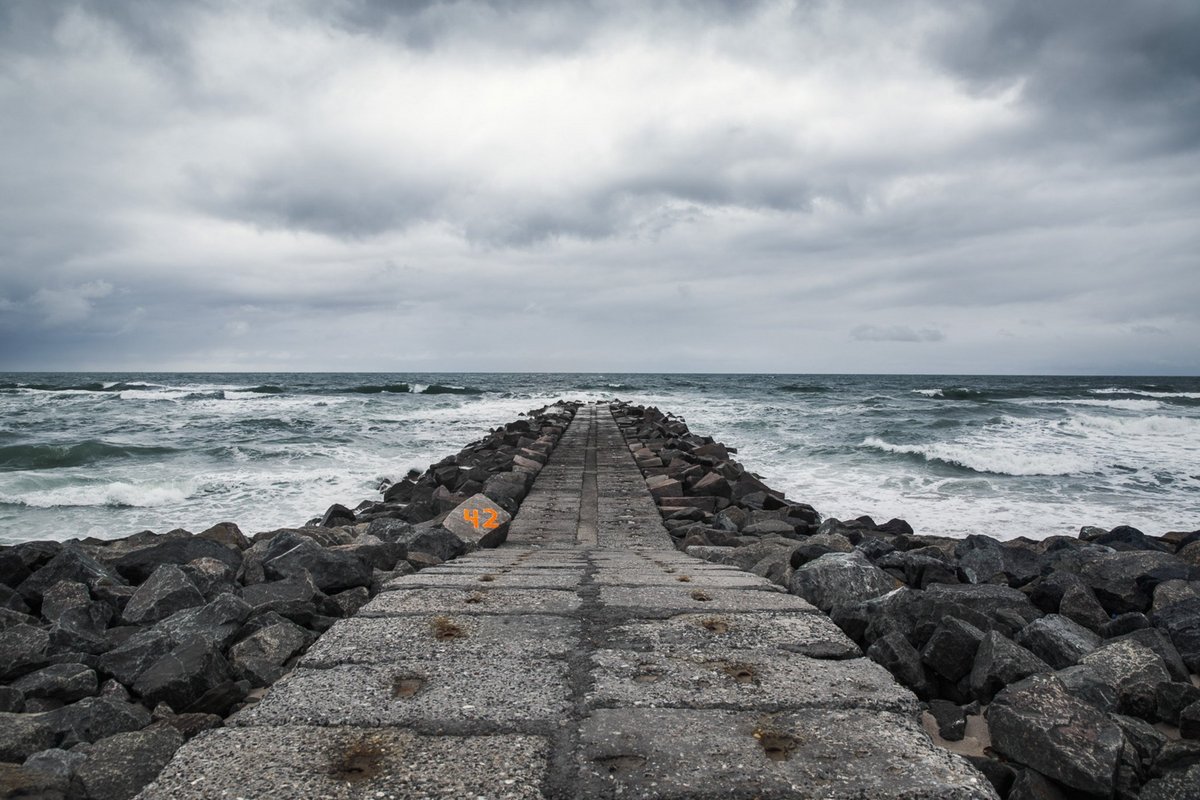
2020: The research foundation voluntarily contributes DKK 125 million towards the clean-up of the pollution at the Høfde 42 chemical waste site.
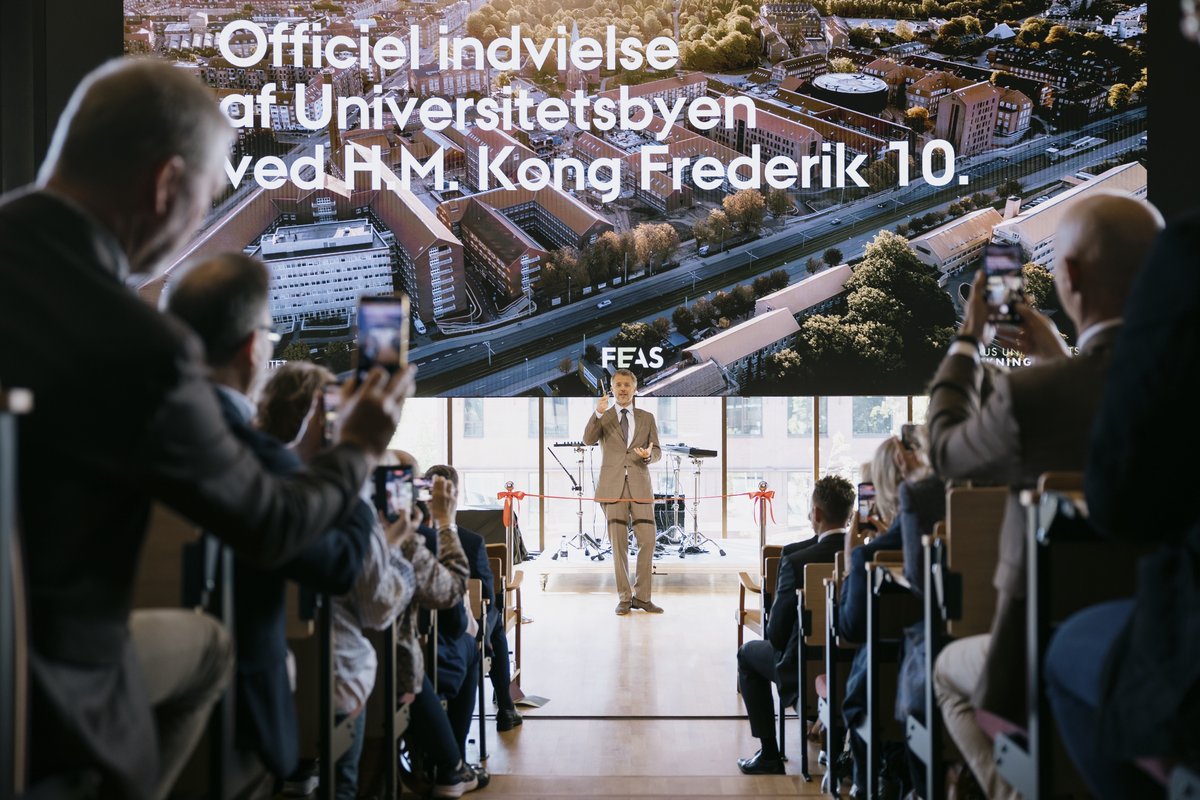
In 1945, the shareholding amounted to DKK 300,000, but the value of the shares grew over the years, and when Cheminova was sold in 2015, the research foundation received DKK 3.2 billion from the proceeds of the sale. Part of the proceeds has since been used to purchase Aarhus Municipal Hospital for just over DKK 800 million and transform it into the University City through Forskningsfondens Ejendomsselskab (FEAS), which is one of the research foundation's companies. Since 1946, the foundation has awarded around DKK 2.5 billion to research.
While money poured into the research foundation over the years, toxic chemicals poured out of Cheminova. Most of it was exported in the form of pesticides used to control agricultural pests, but the toxic waste was left behind in the soil where the factory was located. Initially in Måløv on Zealand and after 1953 in Harboøre, where the huge company settled.
Three sites - the so-called Høfde 42, where chemical waste from Cheminova was buried in the beach sands, the former factory site, and the company's current facility on Harboøre Tange - are today classified as legacy pollution sites. The cost of cleaning them up is likely to amount to billions of kroner, assuming anyone is willing to put forward a definitive estimate.
That is why many in West Jutland are casting a wary eye towards Aarhus University and the research foundation, which had equity of nearly DKK 5.4 billion at the end of 2025.
We have been left with pollution and bad publicity.
“Many people in the local area say that, for the foundation in Aarhus, it has been all about money and profit. For decades, we have watched the profits from Cheminova disappear into Aarhus, where the research foundation has used them to create attractive degree programmes and study environments that have drawn our young people to the city and kept them there, while the rest of the community out here has been left behind,” says Steffen Damgaard and continues:
“It was especially when Cheminova was sold to FMC in 2015 that people came to realise just how much wealth had been created in Harboøre, and how little of it had translated into lasting benefits for the local community. It has all been taken away from here, while we have been left with pollution and bad publicity," says Steffen Damgaard.
The foundation has donated DKK 125 million
Although the research foundation held enough shares to effectively control the fate of Auriga Industries, the company that owned Cheminova, it owned only just over 38 per cent of the shares when the sale took place. Therefore, the money from the sale had to be shared with the other owners, including the Labour Market Supplementary Pension and Lønmodtagernes Dyrtidsfond (a fund designed to provide retirement benefits for employees in Denmark, ed.).
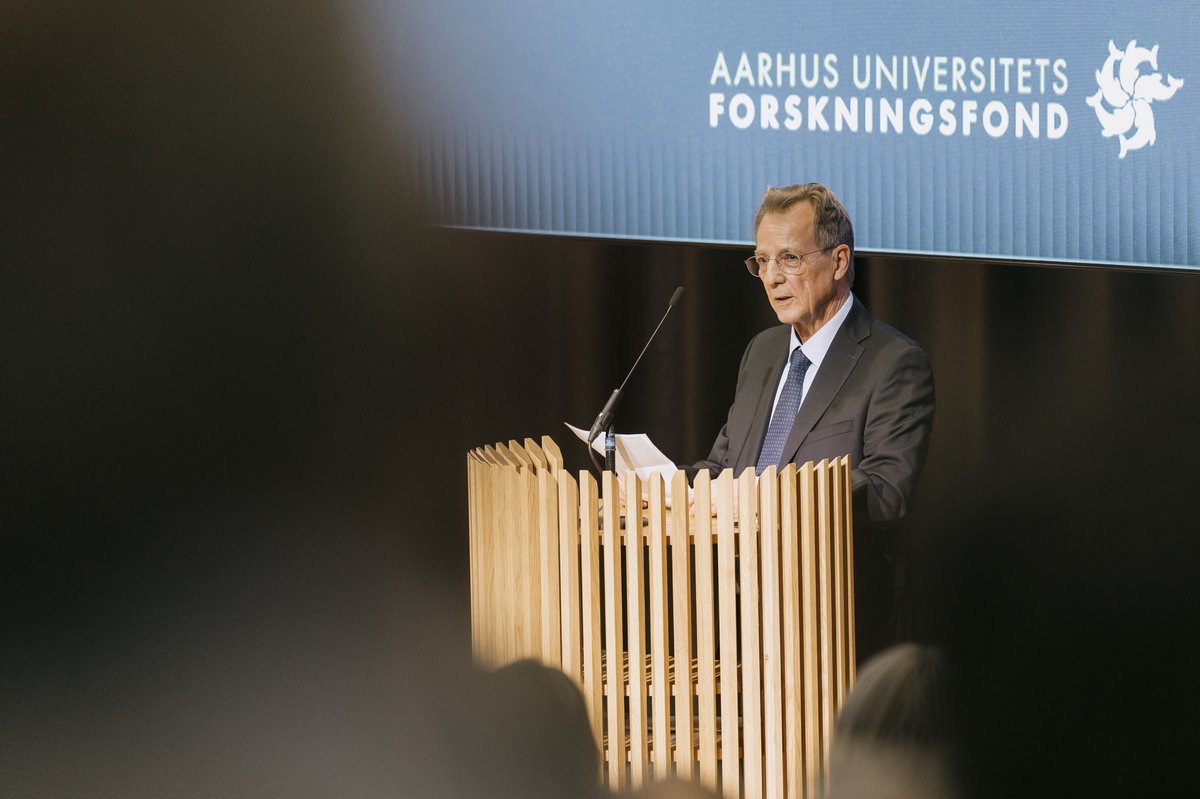
Jørgen Lang has been CEO of the research foundation since 2008. He was involved when the foundation, through its subsidiary Auriga Industries A/S, sold Cheminova to FMC Corporation.
“At the time, Aarhus University’s Research Foundation voluntarily took it upon itself, and was the only shareholder to do so, to contribute to the remediation of the soil contamination. This was done in recognition of the fact that, viewed through today’s lens, past environmental practices fell short of acceptable standards. At the time, the authorities estimated that the clean-up would cost DKK 250 million, and, at AUFF’s initiative, Auriga Industries A/S contributed DKK 125 million, corresponding to 50 per cent of that amount,” Jørgen Lang writes in an email to Omnibus.
According to the foundation’s charter (In Danish, ed.), its funds may be used only “to support research at Aarhus University”. Consequently, it took a series of extraordinary measures in 2020 to make it possible to release the DKK 125 million.
But that does not impress Steffen Damgaard. He believes the research foundation got off far too lightly.
"It's a very small price for leaving a very big problem," says Steffen Damgaard.
That won’t do
However, the foundation’s structure prevents it from directly contributing additional funds to the clean-up of the environmental damage caused by past practices. For, as noted above, the foundation’s purpose is “to support research at Aarhus University”.
"As a clear general rule, a foundation may not pay for damages for which it is not legally obligated to pay. In the end, that could potentially expose the board to legal liability,” says Professor Rasmus Kristian Feldthusen, a professor at WELMA, the Centre for Legal Studies in Welfare and Markets at the University of Copenhagen, where his research includes foundation law.
He stresses that he is not commenting on the specific case, but speaking in general terms.
In 1987, the High Court of Western Denmark acquitted Cheminova of liability for damages at Høfde 42. Neither Cheminova, Auriga Industries, nor FMC has been legally required to clean up after the contamination. No legal basis has been found for requiring the companies to investigate or clean up the historic contamination at the factory site in Harboøre, while the contamination at the original site in Måløv is long since barred by the statute of limitations.
As a shareholder, the research foundation is further protected because shareholders are not directly liable for a company's actions.
In theory, a foundation can change its charter, but that is quite difficult, states Rasmus Feldthusen. A foundation is self-owned. It has no owners. This means that the board cannot simply go to a general meeting and ask for the foundation’s charter to be amended so that purposes other than those originally intended can be accommodated.
"Ultimately, an amendment to a commercial foundation's by-laws will have to be approved by the Danish Business Authority. Obtaining approval for such a change is difficult. Especially if the desired change or addition is completely alien to the existing purpose," says Rasmus Feldthusen.
Must safeguard the foundation's interests
The board of the research foundation must therefore safeguard the foundation’s interests and act within the confines of its stated purpose, as defined by its by-laws, regardless of any moral obligations it might be perceived to have to help clean up the pollution.
“The board of a commercial foundation is required to act solely in pursuit of the foundation’s purpose and interests. Any personal convictions must be left at the door upon entering the boardroom,” states Rasmus Feldthusen.
The foundation's CEO Jørgen Lang also believes that the foundation has done what it could by contributing DKK 125 million to the clean-up.
"The extraordinary contribution from Auriga Industries A/S, which was paid in 2020, is included in the pool of funds meant to solve the task. The government has also set aside funds in the Finance Act for the clean-up of legacy pollution. A pool of funds for the clean-up has therefore been available for several years, and we hope that the remediation work will soon get properly under way,” writes Jørgen Lang in an email to Omnibus.
Lasting value in West Jutland
While the research foundation cannot provide additional funding for the clean-up of the pollution left behind by Cheminova under its current by-laws, and changing those by-laws does not seem realistic either, there are other ways of creating lasting value in the area around Harboøre.
Steffen Damgaard, who for decades has criticised the way wealth has been extracted from the local area and channelled to Aarhus, suggests that the university, with support from the research foundation, establish research positions or a research centre dedicated to investigating the remediation of environmental contamination.
He believes it could create jobs in the local area, benefit the university, and generate knowledge with international potential.
“The research foundation has adhered strictly to its charter and, as far as I am aware, has shown us no willingness whatsoever to accommodate our concerns or any understanding of our situation. At no point have I found the foundation to be proactive, nor have I heard of any attempts on its part to explore opportunities to make further contributions, either towards cleaning up the pollution or through other forms of support for the local community. In my experience, the willingness simply has not been there,” says Steffen Damgaard.
From a general legal perspective, according to Professor Rasmus Feldthusen, there is nothing to prevent some of the foundation’s funds from being used for research into the remediation of contaminated soil or water.
“As long as a proposed grant or allocation by a commercial foundation falls within its stated purpose, the board is entitled to make it,” says Rasmus Feldthusen.
Research is free and independent
However, it does not appear particularly likely that the research foundation will take the initiative to launch such a research project in West Jutland.
"We have great sympathy for the employees and families who are now about to be affected by the closure of FMC Rønland. But it is difficult to find factual evidence that it is AUFF that is the cause of the urbanisation that has characterized Denmark for many years, and which also affects the West Coast," the research foundation's director Jørgen Lang writes to Omnibus, continuing:
“It has never been AUFF’s role to oversee the operation of Cheminova itself, including its local engagement, as responsibility for those matters lay with the company’s management. So Steffen Damgaard is somewhat mistaken about what our role is. But based on what we have been able to observe from the outside, Cheminova, and later FMC Rønland, have certainly been active contributors to the local community of which they were a part.”
It is a fundamental principle for us that research must remain free and independent.
In his email, Jørgen Lang emphasizes that the foundation supports a wide range of research and that over the years, the foundation has distributed funds in many different disciplines to many different researchers. He also stresses that the foundation will not interfere in what researchers choose to seek funding for.
“It is a fundamental principle for us that research must remain free and independent. Researchers themselves decide what they wish to study and why they choose to apply for funding from AUFF.
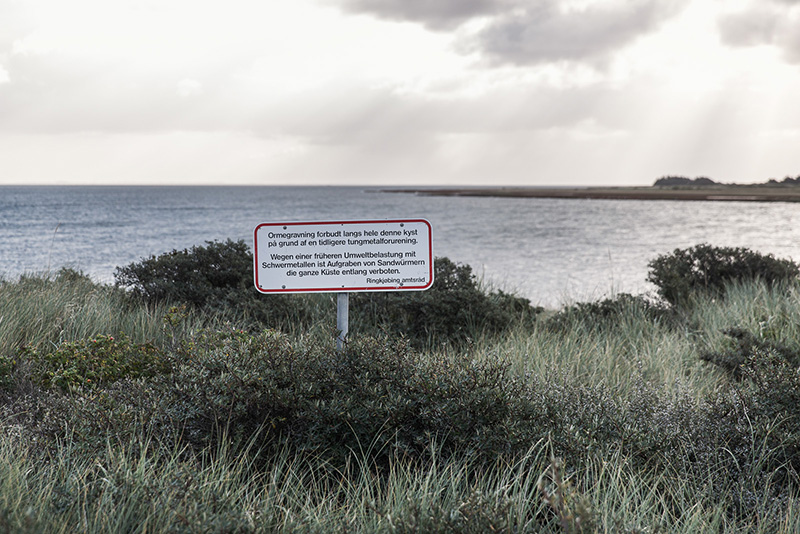
The soil is toxic
As the turn of the year approaches, the final chapter will be written in the story of the notorious chemical plant on Harboøre Tange. What is certain, however, is that the plant will leave behind a legacy marked by some of the most extensive environmental contamination in Danish history.
Various measures have been implemented in an effort to prevent the pollution from spreading further. FMC Rønland has promised to keep the pump that continuously cleans the groundwater running for some time yet. Meanwhile, the Central Denmark Region, which formally bears responsibility for cleaning up the contamination, is preparing for the day when the task ultimately falls on them.
The region has previously estimated that cleaning up the former factory site alone, located a few hundred metres from the current one, will cost more than DKK 4 billion. There are approximately 40 tonnes of pesticides and eight tonnes of mercury distributed over 27,000 square metres. The contamination resembles that found at Høfde 42, where nearly DKK 750 million will be needed to fund the clean-up.
Left with the mess
For the Aarhus University Research Foundation, Cheminova has long been a thing of the past.
"It has been 11 years since our co-ownership was sold, and Cheminova is not part of AUFF's current activities," the foundation's director writes to Omnibus.
The situation is quite different in the area around Harboøre, where people have been talking about Cheminova since the mid-1950s. Although the plant will close for good at the turn of the year, people will continue talking about the chemical factory for many years to come. When the last employees go home, the buildings will remain as visible evidence of an industrial adventure that changed the area. But also as a reminder that not one, but three of the country’s largest pollution sites will remain long after the adventure has come to an end.
“As the pollution, and the extent of it, became more and more widely known, we genuinely felt that we had been left to deal with the mess in the form of a ticking environmental time bomb beneath the feet of our local community. And we still feel this way," says Steffen Damgaard.
Omnibus visited Cheminova shortly before the sale to FMC in 2015:
This text is machine translated and post-edited by Mie Skov Jeppesen.