
BSS' new facilities take shape: One department has moved in – soon another will follow, along with thousands of students
With a carefully thought-out colour palette, an eye for the past and present – and an overview of more than 17,000 pieces of furniture, architect Nanna Calmar Andersen has been responsible for coordinating Aarhus BSS's move from Fuglesangs Allé to the University City for the past four years. A process that is currently culminating towards the start of the semester.

CAMPUS DEVELOPMENT
Aarhus BSS will relocate from Fuglesangs Allé to the University City. This means that the faculty's activities in Aarhus will be concentrated in the north-eastern part of the University Park and in the central part of the University City. According to the faculty, this will provide better opportunities for collaboration across departments and faculties.
Read more about campus development at Aarhus BSS
The Faculty of Arts will move its activities from the Nobel Park, Kasernen, Tåsingegade and Trøjborgvej to the University City, with the move expected to take place in several stages between 2028 and 2031.
You can read more about campus development here (in Danish).
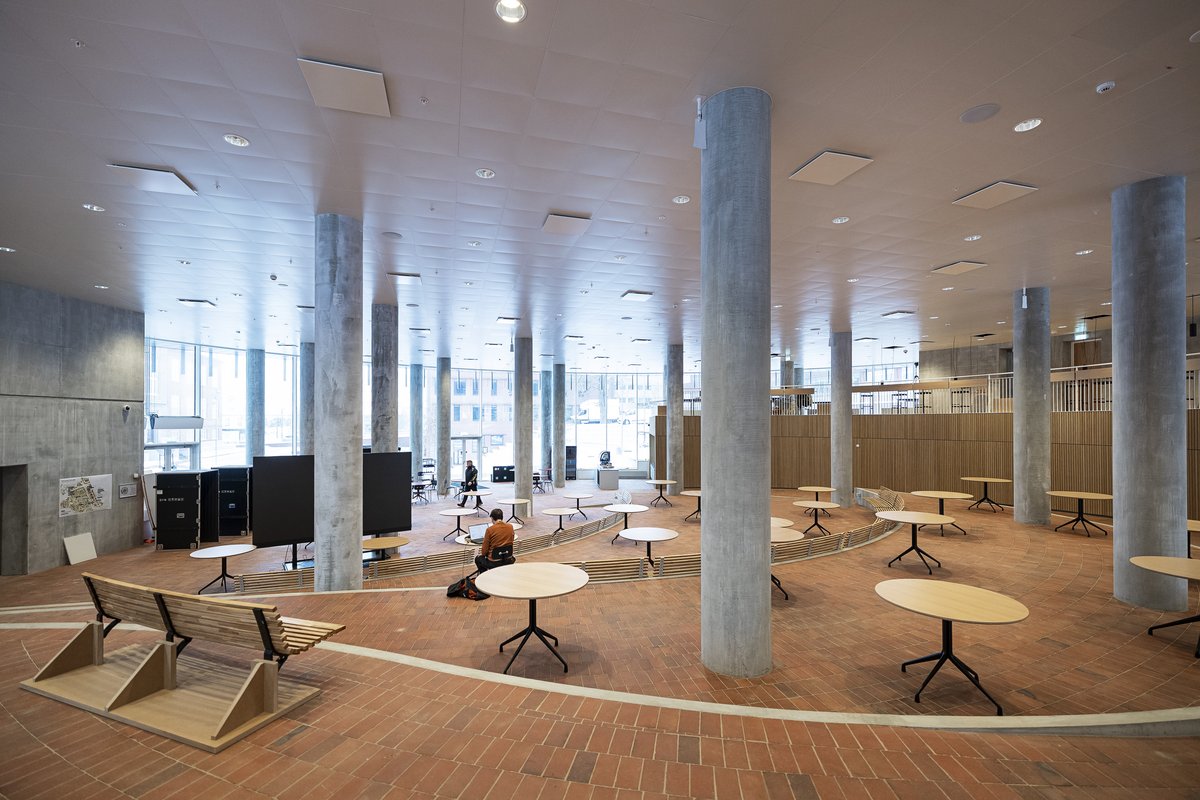
The bright atrium courtyard in the building, which from now on surrounds the Department of Economics and Business Economics, is filled with stacks of tables, chairs and large plants waiting to find their right place. The area that was once a busy car park in front of the former Aarhus Municipal Hospital has now become a large, bright foyer that will soon house study spaces, lounge areas and group tables, and can also be used for smaller events and receptions.
"This room will be the centre of the department," says Nanna Calmar Andersen. She is an architect and has been employed as project manager at Aarhus BSS for the past four years, with responsibility for coordinating the relocation of the faculty's degree programmes and the two departments, the Department of Economics and Business Economics and the Department of Management, from Fuglesangs Allé to the University City. A work she has carried out in close collaboration with the client FEAS, a consulting architectural firm, suppliers, technicians, the faculty's management and employees, and the students have also been consulted on several occasions, she says.
These days, the many years of planning are culminating. Visualisations and sketches take shape room by room, as craftsmen assemble fixtures and movers carry tables and chairs to their rightful places, which have been carefully planned by Nanna Calmar Andersen and her colleagues. With a quick glance into a room, she easily spots a table that shouldn't be there – and notifies the movers.
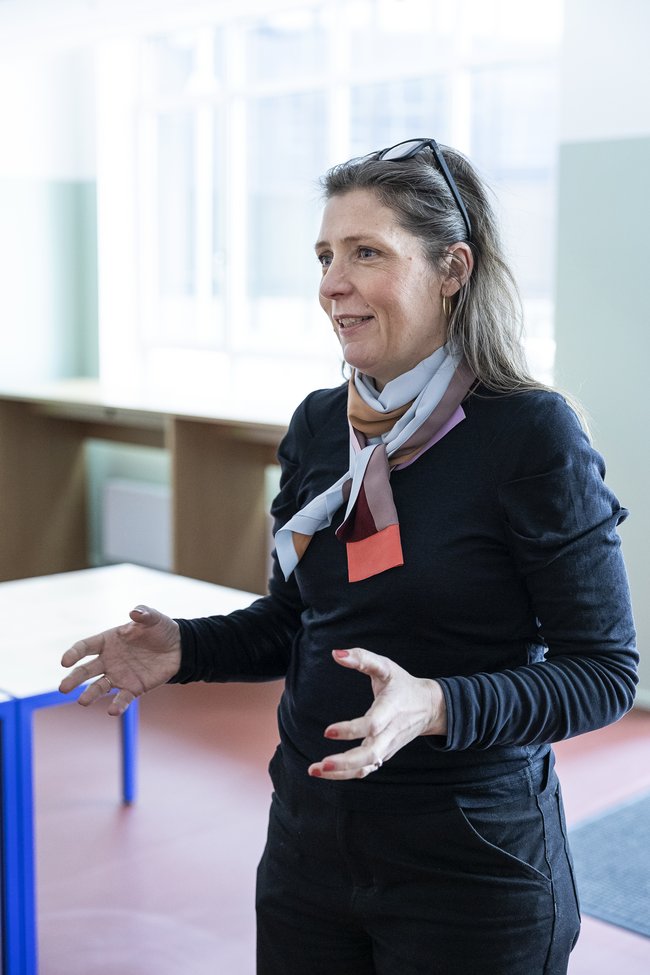
"I'm really looking forward to seeing the buildings come into use," she says.
And it’s just around the corner. At the start of the semester on 2 February, all students who have previously attended Fuglesangs Allé will move to the University City. The employees from the Department of Economics and Business Economics have already moved in, and the employees from the Department of Management will move in during week 3.
OVERVIEW OF 17,000 PIECES OF FURNITURE
Years ago, Nanna Calmar Andersen was in charge of a process where all the furniture on Fuglesangs Allé was counted and registered to assess what could be reused in the new buildings, and what was necessary to buy new. 17,000 tables, chairs, lamps and other furniture were counted and registered in a database.
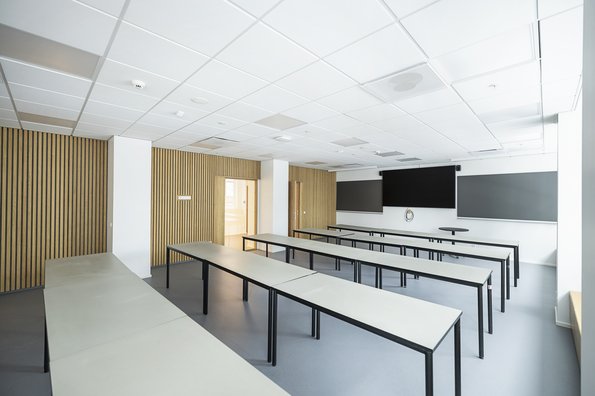
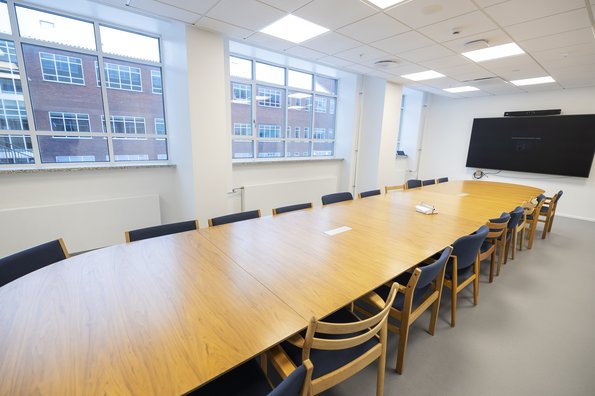
It’s essential to plan well ahead, says Nanna Calmar Andersen. Firstly, some purchases had to be made in time-consuming EU tenders and in addition, she also had to deal with the fact that the furniture was in use until 19 December last year, when Fuglesangs Allé closed to students.
An Era Has Ended: Last Day With Students at Fuglesangs Allé
"We can't remove the chairs from under people. So during the summer holidays, we sent out chairs and tables to be refurbished and brought back before the start of the semester,” she says.
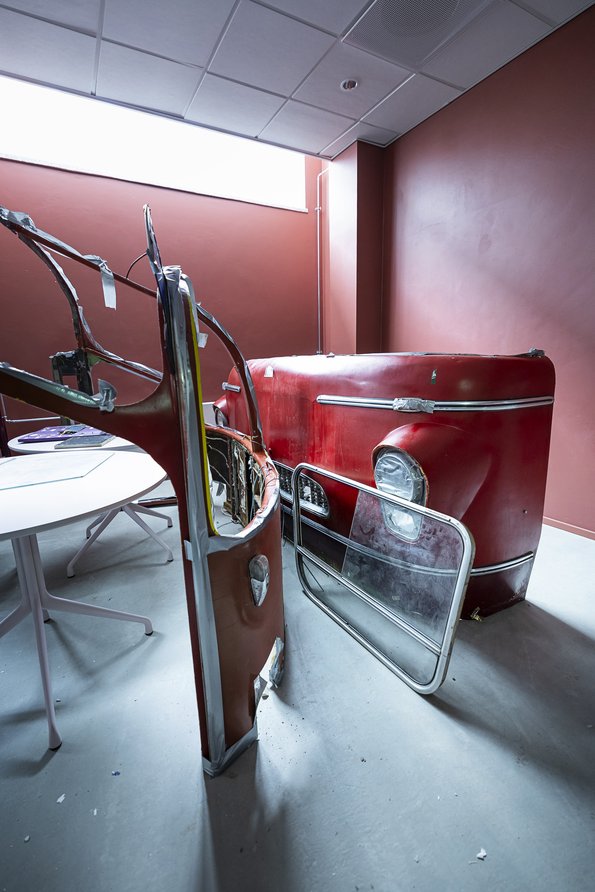
The furniture in the new buildings is a mix of new, recycled and upcycled furniture. In many of the classrooms, the furniture is exactly the same as on Fuglesangs Allé. In the common areas, it’s typically a mix of new and old.
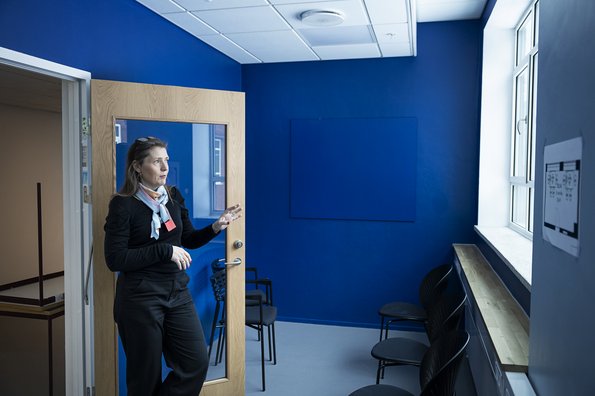
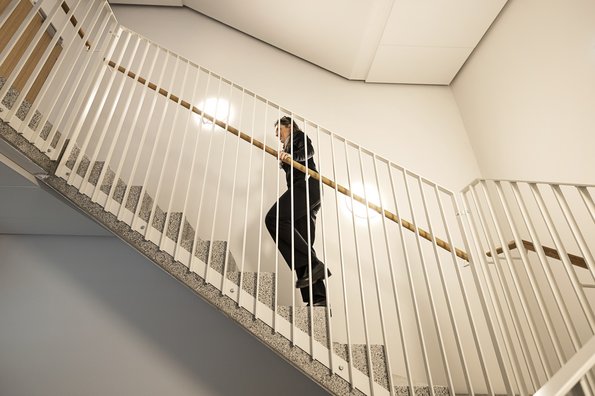
Nanna Calmar Andersen lets her hand slide over a table in the atrium courtyard.
"These are tables that we’ve had custom-built for Aarhus BSS, but where the table tops are made of old parquet floors," she says.
In other places, the furniture has been specially made for the building, for example, the reading desks in the new reading rooms. And then there is furniture that has been given a new life with paint and new upholstery – a total of 1,500 pieces of furniture have been upcycled.
FUNCTIONALIST COLOUR PALETTE AND BSS BLUE TONES
The reuse and upcycling of furniture is done from a sustainability perspective, but it’s also a way of creating character and a sense of continuity in the newly renovated buildings by bringing elements of the history and culture from Fuglesangs Allé with us, says Nanna Calmar Andersen.
The artwork from Fuglesangs Allé will therefore also be moving and will be given new places in collaboration with the departments. In addition, in the atrium courtyard and in a new café, completely new art installations will be created specifically for the site.
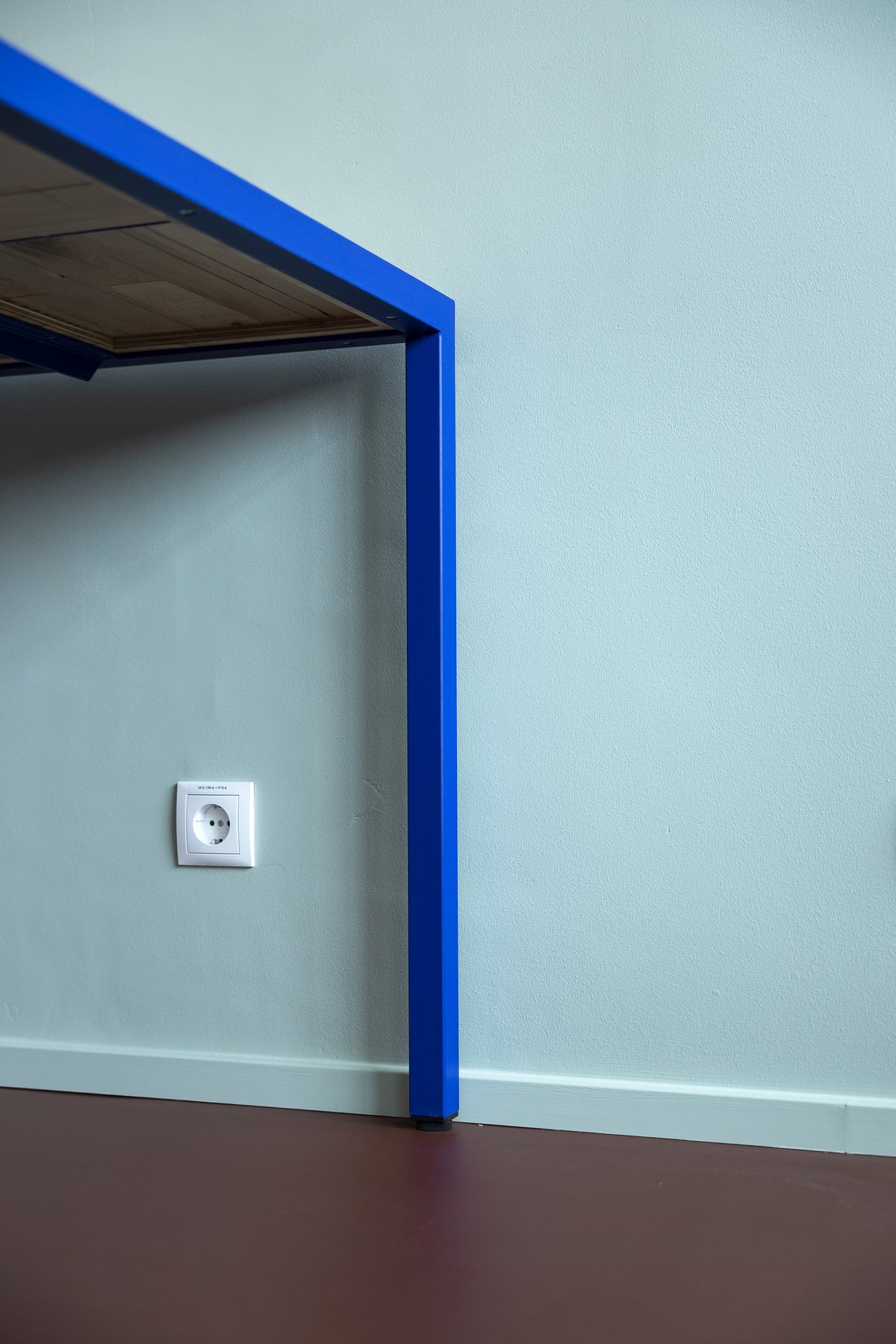
The colour palette that has guided the interior design of the buildings also contains references to history, says Nanna Calmar Andersen.
“We have deliberately avoided fashion colours and have instead used colours that are characteristic of functionalism, where several of the buildings are from. For example, the delicate mint green and the dark red, but put together in a way that seems contemporary. And then the colour blue is always included in one way or another, as it’s BSS's signature colour. In some places on a wall, in other places just on a chair or on a lamp.”
Nanna Calmar Andersen goes on to say that in the design of study environments, variation has been aimed for. There are group rooms, open zones in the hallways, classic reading rooms and study spaces in larger common areas, for example, in the round auditorium building. In other words, environments that can accommodate small and large communities, and that can support collaboration and individual immersion.
“It will be the start of a new era and a new culture. And it will be exciting to see how the students move around and use the buildings.”
The buildings are now coming into use
"It's great to see the interior design of the buildings take shape," says Nanna Calmar Andersen, who is overwhelmingly positive about how close the result is to the visualisations.
"But there are always things you discover along the way that you wish you’d done differently," she says, citing as an example the upholstery on sofas close to the premises that will house Konverterbar – the Friday bar at Economics and Management.
"Here I’d probably have chosen a leather-like upholstery like in Klubben rather than a textile upholstery. But when the decision was made, it wasn’t clear that Konverterbar would use these premises."
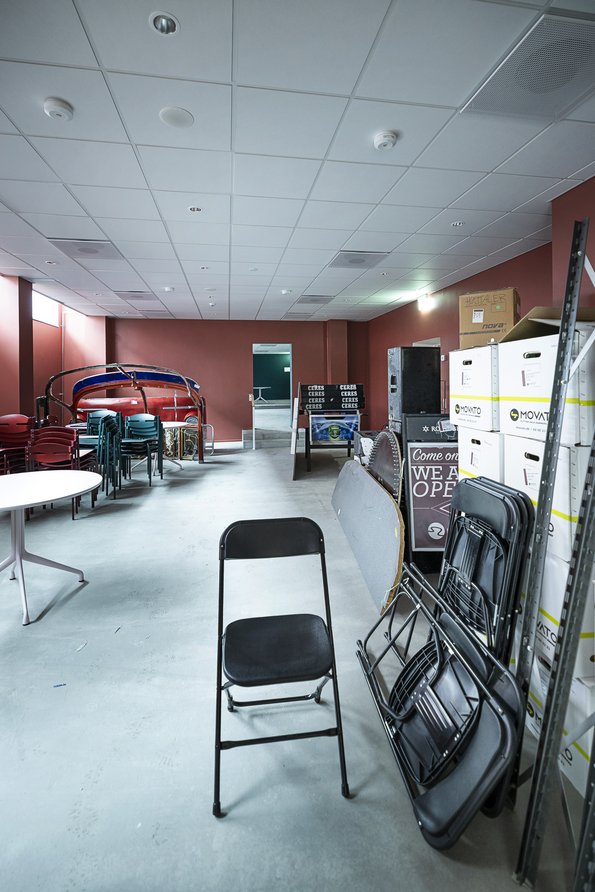
She adds that there is a fund for adjustments during the first year of the buildings’ operation.
"Because it's impossible to figure it all out in advance, there will be things we've overlooked or that need to be adjusted."
In the first months after the buildings are taken into use, Nanna Calmar Andersen will therefore be spending time in the buildings to observe how they are used and how people move through them.
This text is machine translated and post-edited by Lisa Enevoldsen.