

Fire safety: Employees feel they are being treated unequally
There is a significant difference in how staff at Aarhus University are alerted in the event of, for example, a fire. In some places, there are state-of-the-art warning systems. In other places, you have to shout to each other across the floors.

Building 1110 is located right next to the Skou Building and houses part of the Department of Ecoscience. It’s one of the buildings at Aarhus University where staff aren’t automatically alerted in the event of a fire.
This is because there is no automatic warning system, so staff must shout to one another if it becomes necessary to evacuate the building. During the last evacuation drill last summer, one colleague was unable to get out, and several staff members in the building are deeply frustrated about safety at their workplace.
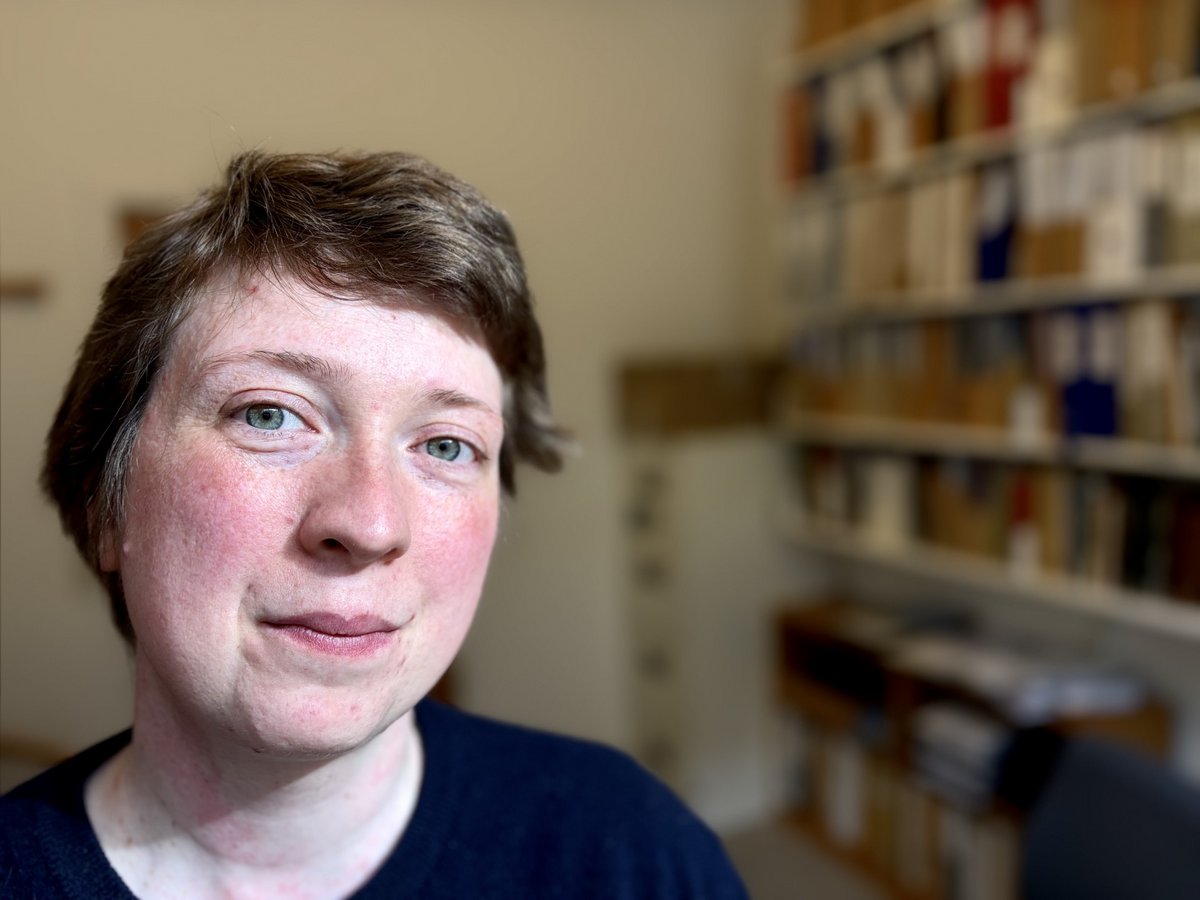
Gwen Freya Fox works as academic staff on the second floor. She started in October and was surprised to be told during her induction that there were no fire alarms, and that staff would therefore have to shout to one another in the event of a fire in the building where she was to be working.
“That’s absurd,” is Gwen Freya Fox’s immediate reaction.
A PROBLEM THAT HAS EXISTED FOR MANY YEARS
Whilst newly renovated buildings such as the Bartholin Building or new buildings such as the Skou Building are equipped with advanced fire alarm systems featuring heat, dust and smoke sensors, speakers, sprinklers, emergency lighting, smoke vents and fire doors that close automatically, there is no automatic fire alarm system in Building 1110.
Gwen Freya Fox wonders how this can be legal.
“I wasn’t quite sure who to ask, so I wrote to the building services department. They replied politely that everything in the building was in order and that, therefore, nothing further would be done. That’s actually what surprises me the most: The fire safety measures are so poor, and yet they can simply claim that it’s legal,” Gwen Freya Fox notes.
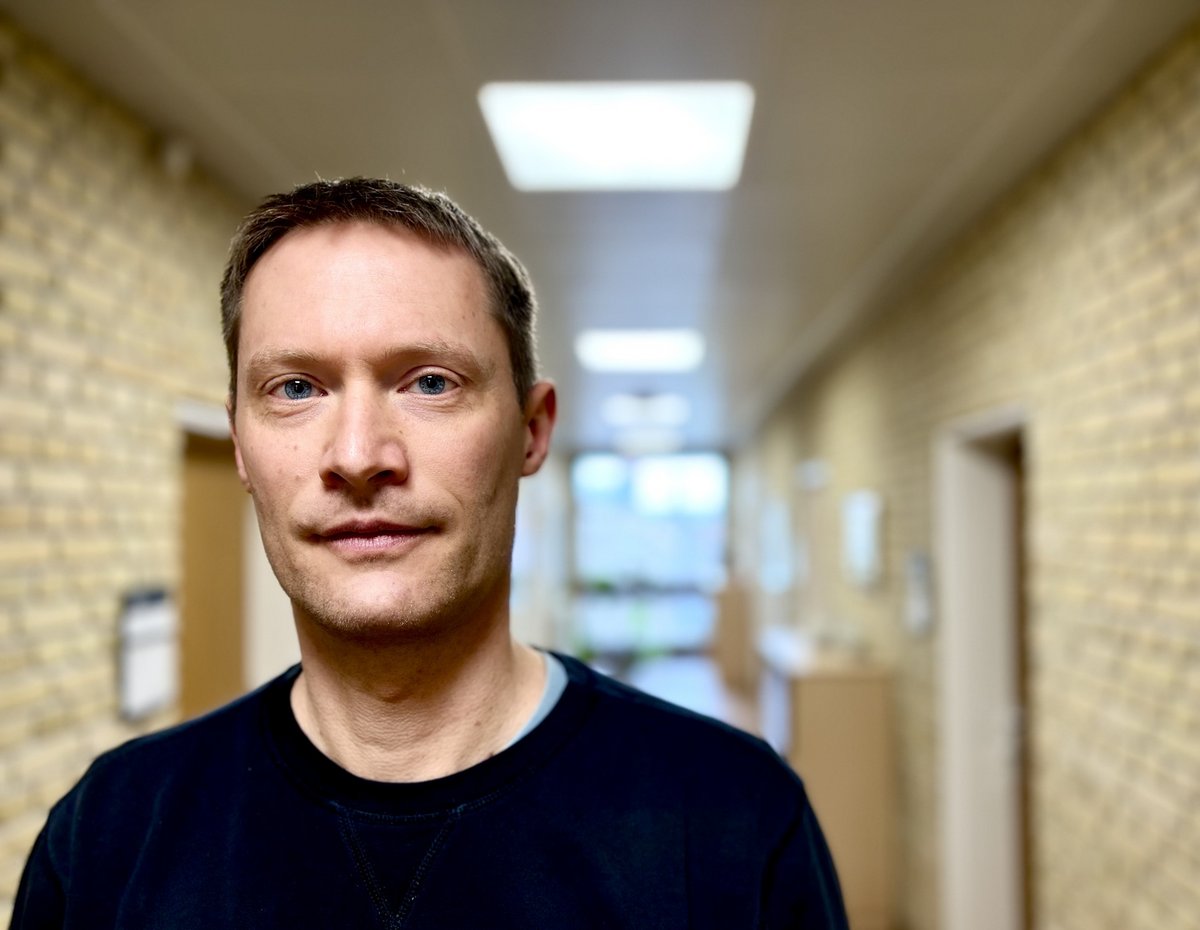
This is a view shared by Jesper Erenskjold Moeslund, a senior researcher at the Department of Ecoscience. He researches biodiversity from his office on the floor above Gwen Freya Fox, and has, over the years, gained experience in drawing attention to what he believes is a lack of adequate warning systems in the building.
It feels as though someone has to get hurt or die before this is taken seriously.
“I’ve been pointing this out for many years. I have said this many times to our health and safety representatives and to our deputy head of department, who has looked into the matter further within the organisation. The response from the building department is always the same: It’s legal, and therefore no further action will be taken. It feels as though someone has to get hurt or die before this is taken seriously,” Jesper Erenskjold Moeslund says.
Have to shout back and forth
Staff on the five floors of Building 1110 must alert one another by shouting from floor to floor if it becomes necessary to evacuate the building.
If Gwen Freya Fox wants to warn Jesper Erenskjold Moeslund on the floor above, she must first shout through a fire door out onto the staircase; the sound must then travel up the stairs, through another fire door on the floor above, down the corridor and through the door into Jesper Erenskjold Moeslund’s office.
It’s perfectly legal, but according to Gwen Freya Fox and Jesper Erenskjold Moeslund, that doesn’t mean it’s also safe and reassuring.
“I have to get on with my work, and I can’t sit here thinking about this all the time. And it’s not as if I feel my life is in danger when I show up for work. But I’m deeply frustrated that nothing is being done, and that the only response is that it’s legal,” Jesper Erenskjold Moeslund says.
Gwen Freya Fox isn’t sitting in her office with her heart in her throat either.
“But I expect things like smoke alarms and warning systems to be in good working order at my workplace.” It goes without saying. It’s unacceptable that people can get away with such a low standard. I hardly know what to say,” she says.
Far from exceptional
Building 1110 is an older building dating from the mid-1960s; it’s made for office space and is designed in such a way that the authorities don’t require an alarm system, such as smoke alarms or a voice alarm.
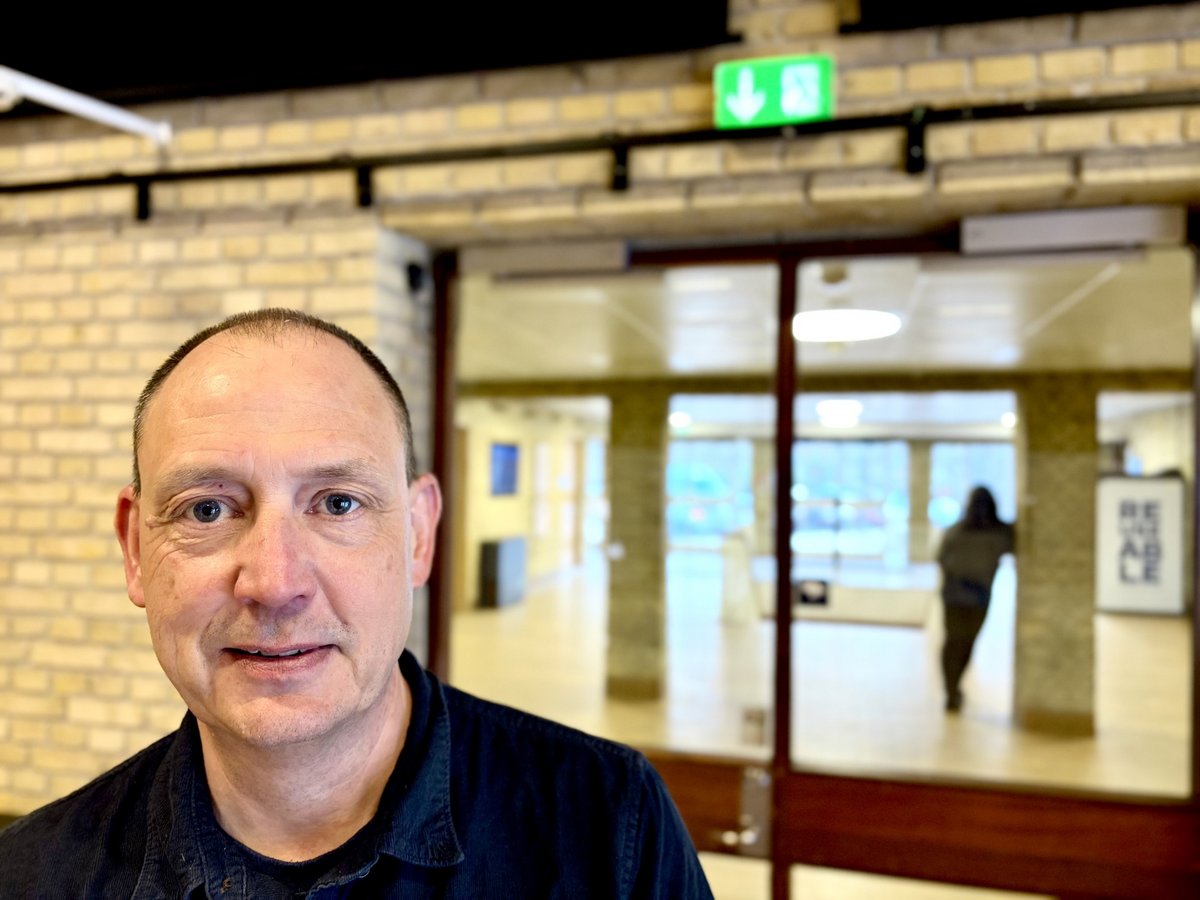
Voice alarm
A voice alarm system is a system used to alert people in emergencies, such as a fire or evacuation. It works by broadcasting clear messages in plain language, telling those affected what to do. This helps to reduce confusion and panic.
“We ensure that all our buildings comply with the authorities’ requirements. We have to, and the fire brigade drops by from time to time to check that everything is in order. If they aren’t, we’ll sort it out,” says Anders Kragh Moestrup, emergency response coordinator at Aarhus University.
Aarhus University has an evacuation plan that applies to all of its campuses. In all buildings, there are notices explaining what to do in the event of an evacuation. All staff members are introduced to the evacuation plan during their first few weeks as employees at Aarhus University.
However, the concept is of no use if you don’t realise or aren’t warned that the building needs to be evacuated.
AU’S EVACUATION PLAN
The shared evacuation concept must:
- Ensure good conditions for safe evacuation.
- Prevent and reduce the risk of personal injury.
The concept for evacuation at Aarhus University must work at all times. The university is an open institution, and so the people who are to act as evacuation leaders and meeting point leaders are not appointed in advance. It is important that everyone is able to step in and assume the role of evacuation leader or meeting point leader, if the situation demands it. It is therefore important that everyone who spends time at Aarhus University is familiar with the evacuation concept in detail.
Emergency response in case of an evacuation – Aarhus University (au.dk)
Source: AU
Furthermore, the authorities’ requirements for warning systems in buildings don’t always meet staff expectations regarding safety in a modern workplace such as Aarhus University.
When a building is to be constructed or renovated, the building permit specifies the requirements for warning. This depends, among other things, on the building’s age, materials, layout and use. For example, a single-storey office building doesn’t have the same fire alarm requirements as a laboratory building where flammable liquids are stored across five floors.
“It’s a bit of a puzzle around campus. In one building there’s a voice alarm system, whereas in the building next door there is nothing at all. During evacuation drills at AU, I often meet people who find it hard to understand why this is the case. And I understand that,” says emergency response coordinator Anders Kragh Moestrup.
Differential treatment
Back in Building 1110, both Jesper Erenskjold Moeslund and Gwen Freya Fox believe that the very different ways of warning indicate discrimination.
“You cannot use the fact that the authorities don’t require it as an excuse for the lack of a warning system. It’s our lives we’re talking about, after all,” says Gwen Freya Fox.
Building 1110 is located right next to the Skou Building, which is equipped with all the latest features modern alarm systems can offer.
“When the alarm goes off over there, we’re practically falling off our chairs over here. I don’t understand how management can justify treating people differently like that, even if it’s legal. Why wouldn’t you want to provide the same level of protection for all your employees?” Jesper Erenskjold Moeslund asks.
When Building 1110 was constructed for the Department of Geology in the mid-1960s, fire safety was barely mentioned, according to a review of the planning documents to which Omnibus has been granted access by City of Aarhus. As mentioned, this is due to the building’s age, the materials used, and the fact that it’s primarily used as office space and has been designed with multiple escape routes.
The Skou Building features a unique layout and various laboratories, and when the building permit was granted, the ‘Fire Safety Strategy’ alone ran to 22 pages.
Who is responsible?
Ultimately, responsibility lies with the university management, but responsibility for buildings lies primarily with the individual faculties’ management units, each of which has its own head of building services.
As Omnibus has previously reported, Arts is currently inspecting all its buildings to ensure that proper warning systems are in place everywhere, following the discovery that safety standards in four buildings in Nobelparken have been inadequate for over 20 years.
Fire protection has been inadequate for more than 20 years
Building 1110 houses the Department of Ecoscience, where Gwen Freya Fox and Jesper Erenskjold Moeslund work. The department is part of the Faculty of Technical Sciences. For historical reasons, the faculty shares its building facilities with the Faculty of Natural Sciences.
Omnibus has asked the facilities managers at BSS, Health and Nat/Tech whether they are complying with all rules and requirements. All three of them confirm this.
They concordantly state that all buildings comply with the authorities’ requirements and are therefore legal. However, they also acknowledge the challenges posed by the wide variety of requirements for the buildings.
Emergency response coordinator Anders Kragh Moestrup frequently raises the issue of the wide variation in warning systems across the university’s buildings with the facilities managers.
“It’s the heads of building services who are responsible for the buildings, and therefore also for safety. I’ve called for more consistent warning procedures at AU and pointed out that this can be prioritised at local level,” Anders Kragh Moestrup says.
The emergency response coordinator’s dialogue takes place primarily with the heads of building services. Anders Kragh Moestrup isn’t entirely sure whether the deans are aware of the issue. But he believes they should be.
“This is discussed annually as part of the meetings of the local occupational health and safety committees (LAMU) where the heads of department chair the meeting. They can take this matter to the faculties’ joint occupational health and safety committee (FAMU), which is chaired by the dean. So I suppose the deans are aware of this and know about the differences that exist,” Anders Kragh Moestrup says.
TOOK MATTERS INTO HIS OWN HANDS
Back in Building 1110, staff concerns and frustrations land on Flemming Skov’s desk.
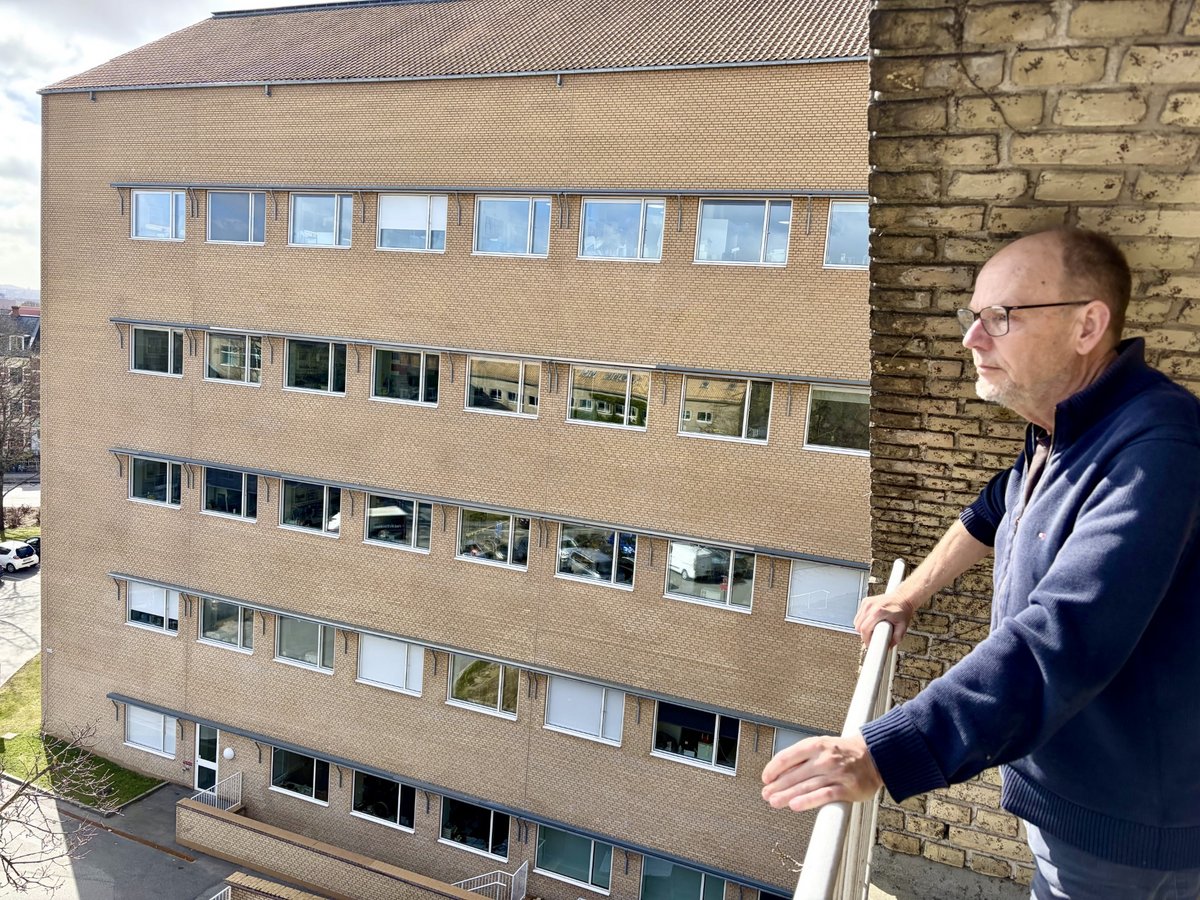
He is deputy head of the section of the Department of Ecoscience based in Building 1110, and his office is up under the roof.
“We’re new in the University Park. When we arrived on campus from Kalø four years ago, we were surprised to find that there was no warning system in the building. That’s something we have been discussing, and we’ve discussed it in our local occupational health and safety committee (LAMU). “We’ve also checked further within the system, and the answer is that the building is legal,” Flemming Skov says.
Following the drill last August, during which a colleague failed to join the evacuation when the building had to be cleared, Flemming Skov decided to take matters into his own hands.
“That exercise showed exactly why it’s not a good idea for people to shout in the corridors. It’s simply not everyone who hears it. And if there’s a fire on the stairs, you can’t get up to the floors above to warn them. It seems completely inadequate that you have to shout to each other from one floor to the next,” he says, continuing:
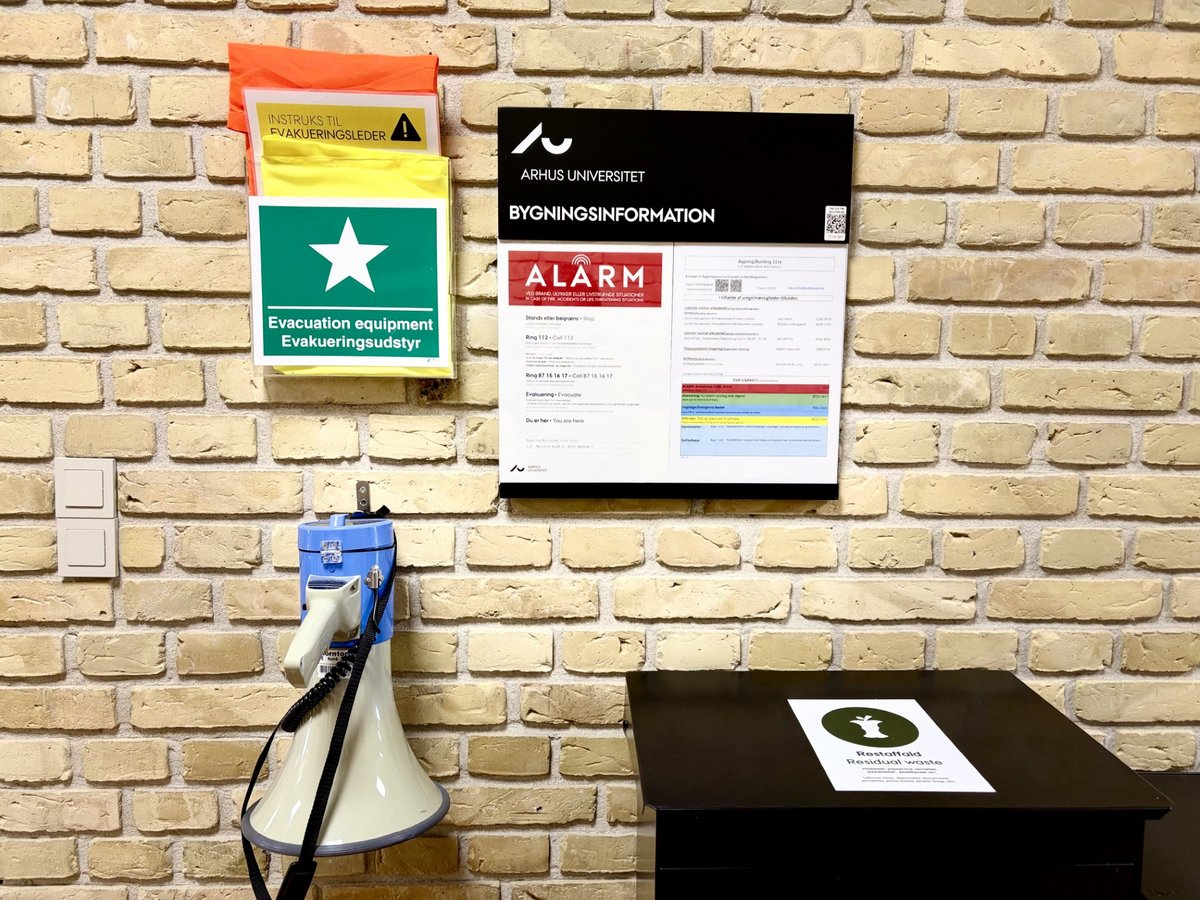
“That’s why I decided to buy four megaphones, one for each floor.” It’s a bit old-fashioned, of course, but hopefully it’s better than nothing if a fire suddenly breaks out. They make a terrible racket and provide a bit more security. The staff are puzzled by the situation, and understandably so. I believe that a modern university should have a centralised alert system that everyone is familiar with,” Flemming Skov says.
AROUND DKK 30 MILLION
It will cost money if, for example, a voice alarm system is to be installed in all the university’s buildings. A few years ago, emergency response coordinator Anders Kragh Moestrup produced an estimate showing that it would cost around DKK 30 million to cover all buildings on the university campuses.
“There’s nothing stopping faculty management from prioritising warning systems that are better than those required by the authorities, and from setting aside funds for this in their budgets,” Anders Kragh Moestrup says.
And at Health, voice alarm systems have actually been installed in several locations, even though this isn’t a requirement, Head of Buildings Conor Richard O’Connor Leerhøy explains.
“In buildings that attract large numbers of students, additional warning systems have been installed in addition to those legally required. Safety is taken very seriously, and it always has been.”
“Personally, I think there should be voice alarm systems in every building, everywhere, and I also know that my management is on board with allocating funds for it on an ongoing basis. Every time we renovate, I insist that voice alarms must be installed, even though it isn’t a legal requirement, and every time they agree,” the head of building services at Health explains.
At BSS, head of building services Peter Bachmann Vestergaard informs that the voice alarm system has been continuously upgraded and that all sections of the building are now covered by the voice alarm system, which is tested regularly.
As part of the ongoing renovation of premises and buildings at BSS, there’s always a focus on ensuring that fire safety meets current requirements. In addition, all buildings will be assessed in 2026 to establish an overall fire safety strategy, which will ensure that fire safety isn’t compromised during the day-to-day use of the buildings.
Emergency response coordinator Anders Kragh Moestrup always welcomes the focus on safety.
“This is important because it affects everyone at Aarhus University. I’m often asked whether I can be sure that people will be alerted in the event of, say, a fire, and I actually can’t promise that – nor can I guarantee it even if an alarm system has been installed,” he says, continuing:
“Whether that means we simply have to install voice alarms in all buildings, including the stables in Foulum, I don’t know. But there are certainly places where it could well be a good investment,” he continues, referring to older buildings such as the one where staff at the Department of Ecoscience currently go to work every day without an alarm system.
For the time being, Gwen Freya Fox, Jesper Erenskjold Moeslund and their colleagues in Building 1110 will have to rely on the newly purchased megaphones.
“Well, it’s a bit better than nothing,” senior researcher Jesper Erenskjold Moeslund notes.
This text is machine translated and post-edited by Lisa Enevoldsen.