

Red Bull gives the Regatta wiiings
Red Bull is as close as it can get to owning the largest student-run event in the Nordic region without actually owning it, according to expert. The student social committee Umbilicus, which organises the Regatta, maintains that it is their event, but acknowledges that it definitely wouldn’t be the same without the expertise and financial contribution of their major partner.

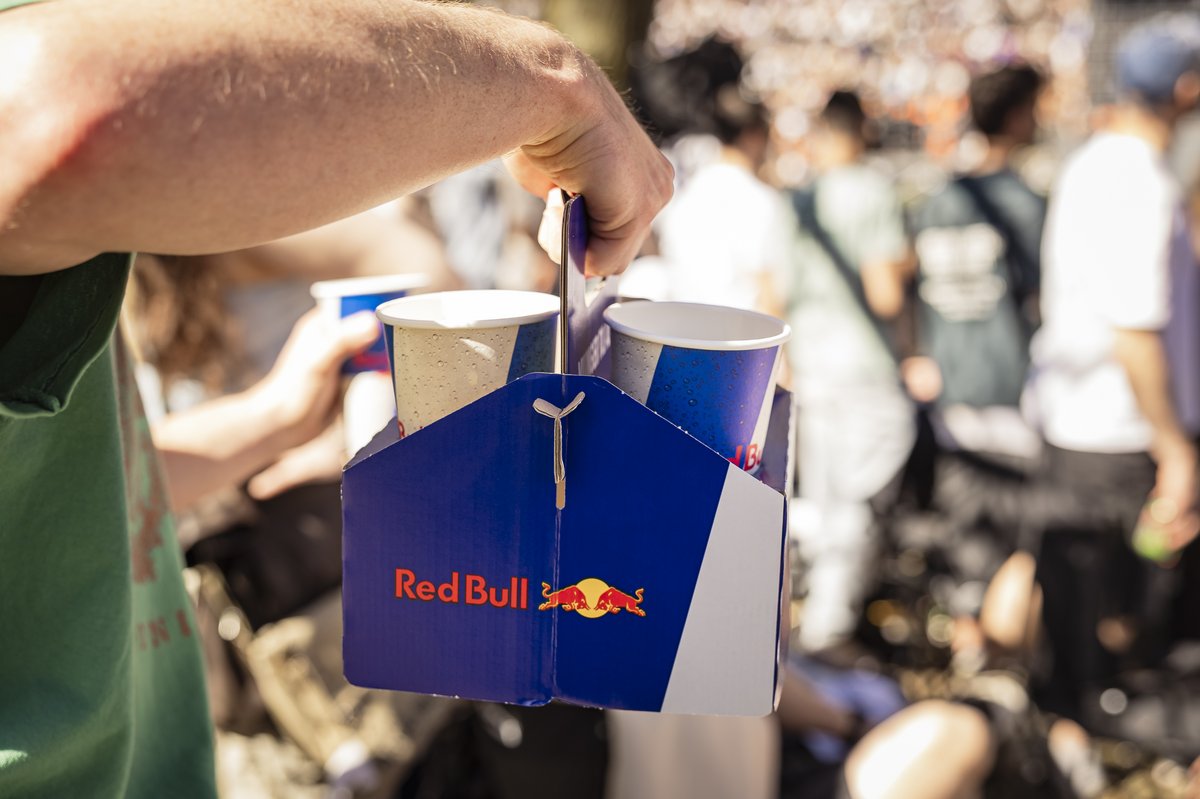
When the Regatta filled the University Park with 30.000 party-loving students in April, the park was simultaneously plastered with the blue-and-red logo of energy drink giant Red Bull – on the raft in the middle of the lake, on the lane ropes, on virtually all of the thousands of drinking cups and drink carriers, on the Red Bull lounge, on the T-shirts worn by the DJs, and so on; and on the big screen, adverts were running with the message that Red Bull gives you wiiings.
This despite the fact that Red Bull does not appear among the official sponsors of the Regatta. So what is the connection between the energy drink company and the largest student-run event in the Nordic region, also known as the Regatta?
Red Bull pushes the boundaries at AU
Red Bull’s role is unclear
This also surprises Trine Susanne Johansen, associate professor in strategic communication at the School of Communication and Culture.

“I’d love to know what the deal with Red Bull is all about,” she says, continuing:
“Red Bull helps organise the Regatta. They help raise the standard of the event with a stage, a pontoon, equipment, parasols, cups, and whatever else is needed. This results in a very prominent presence, which nobody really pays much attention to, but which has gradually become very significant," says Trine Susanne Johansen.
She believes that a legitimacy issue could potentially arise because it is unclear what role Red Bull plays in connection with the Regatta.
“We cannot assess the legitimacy of the partnership with Red Bull when there is a lack of transparency regarding what is going on, and I find that problematic. What are the terms of a partnership that gives Red Bull such massive exposure without them appearing as an official sponsor?” asks Trine Susanne Johansen.
Umbilicus shares details
The Regatta is organised by the student association Umbilicus, which is the medical school’s student social committee. In addition to organising the Regatta, it also organises Friday bars and parties for medical students.
The Regatta, specifically, is organised by the association’s executive committee, which consists of two people who work together to coordinate and plan the huge event that the Regatta has grown into.

“I fully understand why people associate the Regatta with Red Bull because of their significant exposure, and it’s only natural that questions are asked when a company has such a prominent presence,” says Daniel Vestergaard, who, alongside Emil Ebbensgaard, heads the executive committee at Umbilicus.
As organisers of the Regatta, the two have decided to share some of the details of their partnership with Red Bull and address some of the criticism levelled by Trine Susanne Johansen.
They readily admit that the contribution made by the international mega-brand to the Regatta is absolutely crucial to the event looking the way it does.
Financially speaking, Red Bull is putting a six-figure cash sum into Umbilicus’s coffers, and according to the executive committee, there are no restrictions on what the money is to be used for.
“We cannot give any further details about Red Bull’s contribution other than to say that it is a six-figure sum. The contract states that we are not allowed to disclose the amount. It’s standard practice in contracts of this sort not to disclose that sort of information. There’s nothing underhanded about it or anything; it’s simply that the association has agreed to this in the contract," explains Emil Ebbensgaard.
Contributes cash funding
There are 10 official sponsors for the 2026 Regatta. They can be found on the Regatta’s website, which thanks them for their contributions. Here you’ll find names like Djursland Bank, Cryos, Nordic Films Cinemas, and the university’s own Kitchen. But despite the massive exposure, Red Bull is not on the list.
This is because the organisers distinguish between sponsors and partners.
“Sponsorship deals are as simple as this: we provide a service – a spot on the lawn or a slot on the big screen – which the sponsors pay a certain amount of money for, and that’s pretty much it. We’ll then receive some material, which will be shown on the big screen, and the sponsors will turn up at the agreed spot on the lawn during the Regatta. If you are a partner, the dialogue is closer and involves much more than a simple exchange of money for a service. A partnership works both ways,” explains Emil Ebbensgaard, adding that the official sponsors contributed around 100.000 DKK to this year’s Regatta.
Research carried out by Omnibus shows that Red Bull contributed just under 200.000 DKK to the Regatta, but it is not clear whether this amount covers all the services exchanged as part of the partnership.
Without either confirming or denying the exact amount for either 2025 or this year, the organisers state that the contract with Red Bull runs for three years and that it also includes a partnership with Umbilicus that goes beyond the Regatta. If you have a contract with the Regatta, you also have a contract with Umbilicus, as Emil Ebbensgaard puts it.
‘Not quite good enough,’ says associate professor
But that’s not quite good enough, according to Trine Susanne Johansen, associate professor in strategic communication. She finds it ‘very natural’ that there are various forms of collaboration surrounding the Regatta.
“But that does not remove the need for transparency regarding who agreements are made with. In fact, quite the opposite, actually. The potential legitimacy problem does not arise because of the collaboration itself, but rather due to the lack of transparency surrounding it so far,” she says, pointing out that nothing prevents partners from being mentioned on the website on equal terms with sponsors.
“That would ensure a greater degree of transparency regarding who is actually contributing to the event,” says Trine Susanne Johansen.
According to research carried out by Omnibus, it cost just under a million DKK to organise the Regatta last year. This means that Red Bull is contributing almost a fifth of the cost of the party.
Adds expertise and experience
But money isn’t everything, and certainly not when you’re two medical students with just a couple of months to organise a party for 30.000 people; and this is where Red Bull makes a significant contribution in ways that can’t be quantified in a balance sheet, says Daniel Vestergaard
Red Bull and the Regatta
Omnibus can trace the relationship between Red Bull and the Regatta back to 2012. Ahead of the 2012 Regatta, René Holten Poulsen attended a training session in the University Park. As the defending Olympic silver medallist in kayaking and arguably Denmark’s most successful paddler of all time, and a so‑called Red Bull athlete, René Holten Poulsen was preparing to bring home gold from Beijing later that year. But first, he had to offer advice to the competing student associations on the art of paddling fast.
Red Bull ended up staying at the university. It is somewhat unclear when an actual collaboration began.
Source: The Regatta: from boat race to public festival – and back
“Red Bull has a huge events department that we can draw on, which has experience with major events; the fact that Red Bull is showing an interest in the Regatta really puts it on the map.” Red Bull fits in well and elevates the Regatta to a more or less serious sporting event," he says, continuing:
“Red Bull is associated with sport and an active lifestyle, and with something that’s a bit different and a bit extreme in a cool way. The Regatta is too, so in that sense it fits well. And it’s an energy drink that also supports and sponsors a whole host of big-name sports stars, so it’s not that bad. So, I’m not fed up with the publicity Red Bull gets."
Besides the funding and the opportunity to save money by drawing on the events department, Red Bull also provides a great deal of logistical support for the Regatta. According to Daniel Vestergaard and Emil Ebbensgaard, this means setting up the raft in the middle of the lake, where the DJs and the hosts will be based, and setting up the many bars in the park.
“We could probably do it ourselves, but it would take a lot of time to plan and involve a great many hours of work, which we could instead spend on something else,” says Emil Ebbensgaard.
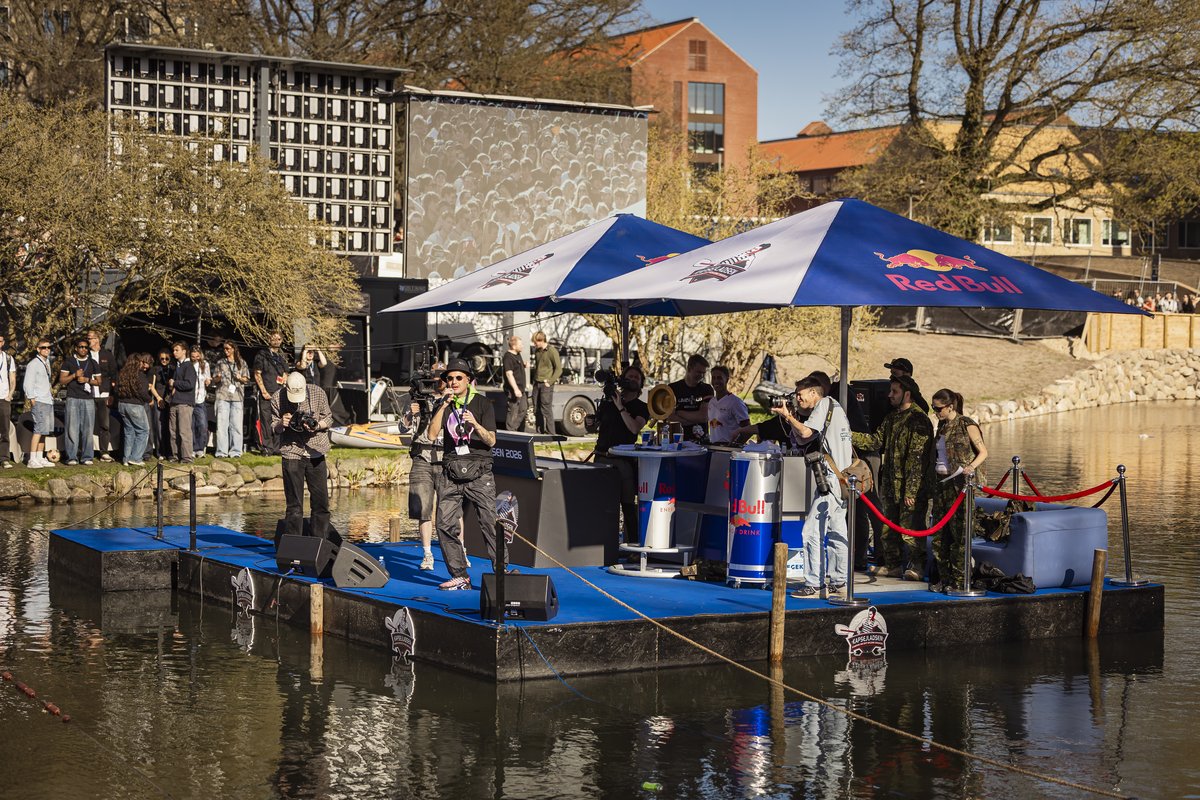
There’s no doubt that Red Bull has a strong visual presence at the Regatta. But that doesn’t mean that the collaboration plays a major role in the planning stage, or that Red Bull has much influence over what happens on the day of the race.
“As new organisers, we’re mainly focusing on what we can do differently, which is why we haven’t had much discussion with Red Bull. It just works based on previous experience," says Emil Ebbensgaard.
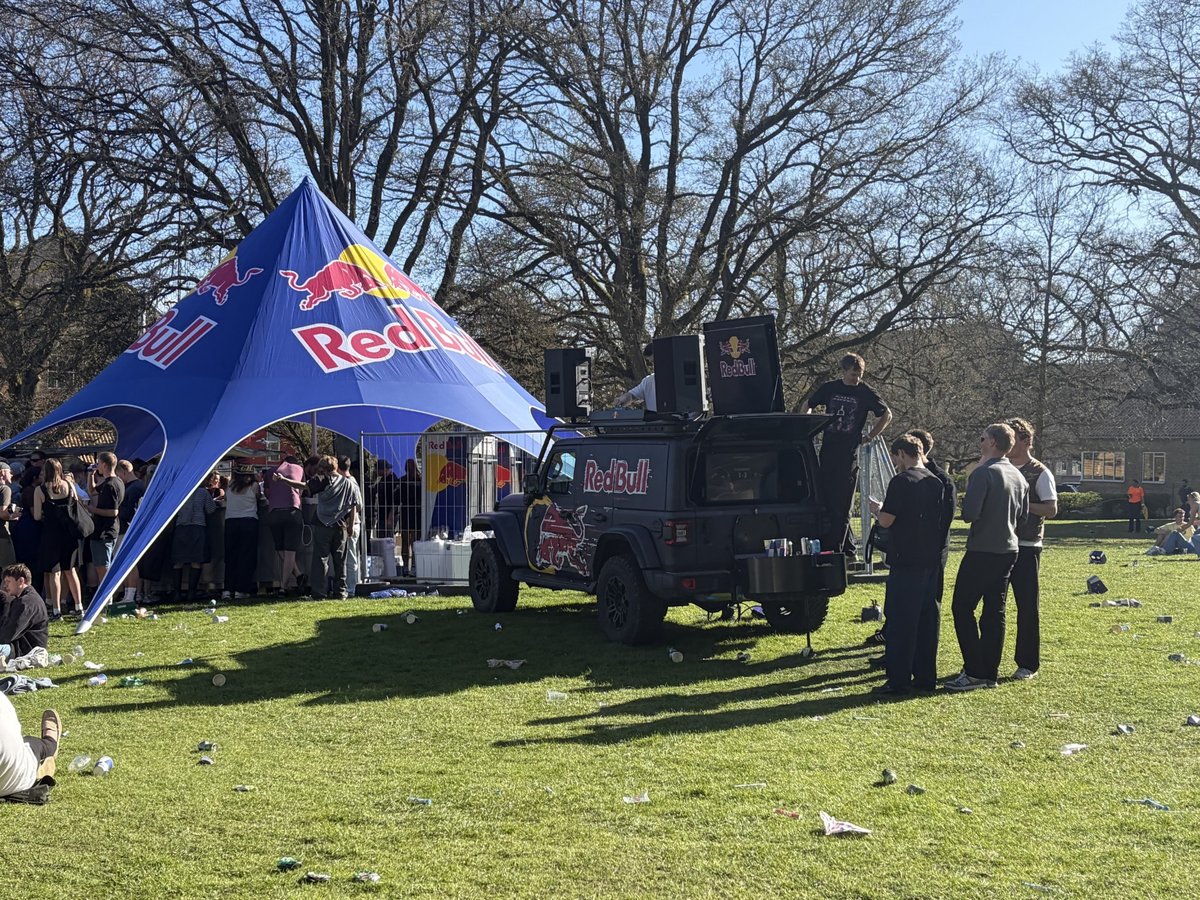
This year, however, Red Bull was behind one of the new initiatives. There was an extra tent and one of Red Bull’s event vehicles in the northernmost part of the University Park during the Regatta. According to the organisers, this is an example of how Red Bull is making a contribution.
“Red Bull offers to bring the car, set it up, and provide a DJ, and then we make an assessment. We decided it was a good initiative in terms of spreading out the crowds more and making the northern part of the park more attractive,” explains Daniel Vestergaard.
Red Bull in a nutshell
The story of Red Bull begins in Thailand, where Austrian Dietrich Mateschitz discovered the energy drink Krating Daeng, which Chaleo Yoovidhya had developed to sustain the energy of hard-working Thais.
The two joined forces, adapted the product for the Western market, and launched the first Red Bull in Austria in 1987.
Since then, the company has grown primarily through unconventional and innovative marketing.
Today, Red Bull is one of the world's most well-known beverage brands. In 2025, they had just under 22.000 employees, activities in 178 countries, and sold almost 14 billion cans of energy drinks.
The company is still controlled by the two founders, who are currently estimated by Forbes to have a fortune of around 45 billion USD.
Since Red Bull was launched in Denmark in 2009, the brand has grown into an international giant.
They own major sports brands, athletes, and events all over the world, and cover everything through their own media organisation and social media channels.
“I wouldn’t be surprised if Red Bull had tried to buy the Regatta,” says Trine Susanne Johansen, associate professor in strategic communication.
“Red Bull doesn’t just sponsor – it owns. In my opinion, Red Bull is as close to owning the Regatta as you can get without actually owning it,” says Trine Susanne Johansen, referring to the massive exposure the brand receives during the Regatta.
“Nothing comes for free,” notes Emil Ebbensgaard.
“Certainly not when you’re organising a party for 30.000 people who don’t pay an entrance fee and who can bring their own drinks from home.”
"Would it be great if it said 'Regatta' everywhere instead of 'Red Bull'? Yes, of course. But that’s not economically feasible. We need to find the money somewhere, and we’ll get it from those who are willing to pay to have their name featured – and Red Bull is one of them," he says.
“The Regatta is ours”
Neither Emil Ebbensgaard nor Daniel Vestergaard makes any secret of the fact that Red Bull is helping to organise the Regatta.
“But the regatta is ours. It’s our event. I’ve never heard anyone say that the Regatta is a Red Bull event. I think most people are aware that Umbilicus is the main organiser. Our most-viewed post on Instagram, with 95.000 views, is the event programme, which states right at the beginning that Umbilicus is the organiser,” says Daniel Vestergaard.
“If you believe otherwise, you certainly haven’t looked into what you’re taking part in,” adds Emil Ebbensgaard.
Trine Susanne Johansen admits that many of the students taking part in the Regatta are well aware of who organises it.
“But perhaps the point is also: What does the rest of Denmark see when they look at the Regatta and see it featured in the media and elsewhere? If the most prominent brand appearing in media images is Red Bull, what impression does that create?” she asks.
“You could, of course, explore the idea of taking Red Bull’s contribution out of the Regatta and see what’s left.”
A Regatta without Red Bull
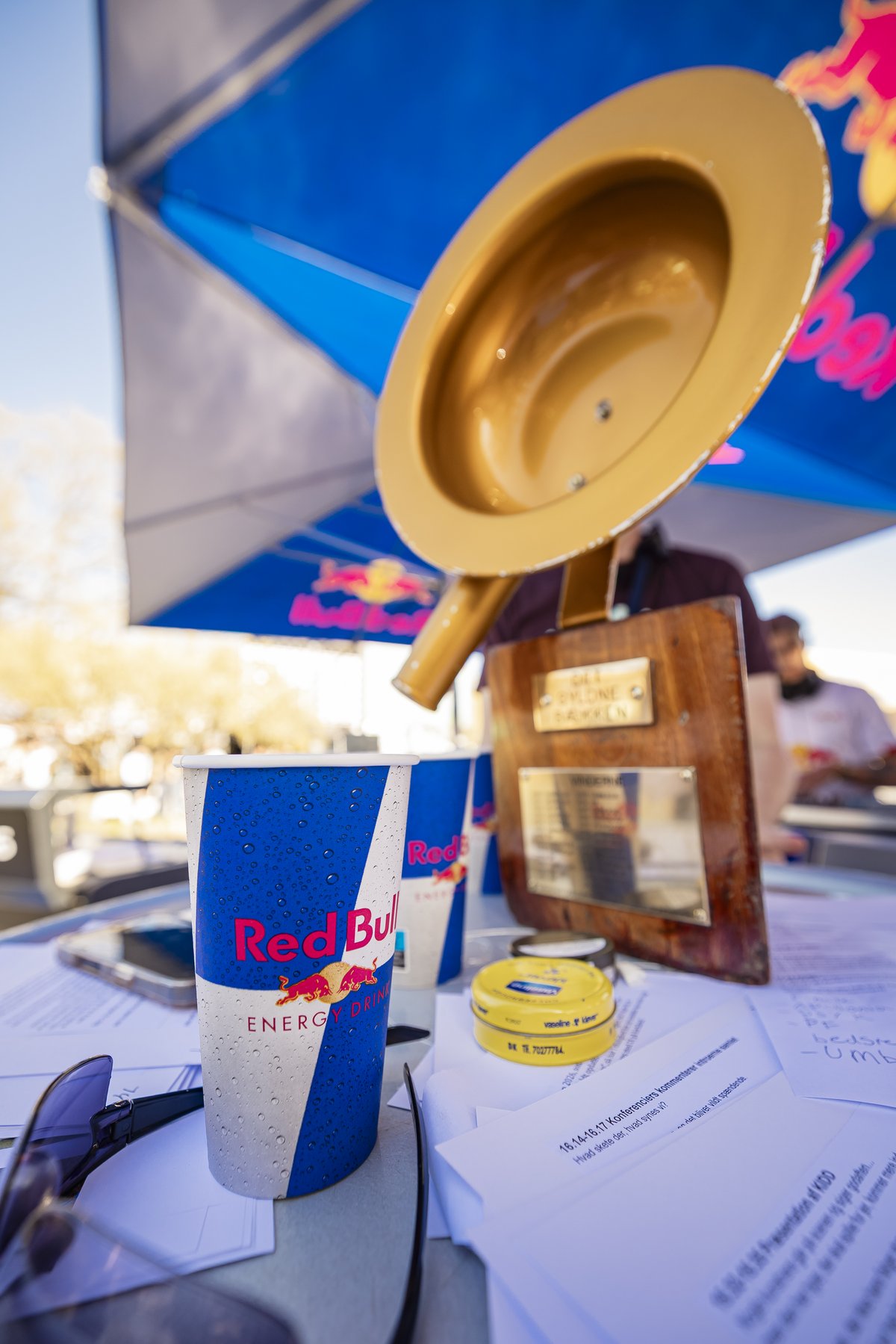
Visually, Red Bull dominates almost everything when the battle for the Golden Bedpan gets underway in the University Park. Yet, this does not mean that the Regatta doesn’t exist without Red Bull, according to the organisers.
“If you take Red Bull out of the picture, you could still organise a Regatta, but it would be more stripped-down and not nearly as enjoyable.” We would end up with many hours of extra work. The Regatta wouldn’t die, but there are many of those ‘nice-to-have’ things that we wouldn’t be able to afford,” notes Emil Ebbensgaard, before Daniel Vestergaard continues:
“There was a time when the Regatta didn’t have a raft, and when the queues for the toilets were longer. But there is an expectation now of what the Regatta is and should be. It’s such a big event."
This year’s organisers believe that Red Bull is well positioned ahead of the contract renegotiation this autumn, but they also state that renewal of the contract is by no means a given.
“When we negotiate with Red Bull again, we’ll definitely be looking at alternative offers to ensure we get the best possible contract. “Whenever we negotiate new contracts, we explore alternative partners before making a decision,” says Daniel Vestergaard, stressing that Umbilicus always handles its own contract negotiations, whether with Royal Unibrew, Carlsberg, a spirits supplier, a security firm, or Red Bull.
Red Bull is the best right now
However, when it comes to renegotiating the contract with Red Bull, it is also worth keeping in mind that any other offer would have to be significantly better before it would be worthwhile for Umbilicus to embark on the extensive task of changing partners.
“We are always free to change our business partner when a contract expires. The contract with Red Bull, too. That’s how the market works. If someone were to offer more than Red Bull and provide a better setup, we might consider it," says Emil Ebbensgaard.
But every time we negotiate a contract, we have to see greater collaborative or financial value for us than what we already have. And so far, there hasn’t been a better opportunity than Red Bull. They have a wealth of experience, thanks to their long-standing involvement in the Regatta, and they provide equipment and a financial contribution of such high value that there has been nothing better,” he notes.
Omnibus has been in contact with Red Bull, who does not wish to participate.
This text is machine translated and post-edited by Mie Skov Jeppesen.