

Time, money, and FOMO are preventing AU students from going on exchange
Fewer AU students are going on exchange, and according to the students themselves, barriers such as time, finances, unclear communication, and the fear of missing out (FOMO) all put a damper on their wanderlust. All signs point to AU when it comes to the lack of clear communication, according to International Director Rikke Nielsen.

Project MOBIL
In autumn 2025, AU launched ‘Project MOBIL’, which aims to identify the barriers AU students face when it comes to going on exchange.
This has resulted in a 28-page qualitative report, “Perceived barriers for going on exchange”, in which AU has gathered responses from over 130 students through interviews, diary entries, and questionnaires. Eleven themes recur in the students’ responses as perceived barriers to going on exchange.
Conclusion
The students highlight time as a significant barrier. This includes the time-consuming application process, the waiting period after the application has been submitted, and the question of whether going on exchange will fit in with their future plans. And because of this, many students are calling for clearer communication from AU.
Several students point out that going on exchange is not as appealing as other competing options within their study programme, such as internships. But the student life in Aarhus, the courses at AU, and student jobs can also give rise to FOMO if you’re planning to go abroad.
On the more administrative side, students highlight uncertainty surrounding whether they will be able to receive credit transfer for their courses as another barrier. In addition, both the quality of the courses abroad and whether the destinations are prestigious enough are also important factors for some students.
Some studies have little to no culture of going on exchange, and as a result, some students feel they lack role models and peer-to-peer support during the application process.
Traditional concerns such as housing and financial conditions also deter students from going abroad.
In recent years, the number of AU students who pack their bags to go study abroad has fallen significantly. From 2019 to 2024, the number has fallen by 30 per cent, according to AU’s own figures. Yet at AU, the objective is clear: More AU students should go on exchange.
AU wants more students to go abroad – fair will help you learn more about how to go on exchange
“We are very keen to strengthen our students’ skills and abilities,” says Rikke Nielsen, International Director at AU Student Administration and Services. She highlights teamwork skills, entrepreneurial skills, and leadership skills as some of the qualities that students develop during their studies abroad, in addition to improved language skills and new perspectives.
Besides the fact that fewer students are taking up the opportunity to go on exchange, a third of them also drop out after submitting their application.
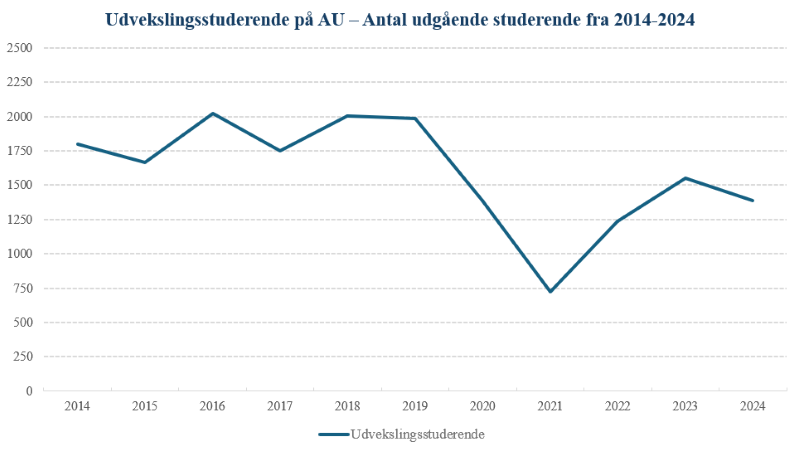
As a result, AU has investigated what it is that prevents students from going abroad. A new internal report identifies 11 barriers that prevent AU students from travelling abroad as part of their studies. Among these barriers are time, finances, and ‘FOMO’ (fear of missing out, ed.).
Possible backlog due to the coronavirus
“We have gained valuable insight into what might be preventing AU students from going abroad,” says Rikke Nielsen, emphasising that although AU would like to see more students applying for exchange, this doesn’t mean that the university has set a specific target.
“We don’t need to persuade students to go abroad, but we do need to make sure that they’re aware of the option,” says Rikke Nielsen.
And the report concludes that far from all students are aware that going on exchange is an option, which has come as a surprise to Rikke Nielsen.
“I actually thought that all students knew they had the opportunity to go on exchange,” she notes.
An analysis by the Danish think tank DEA published last autumn shows that only 15 per cent of students graduating from higher education degree programmes in 2023 had gone on exchange during their studies. In the years before the coronavirus pandemic, that number remained stable at 22 per cent.
“I think we’re missing a couple of exchange cohorts from the Covid era, which might have had a knock-on effect, as there hasn’t been this peer-to-peer mentoring. In other words, students discussing the options among themselves,” Rikke Nielsen notes as a possible explanation for the declining interest.
Dropped out of the exchange programme
One of the students who dropped out of the exchange programme after applying is Emma Volf Skole, who is in her fourth semester studying English. During the application process, she found herself missing information and feedback on the specific destinations from other students who had gone.
“It may be very different depending on whether you’re in New Zealand, the US, or Ireland,” she explains. Originally, she was supposed to go to Limerick, Ireland, but ended up dropping out.
“The decision came a bit late. I’d got so far in the process that I’d already applied for a place to live over there,” she says. That was in November, and she was due to leave in January. Due to a housing crisis in Ireland, there was a chance that the students wouldn’t be allocated housing and would have to find it for themselves.
This became a source of stress and made her wonder whether she should go at all.
“I realised it wasn’t for me. I was really inspired by hearing other students talk about how much they had gained both socially and academically. But I’d kind of forgotten to ask myself whether it was the right decision for me,” explains Emma Volf Skole.
FOMO
Particularly, her life here in Denmark tipped the balance and made her decide to drop out.
“I really enjoy the student life here, my part-time job, my friends, and being close to my family. I’m really happy here at home, so it’s a bit bothersome to have to leave,” says Emma Volf Skole.
“I’m really happy here at home, so it’s a bit bothersome to have to leave,” says Emma Volf Skole
According to the report, she is far from alone in citing FOMO as a reason for dropping out of going on exchange. International Director Rikke Nielsen has also noticed this.
“It’s a bit of a surprise to me that there’s this FOMO. I had the impression that there was a fear of missing out in regard to the students who are actually going on exchange and all the things they’re set to experience. But it has turned out to be the exact opposite,” explains Rikke Nielsen.
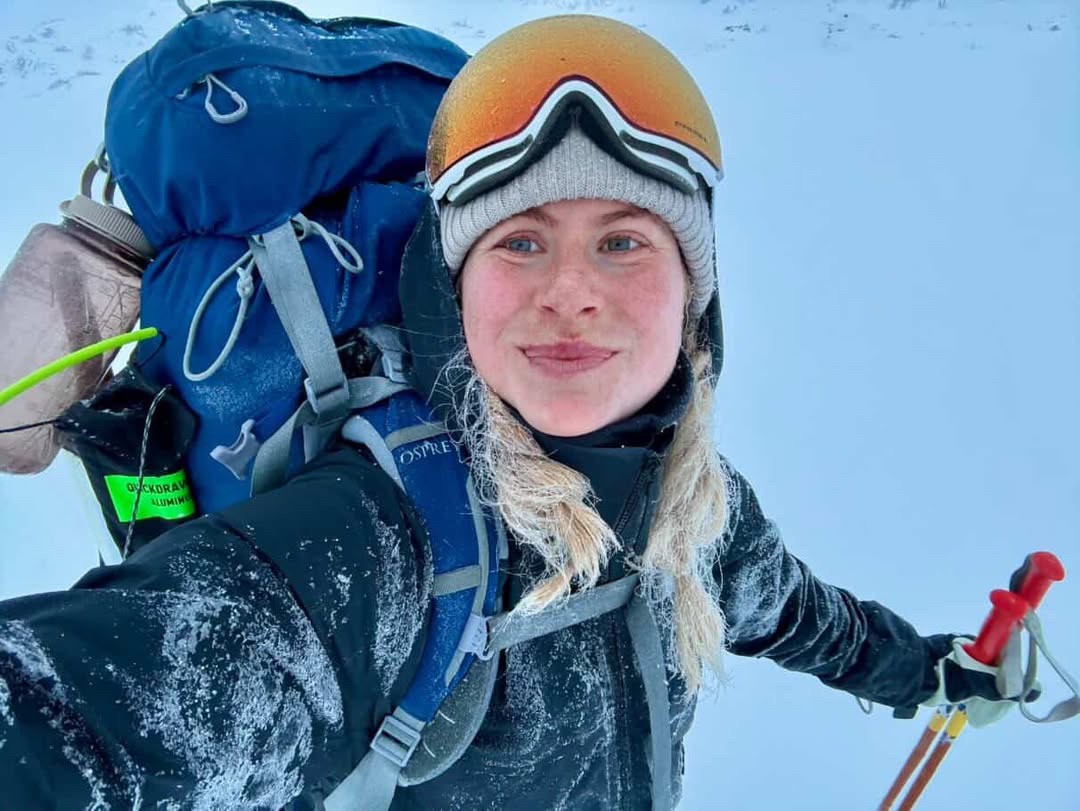
Laura Kirstine Liboriussen is also familiar with all these considerations and the process involved in applying for exchange. She is currently on exchange in Telemark, Norway, and although she ended up going, she is clear about what she thinks of the application process leading up to it.
“I don’t think it was a particularly easy process. There were lots of steps and checks to go through,” says Laura Kirstine Liboriussen, a sixth-semester sports science student.
I don’t think it was a particularly easy process
“I don’t think it was a particularly easy process,” says Laura Kirstine Liboriussen
“I spent a few hours each week applying because there were so many deadlines and emails. I was writing my bachelor’s exam at the same time, so it wasn’t always that great," Laura Kirstine Liboriussen continues.
Along the way, the sports science student also had her doubts about whether she was on the right track in the process.
“I was constantly worried that I’d done something wrong, so that I might not get my Erasmus grant, that I wouldn’t be able to go after all, or that they wouldn’t accept my courses,” explains Laura Kirstine Liboriussen.
Deadlines for exchange
The application deadline this year is 1 December for exchange stays in autumn 2027 and spring 2028.
Additionally, it’s often possible to apply for any remaining spots if you happen to miss the deadline for the first round of applications. These spots are allocated on the basis of the students’ average grade.
Sources: AU.
Calls for clearer communication from AU
Laura Kirstine Liboriussen felt that AU could have provided more and better information about the process of applying for going on exchange.
“You have to find the information yourself. There isn’t a standard user guide that’s easily accessible,” says Laura Kirstine Liboriussen, continuing:
“I think that’s a bit of a shame. I think it deters many students from applying for exchange. It becomes too difficult,” she points out.
International Director Rikke Nielsen completely agrees with the students on this.
“All signs point to us. We have a major communication challenge ahead of us,” says Rikke Nielsen
“All signs point to us. We have a major communication challenge ahead of us. We need to be more on the same level with our students when it comes to providing information. “Both to make sure that they receive the right information at the right time, and through the right channels,” says Rikke Nielsen, continuing:
“We’re doing a great deal at the moment, but there are certain areas that we need to take a closer look at and approach things differently if we’re to achieve our goal of ensuring that more students are aware of their options and receive the right information,” admits Rikke Nielsen.
The feedback from the students has given her food for thought, and she is now setting out to identify how AU, on a broader scale, will break down the barriers highlighted by the students in the report.
“The report allows us to act on this.” “The Education Committee at AU has decided to set up a working group that has to come up with concrete proposals on how we can continue our efforts to address the barriers that students experience,” says Rikke Nielsen, who adds that the working group’s recommendations are due to be discussed by the Education Committee in early autumn 2026.
Well worth it
Although applying for going on exchange is time-consuming, difficult, and possibly a financial burden, it is well worth it, according to Laura Kirstine Liboriussen.
“It’s been absolutely amazing. I’ve often had to pinch myself at the fact that I actually get to have this opportunity abroad. I think it’s a real shame that more people aren’t doing the same,” concludes Laura Kirstine Liboriussen.
This text is machine translated and post-edited by Mie Skov Jeppesen.