
She has walked thousands of kilometres along the former hospital corridors – now her daughter studies here
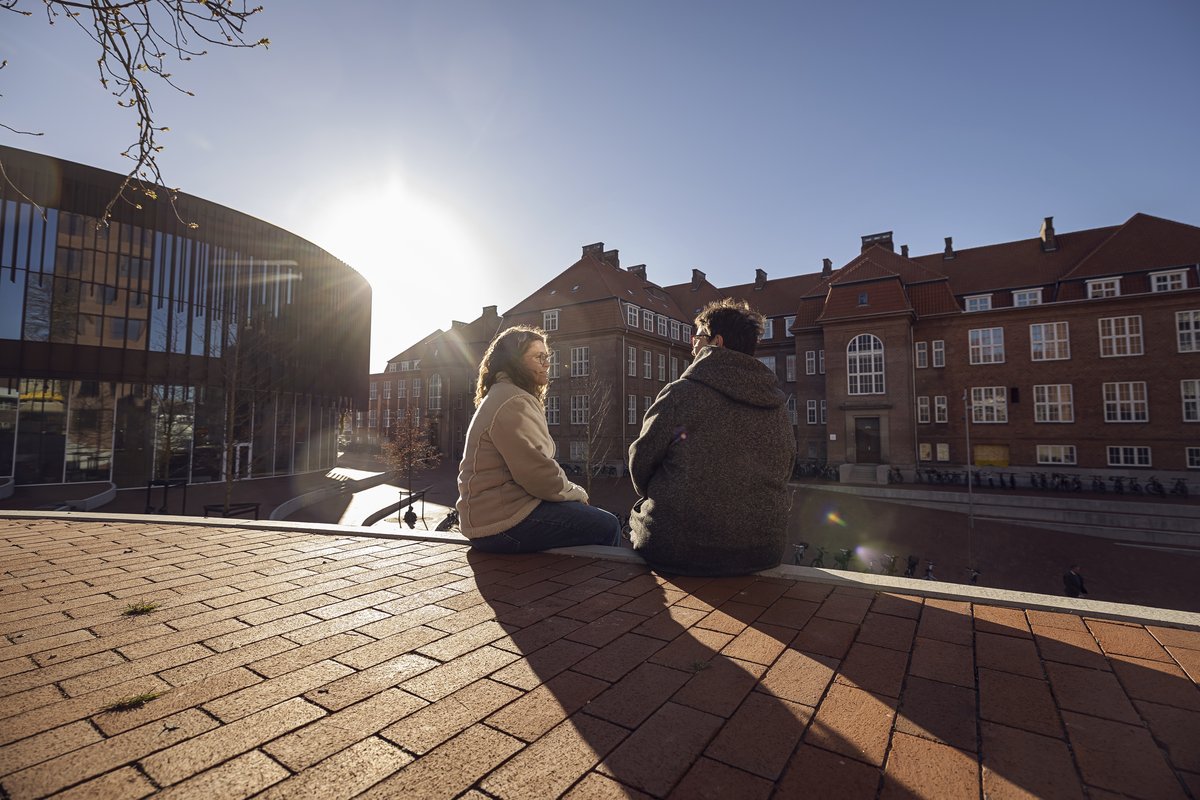
Prompted by the official inauguration of the University City, we met up with Helle Marianne Bjørn and her daughter, Astrid Niemann-Nielsen. Together, mother and daughter reflect the transformation from hospital to campus: Helle Marianne Bjørn worked at the former hospital for more than three decades and is well acquainted with the buildings. Astrid Niemann-Nielsen has visited the hospital throughout her entire childhood, and now she studies at AU's new campus.

From hospital to campus
1893: Aarhus Municipal Hospital opens in 1893.
The 1930s: The hospital is expanded. The architects behind the expansion are C.F. Møller and Kay Fisker. They also designed Aarhus University's yellow campus.
2016: Forskningsfondens Ejendomsselskab A/S (FEAS) (subsidiary of the Aarhus University Research Foundation ed.) purchases the municipal hospital from the Central Denmark Region for DKK 807,5 million.
1 May 2019: Hospital operations move to the Aarhus University Hospital in Skejby in the northern part of Aarhus. Operations of the laundry, pharmacy, and selected buildings, however, continued for a few years afterwards.
FEAS takes on the task of developing the former hospital into a campus alongside Aarhus University, which rents the buildings.
2020: The Kitchen moves into the former central kitchen
2022: AU IT and the Department of Molecular Biology and Genetics move into the University City. So does more than a hundred students who move into the newly renovated student housing in the former patient hotel and nurses’ residence hall.
2026: The Department of Economics and Business Economics and the Department of Management move from Fuglesangs Allé to the University City. Kitchen moves from the former central kitchen into the former laundry.
21 and 22 May 2026: Official opening of the University City.
2029-2032: Arts moves its activities from the Nobel Park and Kasernen to the University City.
Astrid Niemann-Nielsen is currently studying molecular medicine at the Department of Molecular Biology and Genetics, and was among the first to move into Aarhus University's new campus, the University City, in 2022.
“I have noticed that several of my fellow students have had the impression that the building was built for our department,” she says, adding that this is understandable since many of her fellow students are not from Aarhus and because the buildings appear new.
Those who have lived in Aarhus for more than just a couple of years will know that the street that cuts through the University City, where students now stroll or bike to and from lectures, used to be a busy hospital street with ambulances, staff, patients, and relatives up until seven years ago.
Builders are transforming a hospital into your new campus
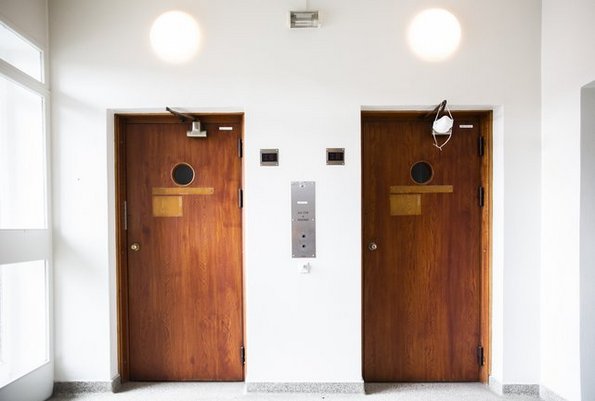
Those familiar with the space will still be able to sense some of the hospital in the newly renovated buildings, and this is true for Astrid Niemann-Nielsen's mother, Helle Marianne Bjørn. She knows the buildings better than most. Right down to the number of kilos each lift is able to carry and the poetry on the back of the toilet doors.
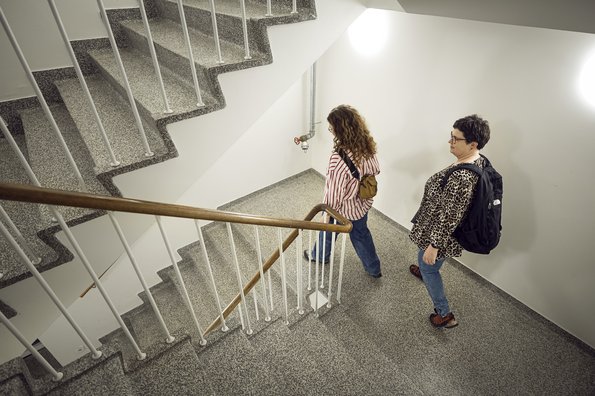
“They have kept the lifts and the stairwell. I've used those lifts a lot," notes Helle Marianne Bjørn, as she walks through the foyer of what is now the Department of Molecular Biology and Genetics for the first time in eight years.
Patient, office aid, and staff manager
The first time Helle Marianne Bjørn set foot in the hospital was as a child. As a hearing aid user, she regularly had to travel from her home in West Jutland to the Audio Clinic at Aarhus Municipal Hospital. And ever since she dropped out of high school in the mid-1980s, the hospital has been her workplace. Initially, she began as an office aid, where she mainly had to transport X-rays, blood, and frozen sections between the different departments. Later, she became head porter, and when the municipal hospital closed due to a decision that all hospital operations in the city were to be concentrated in one place as part of the Aarhus University Hospital in Skejby, she was head of the internal transport department. Today, she is a coordinator and shift planner at the hospital in Skejby, and she recently celebrated her 40th anniversary within Aarhus’s hospital sector.
In the basement below the department, she stands in what was once the entrance to the main artery of the hospital; the tunnel that ran in two lanes from one end of the hospital in the north to the other in the south. And there was plenty of traffic here when mail, tissue samples, goods, laundry, waste, food, and patients – both living and dead – were all transported between the hospital's various departments. Following the renovation, the tunnel has been closed off.
Cold-blooded driving
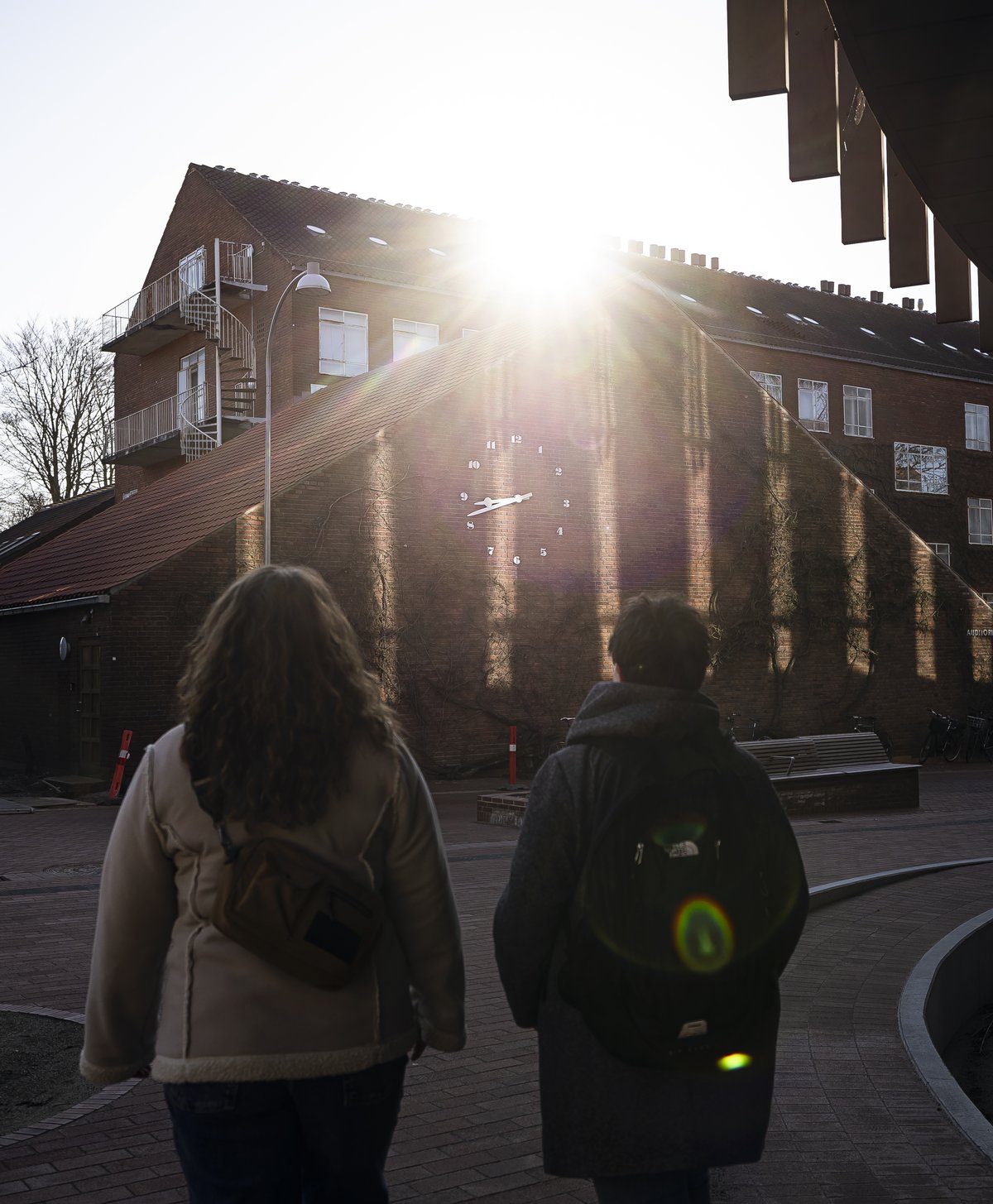
Astrid Niemann-Nielsen gives a tour of the department, which is now her home turf. She shows off the classrooms, study spaces, and Friday bars. All the while referring to how the premises were previously used.
“The scanner was down here somewhere,” says Astrid Niemann-Nielsen to her mother. She is almost as familiar with the former hospital as her mother is, since she often tagged along when her mother had weekend shifts or had to work overtime and couldn’t find care for Astrid.
It was paradise for a child. I loved going to work with her.
“It was paradise for a child. I loved going to work with her and to help sort mail or sit in her office and play with the stamps," Astrid Niemann-Nielsen remembers, adding:
“But driving around on the trucks in the basement was particularly great. I remember we were driving with blood. With cold blood.”
Experiences from her childhood have helped shape her view of hospitals:
“Many people have a hard time around hospitals and associate them with illness and death. I don't feel that way at all. I think it's exciting with everything that goes on behind the scenes at a hospital," she says.
Hierarchy, monarchy, and anarchistic waste sorting
After 40 years in the hospital and traversing thousands of kilometres on the hospital's corridors and stairs, Helle Marianne Bjørn is rich in anecdotes. About the hospital hierarchy, and how senior hospital physicians and head nurses spoke harshly to those who ranked below them. How the hospital had to be scrubbed from top-to-bottom when Her Majesty had to have surgery. How the pigs in the basement under building 9D were used for research. The rather loose definition of what fell under the category of 'small combustibles' (read: amputated limbs and the like). And the "mountain stages", which were the name for the mail and delivery routes that didn’t have any lifts and where tons of goods had to be dragged up the stairs.
“It was a different time,” Helle Marianne Bjørn notes.
Respecting the history
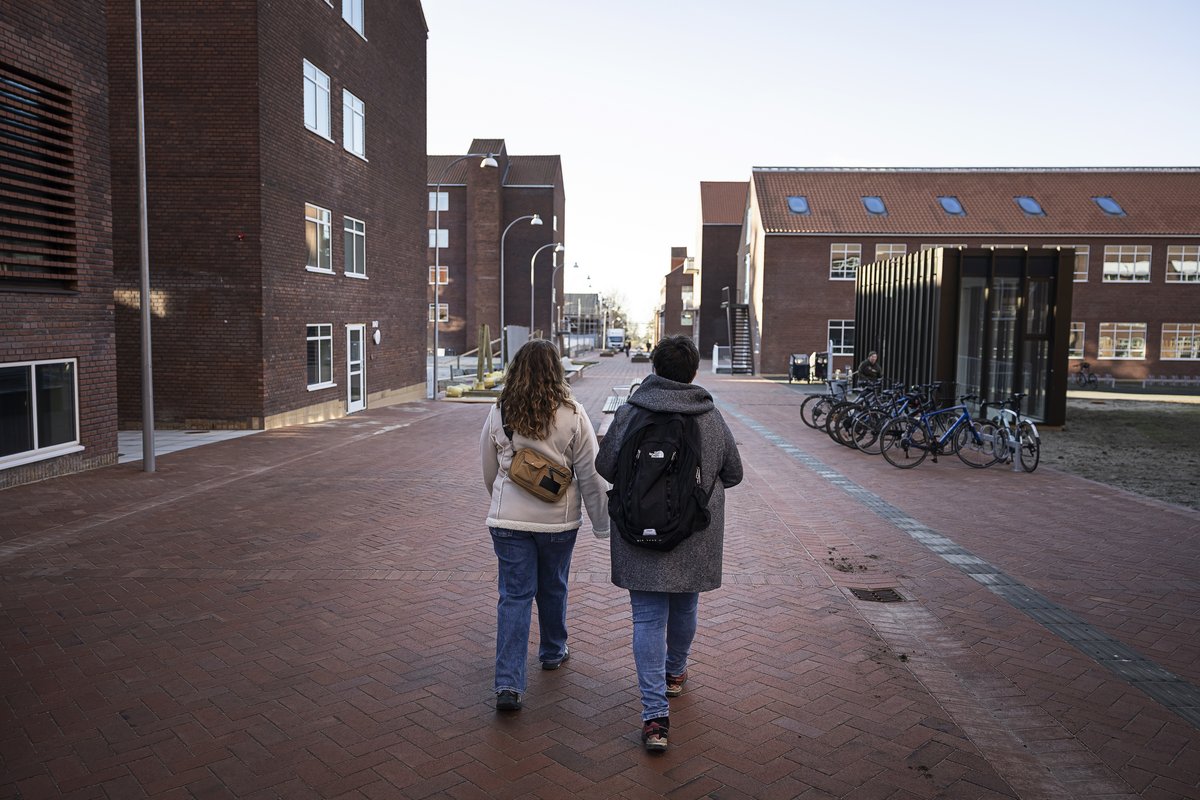
“It has really turned out beautiful,” Helle Marianne Bjørn says, as she walks across the red bricks laid out in a herringbone pattern. We open the door to Kitchen, which previously housed the MidtVask laundry, which washed clothes and linen for hospitals throughout the Central Denmark Region. Walls have been torn down, and the furnishings are new. But Helle Marianne Bjørn distinctly recognizes this part of her old workplace.
Director of Enterprise and Innovation: With more funding for innovation come higher expectations

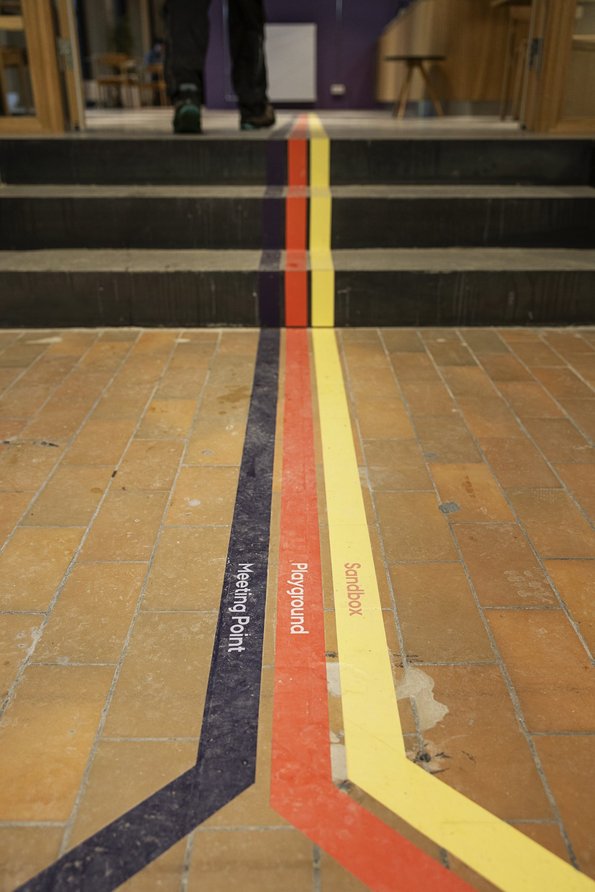
In Kitchen's raw premises, it is possible to see reminiscences of the former laundry in several places: the faintly green tiles on the walls, and the brown tiles on the floors, which bear remnants of the stripes that once marked where the laundry carts were supposed to go. Today, new stripes show the way around Kitchen's premises.
“It's quite nice that they've chosen to preserve it,” says Helle Marianne Bjørn.
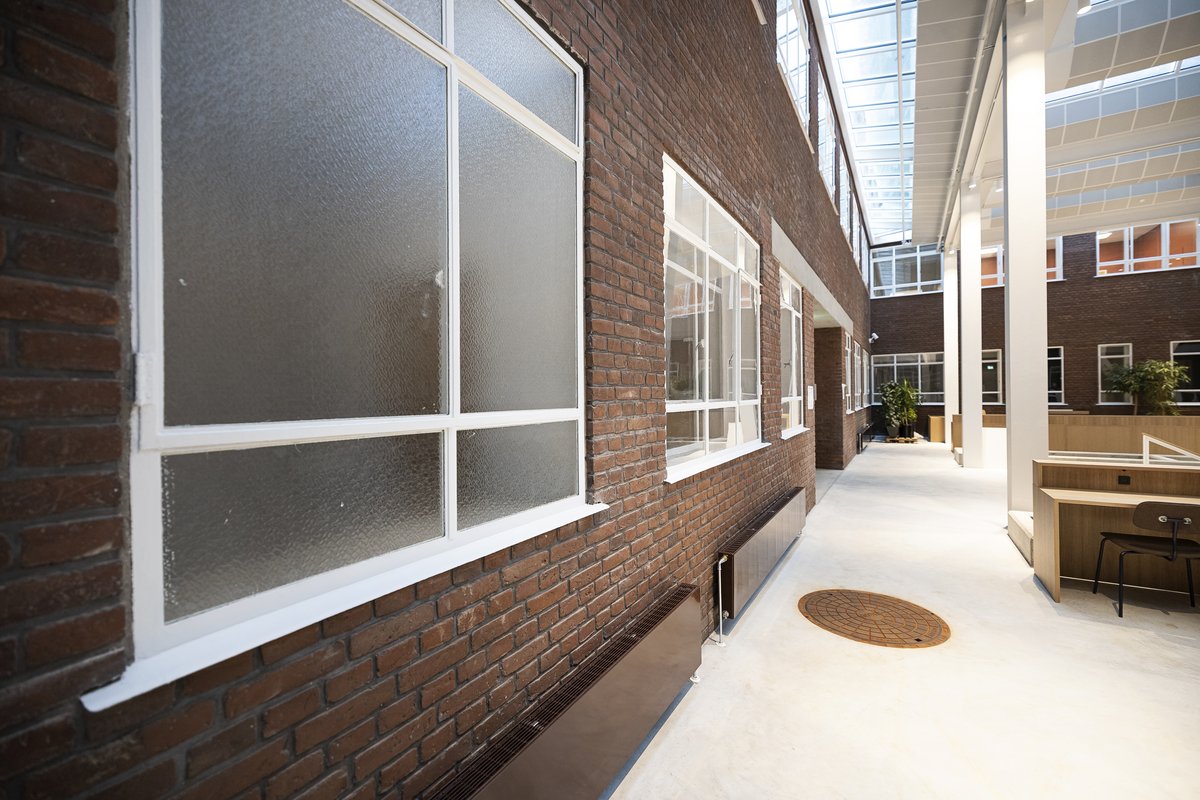
Helle Marianne Bjørn stops to look around in the foyer of the Department of Economics and Business Economics.
“This used to be the entrance to the oncology department. Cars would drive around here.”
The new foyer is indeed built on what was once a road and a parking lot. Manhole covers are visible on the floor in several places.
It has been beautifully renovated in a style that is not too modern, and which respects the history and previous use of the building.
“It has been beautifully renovated in a style that is not too modern, and which respects the history and previous use of the building. That means something to me," says Helle Marianne Bjørn, who remembers the municipal hospital as a large and busy, yet nice workplace.
“Let's see if we can find your old office,” Astrid Niemann-Nielsen suggests. But the building is currently a closed construction site, as it is being converted into the University City's future dining hall. As a result, we end our tour at the University Square with one of the oldest hospital buildings on one side and the round, newly built City Auditorium on the other. Right at the threshold of the next phase of the development of the University City. While Aarhus BSS moved in at the beginning of the year, Arts is scheduled to move more of its activities into the University City in the years 2029-2032.
AU presents a new plan for the campus in Aarhus – gathers activities in fewer square metres
Helle Marianne Bjørn walks in the direction of the light rail. She has a staff meeting in Skejby to catch. Astrid Niemann-Nielsen, on the other hand, will begin her master's degree this summer and continue to work within the characteristic red walls.