

The oak trees will weather an attack
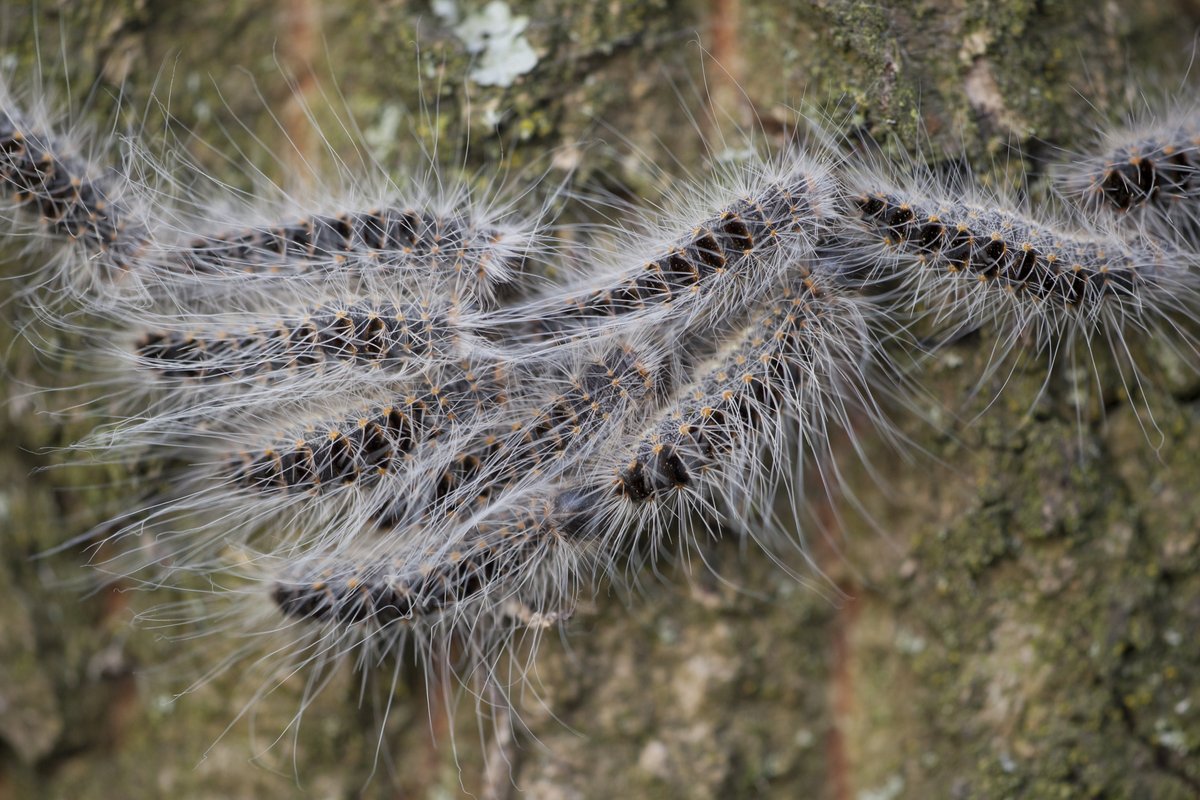
The oak processionary moths, known by the rather unflattering nickname “the caterpillar from hell”, may mar the appearance of the protected oak trees in the University Park, but they are unlikely to do much more than that, assures entomologist.

This summer’s biggest national news story is the invasion from hell, which has made landfall in Odense.
As many media outlets across the country have reported, the oak processionary moth outbreak has become so widespread that it has led to public meetings, petitions and demonstrations directed at what residents regard as the municipality’s insufficient and, according to them, far too late response in Odense.

“As we can see in the pictures from Odense, there are many citizens who are suffering quite a lot. The caterpillar's stinging hairs can travel far in the wind and cause severe itching, burning, and red bumps, and it can also cause an unpleasant tingling sensation in the throat if you inhale the stinging hairs," says professor of entomology and insect researcher at the Danish Museum of Natural History.
A park full of oak trees
The severe outbreak in Odense is partly due to the fact that people like to plant oak trees in parks, along roads, and around public institutions.
Felled oak tells the story of solar storms, nuclear tests, unleaded petrol - and AU’s history
The University Park in Aarhus is densely populated with oak trees, which play such a defining role in the park’s appearance that those in the central part of the park were included in the landscape conservation plan implemented by the Danish Agency for Culture and Palaces in 2024.
According to entomologist Thomas Pape, the many oak trees gathered in one place provide good conditions for the oak processionary moth.
“The caterpillars feed on the leaves of the oak tree. In severe outbreaks, they can eat all the leaves on a smaller oak tree, after which they move on in procession to the next tree. Hence the name. When oak trees are clustered together, they create ideal conditions for the moths and, therefore, for their larvae. During very extensive outbreaks, they can completely defoliate oak trees," says Thomas Pape.
No need to panic
That said, there is no need to panic. Although oak processionary moths are capable of consuming enormous amounts of leaves, they cannot seriously threaten the lives of the trees.
“It does not affect photosynthesis that some of the leaves are eaten, and even if trees are exposed to severe attacks two years in a row, they are not necessarily in danger. Attacks can weaken their immune system and make them vulnerable to other diseases and drought, but oak trees are robust and have existed for thousands of years, along with the oak processionary moth,” says entomologist Thomas Pape, emphasizing that moths, insects, fungi and parasites have always coexisted with trees.
“Normally, nature finds its own balance, and in many places, humans and processionary moths live together without significant problems. Take Bornholm, for example, where people, pine trees and the pine processionary moth coexist, and where most people know how to spot the nests and avoid the unpleasant symptoms,” says Thomas Pape.
Bird boxes can prevent invasion
An invasion of oak processionary moths in the University Park is not imminent. The females that lay eggs in the trees don't move more than a kilometre at most, so it takes time. The eggs can, however, be carried over great distances with newly planted oak trees, as likely happened in Odense.
Some animals love the oak processionary moths. Thomas Pape highlights parasitic wasps and tits. By providing good conditions for them, you can ensure that there is a defence in place if the caterpillar from hell should appear in the University Park.
“It is always a good idea to set up bird boxes, especially for tits, who love to eat insects and who like to move into bird boxes. Tits often lack places to build nests in the cities, and installing nest boxes can help address that while also preparing for potential infestations. "When you look at what controlling oak processionary moths costs in Odense right now, bird boxes are a cheap preventive measure," notes Thomas Pape.
Everyone must be aware
The University Park is used by thousands of people, and therefore, an attack by oak processionary moths can be an unpleasant experience for many. Thomas Pape urges that you react quickly if you experience burning or itching, or if you see something that looks like caterpillar nests on the trunks or branches of the oak trees.
"That way you can quickly mark the affected trees," says Thomas Pape.
At the same time, he also points out that not everything in nature is pleasant.
“We must remember that the desire for a rich and exciting nature means that we must accept that nature can sting and scratch. Just as we accept the thorns on beautiful bushes, so are mosquito bites and hornet stings a consequence of a healthy ecosystem, so maybe we can find a way to learn to live with the oak processionary moths," says professor and entomologist Thomas Pape.
This text is machine translated and post-edited by Mie Skov Jeppesen.